The post Startup Plans To Build 50,000 By End Of 2027 appeared on BitcoinEthereumNews.com. This Phantom humanoid robot by Foundation is working in a factory. SomeThe post Startup Plans To Build 50,000 By End Of 2027 appeared on BitcoinEthereumNews.com. This Phantom humanoid robot by Foundation is working in a factory. Some

Startup Plans To Build 50,000 By End Of 2027

This Phantom humanoid robot by Foundation is working in a factory. Some of them, however, will be working in military applications if the company’s plans come to fruition.

John Koetsier

Most of the hundreds of humanoid robot startups around the world are building robots for work, whether in the factory, the community, or the home. Silicon Valley startup Foundation is too, but it’s also explicitly targeting the U.S. military as a customer for Phantom, its 5’9″, 180-pound humanoid robot. In fact, Phantom will both carry lethal weaponry and fight, and CEO Sankaet Pathak plans to build 50,000 of them in near-record time: by the end of 2027.

“You should really work hard to give the U.S. military smarter tools so that they can be more effective,” Pathak told me in a recent TechFirst interview. And he’s not shy about giving Phantom an M4 Carbine, either, adding that “if you’re first body in and you’re docile, then the enemies are not going to really expose themselves. So you have to be first body in and deadly.”

Of course, military use is not the only plan for Foundation.

The company has built Phantom in near-record time. Within 18 months of establishing Foundation, Pathak already had a production robot hard at work running actual production tasks at (undisclosed) partner locations. That’s almost as fast as Apptronik, thanks to two smart acquisitions in AI and next-generation actuators that vastly accelerated progress.

Foundation’s scaling plan is even more aggressive: 40 robots this year, 10,000 next year, and 40,000 humanoid robots off the production line in 2027. Pathak acknowledges that it’s extremely aggressive, but says there’s a “non-zero chance” the company can make it happen.

One of the reasons: the Foundation team, which includes top talent recruited from companies like Tesla, 1X, Boston Dynamics and SpaceX.

“Our head of manufacturing is an ex-Tesla manufacturing director,” Pathak told me. “He worked on the Model X and Y ramp. So the lessons are just baked in: don’t try to automate too quickly.”

If Foundation can manage the insane growth, Pathak is confident customers will appear. He’s intending to lease robots, not sell them, and he doesn’t need hundreds of customers either.

“We don’t need 50 deals,” he told me. “We need like five really high quality large deals, and they can scope out to be hundreds of millions of dollars in annual recurring revenue purchase orders.”

In fact, if Foundation hits its production goals and sales happen the way Pathak envisions, Foundation becomes an overnight unicorn, multiple times over: 50,000 robots built over 2026 and 2027 would lease out for about $5 billion in annual recurring revenue, he says.

A little bit of math tells you that means Foundation currently plans to lease robots for about $100,000/year each. That seems steep, giving restaurant, warehouse, or production line labor might cost an average of around $40,000 annually, but it’s actually a discount on wetware (humans like us) because the robots can work nearly 24/7, meaning each robot does the equivalent of about three to five humans. Assuming maintenance and repairs are included in the $100,000, that’s a pretty significant discount.

Cost versus return for robot labor compared to human labor

John Koetsier

At near-full utilization, robots could save employers $166,000 each year. With a more realistic calculation including both some downtime for robots and some human overseers, you’re looking at about $90,000 in annual savings.

This all assumes, of course, that the robot is both as fast as humans and as good as humans: something no humanoid robot manufacturer has yet been able to make happen. So the smart money here will add at least a few years to Foundation’s best-case napkin scratches, or discount the value of the robot labor significantly as the hardware and software stack ramp up to full human-equivalent capability.

And that’s in spite of Foundation’s high-end robot “muscles” that can operate for multiple shifts without overheating, using highly efficient, backdrivable actuators that make Phantom both powerful and comparatively safe around people.

But there’s also the military applications.

Like it or not – and anyone who’s watched the Terminator move probably doesn’t – humanoid robots have a huge amount of utility in military applications. They can be used to do grunt work that soldiers or support staff don’t have to, they can ferry weapons and ammunition to soldiers, they can take risks that no good officer wants his or her fighters to undergo. We’re already seeing similar uses of wheeled robots in the Russia-Ukraine conflict.

And yes, this would include carrying a weapon into a building in street fighting scenarios, or being the first one over a hilltop, or entering a cave to search for enemy combatants.

In fact, Pathak argues that humanoid robots could also make military force more precise, not less. Rather than using air strikes or heavy weapons, the military could use a ground-based humanoid robot that can enter buildings, assess situations directly and make the right call. While Phantom would not be fully autonomous in lethal decision making, Foundation envisions a model similar to current military drones, where robots handle movement and navigation themselves while humans back at base (or nearby but safely hidden) retain control over targeting. If that approach holds, humanoid robots like Phantom may ultimately change not only how wars are fought, but when they are avoided, by shifting deterrence toward visible, scalable robotic capability rather than human deployment.

And, rather than the cold-blooded killing image that Terminator-style humanoid drones might have, Pathak argues they would actually be highly effective peacekeepers.

“I do think if the U.S. military had like 100,000 robots that they could just demonstrate work, it would by and large end a lot of wars before they start,” he says.”

That makes sense: the U.S. would be more likely to send them in than humans who might get killed and cause political backlash. Knowing that, rebels, insurgents, terrorists, or other enemy combatants might be less likely to start wars in the first place.

But the opposite might be true as well: the military would be so much more likely to use fighting humanoid drones that wars could be come more likely.

Either way, the ethics of humanoid robots is about to get even more complicated. And if you think that China or Russia isn’t thinking of building warbots, think again. Essentially, though not in humanoid form, they already are. So is the U.S. military, which has had Predator drones for three decades now.

And the first automated and uncrewed weapons of war might date back to World War II: Germany’s V-2 rockets. They had a very crude and rudimentary version of autonomous guidance and control, making them perhaps the first war robots ever created.

Now, we’re just upping the level of sophistication. And, of course, lethality.

Source: https://www.forbes.com/sites/johnkoetsier/2025/12/16/humanoid-robots-for-war-and-work-startup-plans-to-build-50000-by-end-of-2027/


Market Opportunity
John Tsubasa Rivals Logo
John Tsubasa Rivals Price(JOHN)
$0.00255
$0.00255$0.00255
+8.97%
USD
John Tsubasa Rivals (JOHN) Live Price Chart
Disclaimer: The articles reposted on this site are sourced from public platforms and are provided for informational purposes only. They do not necessarily reflect the views of MEXC. All rights remain with the original authors. If you believe any content infringes on third-party rights, please contact service@support.mexc.com for removal. MEXC makes no guarantees regarding the accuracy, completeness, or timeliness of the content and is not responsible for any actions taken based on the information provided. The content does not constitute financial, legal, or other professional advice, nor should it be considered a recommendation or endorsement by MEXC.
Tags:

You May Also Like

HitPaw API is Integrated by Comfy for Professional Image and Video Enhancement to Global Creators

HitPaw API is Integrated by Comfy for Professional Image and Video Enhancement to Global Creators

SAN FRANCISCO, Feb. 7, 2026 /PRNewswire/ — HitPaw, a leader in AI-powered visual enhancement solutions, announced Comfy, a global content creation platform, is
Share
AI Journal2026/02/08 09:15
Journalist gives brutal review of Melania movie: 'Not a single person in the theater'

Journalist gives brutal review of Melania movie: 'Not a single person in the theater'

A Journalist gave a brutal review of the new Melania documentary, which has been criticized by those who say it won't make back the huge fees spent to make it,
Share
Rawstory2026/02/08 09:08
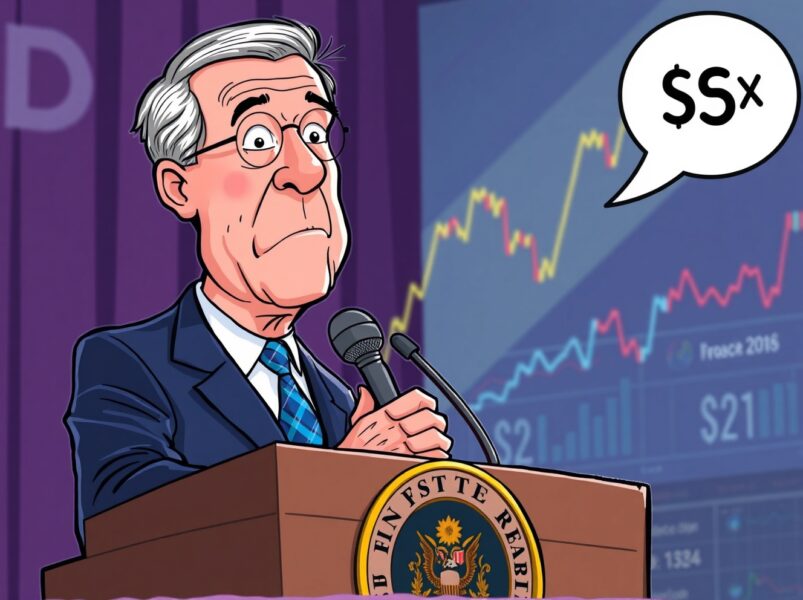
Jerome Powell’s Press Conference: Crucial Insights Unveiled for the Market’s Future

Jerome Powell’s Press Conference: Crucial Insights Unveiled for the Market’s Future

BitcoinWorld Jerome Powell’s Press Conference: Crucial Insights Unveiled for the Market’s Future The financial world, including the dynamic cryptocurrency market, often hangs on every word from the Federal Reserve. Recently, Jerome Powell’s press conference following the Federal Open Market Committee (FOMC) meeting concluded, leaving investors and analysts dissecting his remarks for clues about the future economic direction. This event is always a pivotal moment, shaping expectations for inflation, interest rates, and the overall stability of global markets. What Were the Key Takeaways from Jerome Powell’s Press Conference? During Jerome Powell’s press conference, the Fed Chair provided an update on the central bank’s monetary policy decisions and its economic outlook. His statements often reiterate the Fed’s dual mandate: achieving maximum employment and stable prices. This time was no different, with a strong emphasis on managing persistent inflation. Key points from the recent discussion included: Inflation Control: Powell emphasized the Fed’s unwavering commitment to bringing inflation back down to its 2% target. He reiterated that the fight against rising prices remains the top priority, even if it entails some economic slowdown. Interest Rate Policy: While the Fed’s stance on future interest rate adjustments was discussed, the path remains data-dependent. Powell indicated that decisions would continue to be made meeting-by-meeting, based on incoming economic data. Economic Projections: The updated Summary of Economic Projections (SEP) offered insights into the Fed’s forecasts for GDP growth, unemployment, and inflation. These projections help market participants gauge the central bank’s expectations for the economy’s trajectory. Quantitative Tightening (QT): The ongoing process of reducing the Fed’s balance sheet, known as quantitative tightening, was also a topic. This reduction in liquidity in the financial system has broad implications for asset prices. How Did Jerome Powell’s Remarks Impact Cryptocurrency Markets? The conclusion of Jerome Powell’s press conference often sends ripples through traditional financial markets, and cryptocurrencies are increasingly sensitive to these macroeconomic shifts. Digital assets, once thought to be uncorrelated, now frequently react to the Fed’s monetary policy signals. Higher interest rates, for instance, tend to make riskier assets like cryptocurrencies less attractive. This is because investors might prefer safer, interest-bearing investments. Consequently, we often see increased volatility in Bitcoin (BTC) and Ethereum (ETH) prices immediately following such announcements. The tightening of financial conditions, driven by the Fed, reduces overall liquidity in the system, which can put downward pressure on asset valuations across the board. However, some argue that this growing correlation signifies crypto’s increasing integration into the broader financial ecosystem. It suggests that institutional investors and mainstream finance are now paying closer attention to digital assets, treating them more like other risk-on investments. Navigating the Economic Landscape After Jerome Powell’s Press Conference For cryptocurrency investors, understanding the implications of Jerome Powell’s press conference is crucial for making informed decisions. The Fed’s policy trajectory directly influences the availability of capital and investor sentiment, which are key drivers for crypto valuations. Here are some actionable insights for navigating this environment: Stay Informed: Regularly monitor Fed announcements and economic data releases. Understanding the macroeconomic backdrop is as important as analyzing individual crypto projects. Assess Risk Tolerance: In periods of economic uncertainty and tighter monetary policy, a reassessment of personal risk tolerance is wise. Diversification within your crypto portfolio and across different asset classes can mitigate potential downsides. Focus on Fundamentals: While market sentiment can be swayed by macro news, projects with strong fundamentals, clear use cases, and robust development teams tend to perform better in the long run. Long-Term Perspective: Cryptocurrency markets are known for their volatility. Adopting a long-term investment horizon can help weather short-term fluctuations driven by macro events like Fed meetings. The challenges include potential continued volatility and reduced liquidity. However, opportunities may arise from market corrections, allowing strategic investors to accumulate assets at lower prices. In summary, Jerome Powell’s press conference provides essential guidance on the Fed’s economic strategy. Its conclusions have a profound impact on financial markets, including the dynamic world of cryptocurrencies. Staying informed, understanding the nuances of monetary policy, and maintaining a strategic investment approach are paramount for navigating the evolving economic landscape. The Fed’s actions underscore the interconnectedness of traditional finance and the burgeoning digital asset space. Frequently Asked Questions (FAQs) Q1: What is the Federal Open Market Committee (FOMC)? A1: The FOMC is the monetary policy-making body of the Federal Reserve System. It sets the federal funds rate target and directs open market operations, influencing the availability of money and credit in the U.S. economy. Q2: How do the Fed’s interest rate decisions typically affect cryptocurrency markets? A2: Generally, when the Fed raises interest rates, it makes borrowing more expensive and reduces liquidity in the financial system. This often leads investors to shy away from riskier assets like cryptocurrencies, potentially causing prices to decline. Conversely, lower rates can stimulate investment in riskier assets. Q3: What does “data-dependent” mean in the context of Fed policy? A3: “Data-dependent” means that the Federal Reserve’s future monetary policy decisions, such as interest rate adjustments, will primarily be based on the latest economic data. This includes inflation reports, employment figures, and GDP growth, rather than a predetermined schedule. Q4: Should I change my cryptocurrency investment strategy based on Jerome Powell’s press conference? A4: While it’s crucial to be aware of the macroeconomic environment shaped by Jerome Powell’s press conference, drastic changes to a well-researched investment strategy may not always be necessary. It’s recommended to review your portfolio, assess your risk tolerance, and consider if your strategy aligns with the current economic outlook, focusing on long-term fundamentals. If you found this analysis helpful, please consider sharing it with your network! Your insights and shares help us reach more readers interested in the intersection of traditional finance and the exciting world of cryptocurrencies. Spread the word! To learn more about the latest crypto market trends, explore our article on key developments shaping Bitcoin price action. This post Jerome Powell’s Press Conference: Crucial Insights Unveiled for the Market’s Future first appeared on BitcoinWorld.
Share
Coinstats2025/09/18 16:25