Crypto ownership in the UK dropped noticeably in 2025, even as the investors who stayed in the market continued to build larger holdings, according to new figuresCrypto ownership in the UK dropped noticeably in 2025, even as the investors who stayed in the market continued to build larger holdings, according to new figures

UK Crypto Ownership Plunges to 8% — But High-Value Portfolios Are Soaring

Crypto ownership in the UK dropped noticeably in 2025, even as the investors who stayed in the market continued to build larger holdings, according to new figures from the Financial Conduct Authority (FCA).

The data from FCA’s Cryptoassets Consumer Research 2025 report shows that 8% of UK adults currently own some form of cryptocurrency. That is down from 12% a year earlier, marking the first clear decline in participation since crypto use surged during the pandemic.
Source: FCA

While fewer people now hold digital assets, ownership has not fallen back to early levels. In 2021, just 4% of adults reported owning crypto, meaning today’s figure is still roughly double what it was four years ago.

The figures point to a market that is becoming smaller but more concentrated. Rather than attracting new entrants, crypto ownership appears to be shifting toward existing users who are committing more capital and holding their assets for longer periods.

Crypto Ownership in the UK Still Dominated by 18–34 Age Group

The profile of crypto holders has remained broadly consistent. Ownership is higher among men at 11%, compared with women, and is most concentrated among people aged 18 to 34, where 15% report holding crypto.

Source: FCA

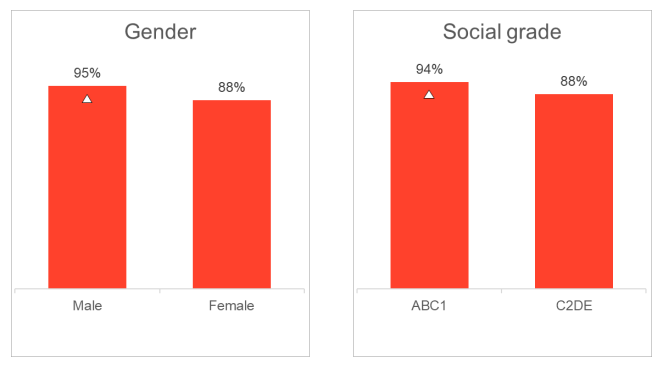
Overall public awareness of crypto remains high, with 91% of respondents saying they have heard of cryptocurrencies, matching 2024 levels and continuing a multi-year trend of widespread familiarity.

Individuals from ethnic minority backgrounds and higher-income social grades are also more likely to own digital assets, according to the FCA’s nationally representative survey of more than 2,300 respondents.

Source: FCA

Bitcoin remains the most commonly held cryptoasset, owned by 57% of users, and recorded a five-percentage-point recovery after several years of declining ownership.

Ethereum followed at 43%, largely unchanged from 2024. Also, other assets were held at much lower levels, with Solana, Dogecoin, XRP, and Cardano the most commonly mentioned beyond the two market leaders.

Small Holders Exit as High-Value Crypto Portfolios Grow

Behind the headline decline in ownership, the report shows a steady shift toward higher-value holdings.

The share of users holding £1,001 to £5,000 in crypto rose to 21%, up four percentage points from 2024, while those holding £5,001 to £10,000 increased to 11%, up three points.

Source: FCA

At the same time, the number of people holding £100 or less continued to fall, extending a trend seen over several years.

The FCA noted that the difference between high- and low-value holders has widened since last year, particularly in motivations linked to long-term investing.

Most crypto purchases continue to be funded using personal cash.

Around 76% of users relied on disposable income, while 25% used long-term savings and 19% used previous investment gains.

Source: FCA

The use of credit cards or borrowing fell further, with just 9% reporting credit-based purchases, down five percentage points from 2024.

The data also suggests that new adoption is slowing, noting that only 5% of crypto owners first bought assets after October 2024, while most entered the market between 2019 and 2021.

Incentives such as rewards or promotions also declined, with just 17% of users reporting receiving one in the past six months.

Source: FCA

The report also noted centralized exchanges remain the dominant access point, used by 73% of UK crypto users, an increase from last year. Coinbase and Binance remained the most widely used platforms, though Binance’s share declined.

UK Ranks 11th in Global Crypto Adoption as regulation gets clearer

The findings come as the UK continues to reshape its regulatory framework. In 2025, the government introduced legislation to bring crypto activities under the FCA’s supervision while also formally recognizing digital assets as personal property under UK law.

Full implementation of the regime is not expected until 2027, but the FCA has already accelerated approvals and launched consultations covering trading, staking, lending, and decentralized finance.

Globally, the UK ranked 11th in Chainalysis’ crypto adoption index, behind countries such as India, the United States, Brazil, and Vietnam.

Disclaimer: The articles reposted on this site are sourced from public platforms and are provided for informational purposes only. They do not necessarily reflect the views of MEXC. All rights remain with the original authors. If you believe any content infringes on third-party rights, please contact service@support.mexc.com for removal. MEXC makes no guarantees regarding the accuracy, completeness, or timeliness of the content and is not responsible for any actions taken based on the information provided. The content does not constitute financial, legal, or other professional advice, nor should it be considered a recommendation or endorsement by MEXC.

You May Also Like

Solana Treasury Stocks: Why Are These Companies Buying Up SOL?

Solana Treasury Stocks: Why Are These Companies Buying Up SOL?

The post Solana Treasury Stocks: Why Are These Companies Buying Up SOL? appeared on BitcoinEthereumNews.com. In 2020, everyone watched Strategy (called Microstrategy back then) scoop up Bitcoin and turn corporate crypto treasuries into a mainstream story. Now, a new wave is forming. And it’s centered on Solana. Dozens of companies are holding SOL as a bet on price. Except they’re not just holding. They’re building what’s being called Solana treasuries or Digital Asset Treasuries (DATs). These aren’t passive vaults. They’re active strategies that stake, earn yield, and tie into the fast-growing Solana ecosystem. Forward Industries, a Nasdaq-listed firm, recently bought more than 6.8 million SOL, making it the world’s largest Solana treasury company. Others like Helius Medical, Upexi, and DeFi Development are following a similar playbook, turning SOL into a centerpiece of their balance sheets. The trend is clear: Solana treasury stocks are emerging as a new class of crypto-exposed equities. And for investors, the question isn’t just who’s buying but why this strategy is spreading so fast. Key highlights: Solana treasuries (DATs) are corporate reserves of SOL designed to earn yield through staking and DeFi. Companies like Forward Industries, Helius Medical, Upexi, and DeFi Development Corp now hold millions of SOL. Public firms collectively own 17.1M SOL (≈$4B), which makes Solana one of the most adopted treasuries. Unlike Bitcoin treasuries, Solana holdings generate 6–8% annual rewards. It makes reserves into productive assets Solana treasury stocks are emerging as a new way for investors to gain indirect exposure to SOL. Risks remain: volatility, regulation, and concentrated holdings. But corporate adoption is growing fast. What is a Solana treasury (DAT)? A Solana treasury, sometimes called a Digital Asset Treasury (DAT), is when a company holds SOL as part of its balance sheet. But unlike Bitcoin treasuries, these usually aren’t just static reserves sitting in cold storage.  The key difference is productivity. SOL can be staked directly…
Share
BitcoinEthereumNews2025/09/21 06:09
Unstoppable: Why No Public Company Can Ever Catch MicroStrategy’s Massive Bitcoin Holdings

Unstoppable: Why No Public Company Can Ever Catch MicroStrategy’s Massive Bitcoin Holdings

BitcoinWorld Unstoppable: Why No Public Company Can Ever Catch MicroStrategy’s Massive Bitcoin Holdings Imagine trying to build a mountain of gold, only to discover
Share
bitcoinworld2025/12/17 14:30
Little Pepe soars from presale to market spotlight

Little Pepe soars from presale to market spotlight

The post Little Pepe soars from presale to market spotlight appeared on BitcoinEthereumNews.com. Disclosure: This article does not represent investment advice. The content and materials featured on this page are for educational purposes only. Early investors often capture the biggest rewards in crypto, and Little Pepe, priced under $0.005, is emerging as a memecoin that could rival big players. Summary LILPEPE has sold over 15 billion tokens in its presale, raising $25.4 million. The project’s community has grown to more than 41,000 holders and 30,000 Telegram members. Analysts suggest the token could see gains of up to 55x in two years and 100x by 2030. Crypto enthusiasts are aware that early investors tend to benefit the most from the market. Ripple (XRP) and Solana (SOL) are popular tokens that have profited traders. Little Pepe (LILPEPE), valued at less than $0.005, might produce more profit. LILPEPE is swiftly gaining popularity despite its recent introduction. Little Pepe: The market-changing memecoin Little Pepe has surprised everyone with its quick surge in cryptocurrencies. LILPEPE is becoming a popular meme currency. Its presale price is below $0.003. Strong foundations, a distinct market presence, and a developing and enthusiastic community distinguish it from other meme tokens. Many meme currencies use hype to attract investors, but LILPEPE’s rarity, community support, and distinctive roadmap have effectively drawn them in. Currently in its 13th presale stage, more than 15 billion tokens have been sold, generating over $25.4 million and sparking considerable interest. As the token approaches official listing, enthusiasm is growing, and many people believe it could be one of the following major memecoin success stories. LILPEPE’s growing community drives growth The strong community surrounding LILPEPE is a primary reason for its success. LILPEPE has built a loyal following of over 41,000 holders and about 30,000 active members on Telegram. Its rise is being fueled by this. The support of its community…
Share
BitcoinEthereumNews2025/09/19 15:12