Arthur Hayes is standing by his prediction that Bitcoin could reach $200,000–$250,000 by the end of 2025, despite the October–November crash and lingering market fear.  Speaking on the Milk Road Show on November 26, he said the recent drop to $80,000 marked the cycle bottom and argued that global dollar liquidity has turned a corner. “I’m going to stick with it,” Hayes said when asked if his $200,000–$250,000 target still holds with only weeks left in the year. “If I’m wrong it doesn’t matter… I’m long, I’m still happy either way.” Hayes Calls $80,000 the Bottom After Liquidity Shock Hayes framed the entire move from Bitcoin’s $125,000 high down to $80,000 as a liquidity-driven reset, not the start of a new bear market. He said his Bloomberg-based US dollar liquidity index showed about $1 trillion drained from dollar money markets between July and now.  This came from the US Treasury refilling its account and the Federal Reserve continuing quantitative tightening. According to Hayes, Bitcoin ignored that liquidity drain for months because ETF inflows and Digital Asset Treasury (DAT) issuances masked the damage.  Once those flows flipped, he said, Bitcoin “fell down to where it should have been based on the dollar liquidity situation.” ETF “Institutional Bid” Was Just a Basis Trade Hayes argued that the widely celebrated ETF bid was badly misunderstood by retail traders. The largest holders of BlackRock’s IBIT ETF are firms like Brevan Howard, Goldman Sachs, Millennium, Jane Street and Avenue.  These are not long-only Bitcoin believers, he stressed, but basis traders exploiting a spread. “They’re taking the IBIT ETF, they buy it, they pledge it with their broker, then they sell a futures contract… they were making let’s call it 7 to 10% per annum on that trade,” he said.  As funding rates fell in September and October, those players unwound the trade by selling ETFs and buying back futures, turning ETF flows negative. Retail investors then misread the outflows as “institutions dumping Bitcoin,” Hayes said, without understanding that institutions were only unwinding a funding strategy. Hayes also highlighted the role of Digital Asset Treasury companies, which issue stock and debt to buy Bitcoin when their market NAV trades at a premium. When those stocks fell to par or discount, he said, this model broke. DATs could no longer issue new securities in an accretive way.  Some even had an incentive to sell Bitcoin and buy back their own shares. “All we know is that we have essentially bottomed on the liquidity chart and the direction in the future is higher,” he said. “That’s why I believe that the $80,000 dip on Bitcoin recently is the bottom.” He expects the next leg of liquidity to come less from the Fed and more from the commercial banking system, pointing to early signs of renewed bank lending and political plans for a credit-fuelled industrial build-out. Why Bitcoin Is “Stuck” Around $90,000 For Now Asked why Bitcoin still trades near $90,000 if the liquidity outlook is improving, Hayes pointed to uncertainty over how aggressively the new US administration will actually create credit. Markets, he said, still question how and when another “$10 trillion” of liquidity will materialise.  Promises about bank lending, industrial policy, and a new Fed chair remain political talk until they turn into concrete programs and flows. “Once we actually start to see things happen, markets will price a bigger forward on where this dollar liquidity situation is and risk assets like Bitcoin will accelerate their rise in price,” Hayes said.Arthur Hayes is standing by his prediction that Bitcoin could reach $200,000–$250,000 by the end of 2025, despite the October–November crash and lingering market fear.  Speaking on the Milk Road Show on November 26, he said the recent drop to $80,000 marked the cycle bottom and argued that global dollar liquidity has turned a corner. “I’m going to stick with it,” Hayes said when asked if his $200,000–$250,000 target still holds with only weeks left in the year. “If I’m wrong it doesn’t matter… I’m long, I’m still happy either way.” Hayes Calls $80,000 the Bottom After Liquidity Shock Hayes framed the entire move from Bitcoin’s $125,000 high down to $80,000 as a liquidity-driven reset, not the start of a new bear market. He said his Bloomberg-based US dollar liquidity index showed about $1 trillion drained from dollar money markets between July and now.  This came from the US Treasury refilling its account and the Federal Reserve continuing quantitative tightening. According to Hayes, Bitcoin ignored that liquidity drain for months because ETF inflows and Digital Asset Treasury (DAT) issuances masked the damage.  Once those flows flipped, he said, Bitcoin “fell down to where it should have been based on the dollar liquidity situation.” ETF “Institutional Bid” Was Just a Basis Trade Hayes argued that the widely celebrated ETF bid was badly misunderstood by retail traders. The largest holders of BlackRock’s IBIT ETF are firms like Brevan Howard, Goldman Sachs, Millennium, Jane Street and Avenue.  These are not long-only Bitcoin believers, he stressed, but basis traders exploiting a spread. “They’re taking the IBIT ETF, they buy it, they pledge it with their broker, then they sell a futures contract… they were making let’s call it 7 to 10% per annum on that trade,” he said.  As funding rates fell in September and October, those players unwound the trade by selling ETFs and buying back futures, turning ETF flows negative. Retail investors then misread the outflows as “institutions dumping Bitcoin,” Hayes said, without understanding that institutions were only unwinding a funding strategy. Hayes also highlighted the role of Digital Asset Treasury companies, which issue stock and debt to buy Bitcoin when their market NAV trades at a premium. When those stocks fell to par or discount, he said, this model broke. DATs could no longer issue new securities in an accretive way.  Some even had an incentive to sell Bitcoin and buy back their own shares. “All we know is that we have essentially bottomed on the liquidity chart and the direction in the future is higher,” he said. “That’s why I believe that the $80,000 dip on Bitcoin recently is the bottom.” He expects the next leg of liquidity to come less from the Fed and more from the commercial banking system, pointing to early signs of renewed bank lending and political plans for a credit-fuelled industrial build-out. Why Bitcoin Is “Stuck” Around $90,000 For Now Asked why Bitcoin still trades near $90,000 if the liquidity outlook is improving, Hayes pointed to uncertainty over how aggressively the new US administration will actually create credit. Markets, he said, still question how and when another “$10 trillion” of liquidity will materialise.  Promises about bank lending, industrial policy, and a new Fed chair remain political talk until they turn into concrete programs and flows. “Once we actually start to see things happen, markets will price a bigger forward on where this dollar liquidity situation is and risk assets like Bitcoin will accelerate their rise in price,” Hayes said.

Arthur Hayes Sticks To His Extreme Bitcoin Price Prediction for Year-End

2025/11/29 09:55
3 min read

Arthur Hayes is standing by his prediction that Bitcoin could reach $200,000–$250,000 by the end of 2025, despite the October–November crash and lingering market fear. 

Speaking on the Milk Road Show on November 26, he said the recent drop to $80,000 marked the cycle bottom and argued that global dollar liquidity has turned a corner.

Hayes Calls $80,000 the Bottom After Liquidity Shock

Hayes framed the entire move from Bitcoin’s $125,000 high down to $80,000 as a liquidity-driven reset, not the start of a new bear market.

He said his Bloomberg-based US dollar liquidity index showed about $1 trillion drained from dollar money markets between July and now. 

This came from the US Treasury refilling its account and the Federal Reserve continuing quantitative tightening.

According to Hayes, Bitcoin ignored that liquidity drain for months because ETF inflows and Digital Asset Treasury (DAT) issuances masked the damage. 

ETF “Institutional Bid” Was Just a Basis Trade

Hayes argued that the widely celebrated ETF bid was badly misunderstood by retail traders.

The largest holders of BlackRock’s IBIT ETF are firms like Brevan Howard, Goldman Sachs, Millennium, Jane Street and Avenue. 

These are not long-only Bitcoin believers, he stressed, but basis traders exploiting a spread.

As funding rates fell in September and October, those players unwound the trade by selling ETFs and buying back futures, turning ETF flows negative.

Retail investors then misread the outflows as “institutions dumping Bitcoin,” Hayes said, without understanding that institutions were only unwinding a funding strategy.

Hayes also highlighted the role of Digital Asset Treasury companies, which issue stock and debt to buy Bitcoin when their market NAV trades at a premium.

When those stocks fell to par or discount, he said, this model broke. DATs could no longer issue new securities in an accretive way. 

Some even had an incentive to sell Bitcoin and buy back their own shares.

He expects the next leg of liquidity to come less from the Fed and more from the commercial banking system, pointing to early signs of renewed bank lending and political plans for a credit-fuelled industrial build-out.

Why Bitcoin Is “Stuck” Around $90,000 For Now

Asked why Bitcoin still trades near $90,000 if the liquidity outlook is improving, Hayes pointed to uncertainty over how aggressively the new US administration will actually create credit.

Markets, he said, still question how and when another “$10 trillion” of liquidity will materialise. 

Promises about bank lending, industrial policy, and a new Fed chair remain political talk until they turn into concrete programs and flows.

Market Opportunity
MemeCore Logo
MemeCore Price(M)
$1.41615
$1.41615$1.41615
+5.82%
USD
MemeCore (M) Live Price Chart
Disclaimer: The articles reposted on this site are sourced from public platforms and are provided for informational purposes only. They do not necessarily reflect the views of MEXC. All rights remain with the original authors. If you believe any content infringes on third-party rights, please contact service@support.mexc.com for removal. MEXC makes no guarantees regarding the accuracy, completeness, or timeliness of the content and is not responsible for any actions taken based on the information provided. The content does not constitute financial, legal, or other professional advice, nor should it be considered a recommendation or endorsement by MEXC.

You May Also Like

Pikachu Illustrator PSA 10 sets record at Goldin sale

Pikachu Illustrator PSA 10 sets record at Goldin sale

The post Pikachu Illustrator PSA 10 sets record at Goldin sale appeared on BitcoinEthereumNews.com. Logan Paul sold Pikachu Illustrator PSA 10 for $16,492,000 Logan
Share
BitcoinEthereumNews2026/02/17 06:11
SEC clears framework for fast-tracked crypto ETF listings
SEC clears framework for fast-tracked crypto ETF listings

The post SEC clears framework for fast-tracked crypto ETF listings appeared on BitcoinEthereumNews.com. The Securities and Exchange Commission has approved new generic listing standards for spot crypto exchange-traded funds, clearing the way for faster approvals. Summary SEC has greenlighted new generic listing standards for spot crypto ETFs. Rule change eliminates lengthy case-by-case approvals, aligning crypto ETFs with commodity funds. Grayscale’s Digital Large Cap Fund and Bitcoin ETF options also gain approval. The U.S. SEC has approved new generic listing standards that will allow exchanges to fast-track spot crypto ETFs, marking a pivotal shift in U.S. digital asset regulation. According to a Sept. 17 press release, the SEC voted to approve rule changes from Nasdaq, NYSE Arca, and Cboe BZX, enabling them to list and trade commodity-based trust shares, including those holding spot digital assets, without submitting individual proposals for each product. A streamlined path for crypto ETFs Under the new rules, an ETF can be listed without SEC sign-off if its underlying asset trades on a market with surveillance-sharing agreements, has active CFTC-regulated futures contracts for at least six months, or already represents at least 40% of an existing listed ETF. This brings crypto ETFs in line with traditional commodity-based funds under Rule 6c-11, eliminating a process that could take up to 240 days. SEC chair Paul Atkins said the move was designed to “maximize investor choice and foster innovation” while ensuring the U.S. remains the leading market for digital assets. Jamie Selway, director of the division of trading and markets, called the framework “a rational, rules-based approach” that balances access with investor protection. First products already approved Alongside the new standards, the SEC cleared the listing of the Grayscale Digital Large Cap Fund, which tracks spot assets based on the CoinDesk 5 Index. It also approved trading of options tied to the Cboe Bitcoin U.S. ETF Index and its mini version, with…
Share
BitcoinEthereumNews2025/09/18 14:04
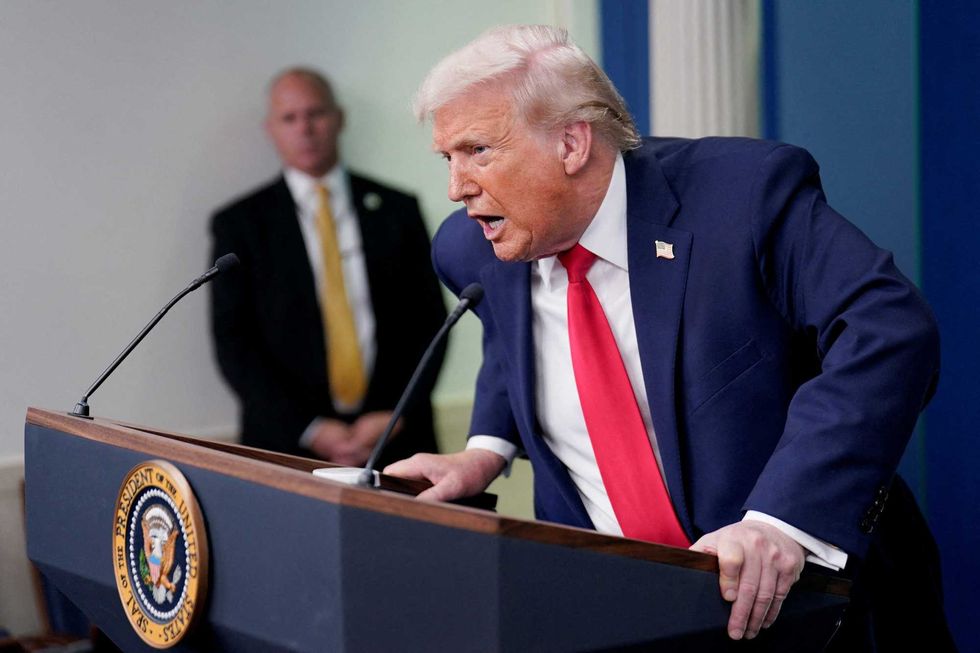
Trump is proof Founding Fathers were 'tragically wrong' about demagogues: conservative

Trump is proof Founding Fathers were 'tragically wrong' about demagogues: conservative

Conservative columnist Jennifer Rubin wrote on her Substack on Monday that the Founding Fathers were “laughably, tragically wrong” in trusting voters to not fall
Share
Alternet2026/02/17 06:32