Change is afoot in India’s finance sector – and Gulf institutions are biting. Last month Emirates NBD, Dubai’s largest lender by assets, said it was taking a 60 percent stake in RBL, a mid-tier Indian bank, and paying a hefty $3 billion. Emirates NBD has also been linked with Deutsche Bank’s network of 17 branches in India. Also […]Change is afoot in India’s finance sector – and Gulf institutions are biting. Last month Emirates NBD, Dubai’s largest lender by assets, said it was taking a 60 percent stake in RBL, a mid-tier Indian bank, and paying a hefty $3 billion. Emirates NBD has also been linked with Deutsche Bank’s network of 17 branches in India. Also […]

Why Gulf investors are snapping up Indian banks

2025/11/27 13:10
3 min read
For feedback or concerns regarding this content, please contact us at crypto.news@mexc.com

Change is afoot in India’s finance sector – and Gulf institutions are biting. Last month Emirates NBD, Dubai’s largest lender by assets, said it was taking a 60 percent stake in RBL, a mid-tier Indian bank, and paying a hefty $3 billion.

Emirates NBD has also been linked with Deutsche Bank’s network of 17 branches in India.

Also in October, Abu Dhabi’s International Holding Company bought a controlling stake in Sammaan Capital, a specialist mortgage lender, for a not trifling $1 billion.

More announcements are likely to be on the way. The Reserve Bank of India, the central bank, has let it be known that it is welcoming more foreign investment and wants to see bigger banks. Approvals come on a case-by-case basis – with a clear political tinge. Japanese, Canadian and Emirati investors are “in” for the moment while blue-chip status, deep pockets and local connections help.

IHC, for example, has a small stake in Adani Enterprises, controlled by Indian billionaire Gautam Adani.

DBS of Singapore, southeast Asia’s largest bank by assets, and Fairfax Financial, controlled by Canadian-Indian billionaire Prem Watsa, have also been allowed to invest.

In May, Sumitomo Mitsui Banking Corporation bought 20 percent of Yes Bank. Mitsubishi UFJ Financial Group, Japan’s largest lender, is also reported to be in acquisition talks.

Even US institutions are getting into the market, despite a trade deal remaining elusive. Scott Nuttall, the boss of KKR, said this month that the New York private equity giant’s assets in India – mainly in insurance and healthcare – were its best performing in Asia, along with Japan.

Emirates NBD’s investment has not met with universal approval, however. Our columnist Matein Khalid believes the UAE bank overpaid and wonders how it is going to compete with massive incumbents such as HDFC and ICICI – the latter has more than 7,000 branches.

“Frankly, I doubt that this is a banking marriage made in heaven,” Matein wrote.

But much has changed in India to benefit banks and others. The country is reaping the rewards of reforms instituted by Raghuram Rajan when he was governor of the RBI and of the pro-market Modi government.

Further reading:

  • Scrapping the UAE’s salary rule opens up credit access to millions
  • India’s JSW to invest $530m in Oman minerals project
  • Emirates NBD in talks to buy Deutsche Bank’s India retail business

In particular, the unified payments interface and the national company law tribunal, set up to hear corporate insolvencies and sideline India’s famously sclerotic legal system, are kicking in.

Non-performing loans were only 2.3 percent across 46 banks at the end of March, according to the RBI.

The Aadhaar ID card scheme means “know your customer” procedures can take a matter of minutes. This, in combination with the 2016 demonetisation when 500 and 1,000-rupee banknotes were taken off-market overnight, has boosted deposits.

Yes, the consumer side is a free-for-all. Yes, Deutsche’s apparent willingness to sell up in India is not positive and exiting can be a nightmare, as General Motors can testify. But the Modi administration still has gas in the tank, albeit perhaps polluted. The government has just pushed through GST 2.0, a rationalisation of the goods and services tax, and updated a bundle of labour laws in what some have described as the biggest overhaul in decades.

Three billion dollars is a lot to pay, but on a long-term horizon with growth aspirations the consideration is perhaps not so much. At any rate, financial institutions in the Arabian Gulf are along for the India ride.

Market Opportunity
ChangeX Logo
ChangeX Price(CHANGE)
$0.00111715
$0.00111715$0.00111715
0.00%
USD
ChangeX (CHANGE) Live Price Chart
Disclaimer: The articles reposted on this site are sourced from public platforms and are provided for informational purposes only. They do not necessarily reflect the views of MEXC. All rights remain with the original authors. If you believe any content infringes on third-party rights, please contact crypto.news@mexc.com for removal. MEXC makes no guarantees regarding the accuracy, completeness, or timeliness of the content and is not responsible for any actions taken based on the information provided. The content does not constitute financial, legal, or other professional advice, nor should it be considered a recommendation or endorsement by MEXC.

You May Also Like

Facts Vs. Hype: Analyst Examines XRP Supply Shock Theory

Facts Vs. Hype: Analyst Examines XRP Supply Shock Theory

Prominent analyst Cheeky Crypto (203,000 followers on YouTube) set out to verify a fast-spreading claim that XRP’s circulating supply could “vanish overnight,” and his conclusion is more nuanced than the headline suggests: nothing in the ledger disappears, but the amount of XRP that is truly liquid could be far smaller than most dashboards imply—small enough, in his view, to set the stage for an abrupt liquidity squeeze if demand spikes. XRP Supply Shock? The video opens with the host acknowledging his own skepticism—“I woke up to a rumor that XRP supply could vanish overnight. Sounds crazy, right?”—before committing to test the thesis rather than dismiss it. He frames the exercise as an attempt to reconcile a long-standing critique (“XRP’s supply is too large for high prices”) with a rival view taking hold among prominent community voices: that much of the supply counted as “circulating” is effectively unavailable to trade. His first step is a straightforward data check. Pulling public figures, he finds CoinMarketCap showing roughly 59.6 billion XRP as circulating, while XRPScan reports about 64.7 billion. The divergence prompts what becomes the video’s key methodological point: different sources count “circulating” differently. Related Reading: Analyst Sounds Major XRP Warning: Last Chance To Get In As Accumulation Balloons As he explains it, the higher on-ledger number likely includes balances that aggregators exclude or treat as restricted, most notably Ripple’s programmatic escrow. He highlights that Ripple still “holds a chunk of XRP in escrow, about 35.3 billion XRP locked up across multiple wallets, with a nominal schedule of up to 1 billion released per month and unused portions commonly re-escrowed. Those coins exist and are accounted for on-ledger, but “they aren’t actually sitting on exchanges” and are not immediately available to buyers. In his words, “for all intents and purposes, that escrow stash is effectively off of the market.” From there, the analysis moves from headline “circulating supply” to the subtler concept of effective float. Beyond escrow, he argues that large strategic holders—banks, fintechs, or other whales—may sit on material balances without supplying order books. When you strip out escrow and these non-selling stashes, he says, “the effective circulating supply… is actually way smaller than the 59 or even 64 billion figure.” He cites community estimates in the “20 or 30 billion” range for what might be truly liquid at any given moment, while emphasizing that nobody has a precise number. That effective-float framing underpins the crux of his thesis: a potential supply shock if demand accelerates faster than fresh sell-side supply appears. “Price is a dance between supply and demand,” he says; if institutional or sovereign-scale users suddenly need XRP and “the market finds that there isn’t enough XRP readily available,” order books could thin out and prices could “shoot on up, sometimes violently.” His phrase “circulating supply could collapse overnight” is presented not as a claim that tokens are destroyed or removed from the ledger, but as a market-structure scenario in which available inventory to sell dries up quickly because holders won’t part with it. How Could The XRP Supply Shock Happen? On the demand side, he anchors the hypothetical to tokenization. He points to the “very early stages of something huge in finance”—on-chain tokenization of debt, stablecoins, CBDCs and even gold—and argues the XRP Ledger aims to be “the settlement layer” for those assets.He references Ripple CTO David Schwartz’s earlier comments about an XRPL pivot toward tokenized assets and notes that an institutional research shop (Bitwise) has framed XRP as a way to play the tokenization theme. In his construction, if “trillions of dollars in value” begin settling across XRPL rails, working inventories of XRP for bridging, liquidity and settlement could rise sharply, tightening effective float. Related Reading: XRP Bearish Signal: Whales Offload $486 Million In Asset To illustrate, he offers two analogies. First, the “concert tickets” model: you think there are 100,000 tickets (100B supply), but 50,000 are held by the promoter (escrow) and 30,000 by corporate buyers (whales), leaving only 20,000 for the public; if a million people want in, prices explode. Second, a comparison to Bitcoin’s halving: while XRP has no programmatic halving, he proposes that a sudden adoption wave could function like a de facto halving of available supply—“XRP’s version of a halving could actually be the adoption event.” He also updates the narrative context that long dogged XRP. Once derided for “too much supply,” he argues the script has “totally flipped.” He cites the current cycle’s optics—“XRP is sitting above $3 with a market cap north of around $180 billion”—as evidence that raw supply counts did not cap price as tightly as critics claimed, and as a backdrop for why a scarcity narrative is gaining traction. Still, he declines to publish targets or timelines, repeatedly stressing uncertainty and risk. “I’m not a financial adviser… cryptocurrencies are highly volatile,” he reminds viewers, adding that tokenization could take off “on some other platform,” unfold more slowly than enthusiasts expect, or fail to get to “sudden shock” scale. The verdict he offers is deliberately bound. The theory that “XRP supply could vanish overnight” is imprecise on its face; the ledger will not erase coins. But after examining dashboard methodologies, escrow mechanics and the behavior of large holders, he concludes that the effective float could be meaningfully smaller than headline supply figures, and that a fast-developing tokenization use case could, under the right conditions, stress that float. “Overnight is a dramatic way to put it,” he concedes. “The change could actually be very sudden when it comes.” At press time, XRP traded at $3.0198. Featured image created with DALL.E, chart from TradingView.com
Share
NewsBTC2025/09/18 11:00
Shiba Inu Leader Breaks Silence on $2.4M Shibarium Exploit, Confirms Active Recovery
Shiba Inu Leader Breaks Silence on $2.4M Shibarium Exploit, Confirms Active Recovery

The lead developer of Shiba Inu, Shytoshi Kusama, has publicly addressed the Shibarium bridge exploit that occurred recently, draining $2.4 million from the network. After days of speculation about his involvement in managing the crisis, the project leader broke his silence.Kusama emphasized that a special ”war room” has been set up to restore stolen finances and enhance network security. The statement is his first official words since the bridge compromise occurred.”Although I am focusing on AI initiatives to benefit all our tokens, I remain with the developers and leadership in the war room,” Kusama posted on social media platform X. He dismissed claims that he had distanced himself from the project as ”utterly preposterous.”The developer said that the reason behind his silence at first was strategic. Before he could make any statements publicly, he must have taken time to evaluate what he termed a complex and deep situation properly. Kusama also vowed to provide further updates in the official Shiba Inu channels as the team comes up with long-term solutions.Attack Details and Immediate ResponseAs highlighted in our previous article, targeted Shibarium's bridge infrastructure through a sophisticated attack vector. Hackers gained unauthorized access to validator signing keys, compromising the network's security framework.The hackers executed a flash loan to acquire 4.6 million BONE ShibaSwap tokens. The validator power on the network was majority held by them after this purchase. They were able to transfer assets out of Shibarium with this control.The response of Shibarium developers was timely to limit the breach. They instantly halted all validator functions in order to avoid additional exploitation. The team proceeded to deposit the assets under staking in a multisig hardware wallet that is secure.External security companies were involved in the investigation effort. Hexens, Seal 911, and PeckShield are collaborating with internal developers to examine the attack and discover vulnerabilities.The project's key concerns are network stability and the protection of user funds, as underlined by the lead developer, Dhairya. The team is working around the clock to restore normal operations.In an effort to recover the funds, Shiba Inu has offered a bounty worth 5 Ether ($23,000) to the hackers. The bounty offer includes a 30-day deadline with decreasing rewards after seven days.Market Impact and Recovery IncentivesThe exploit caused serious volatility in the marketplace of Shiba Inu ecosystem tokens. SHIB dropped about 6% after the news of the attack. However, The token has bounced back and is currently trading at around $0.00001298 at the time of writing.SHIB Price Source CoinMarketCap
Share
Coinstats2025/09/18 02:25
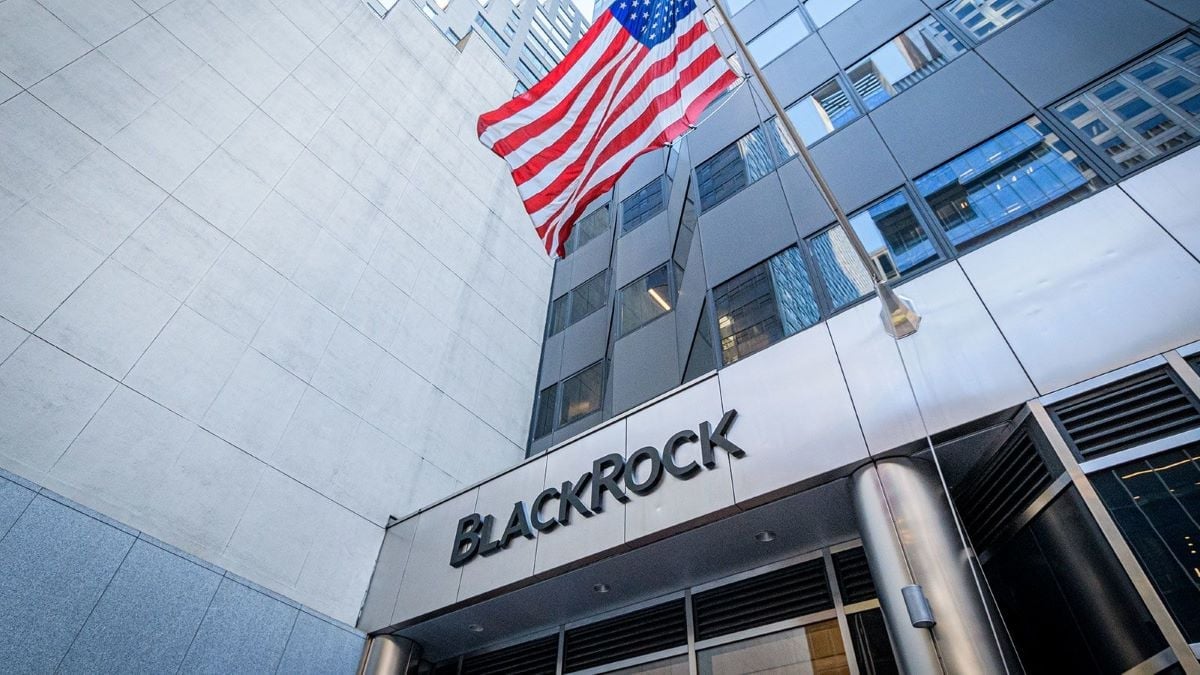
BlackRock and Marvel Studios Acquire Big Stakes in Mutual Capital

BlackRock and Marvel Studios Acquire Big Stakes in Mutual Capital

BlackRock and Marvel Studios acquire major stakes in Mutual Capital, boosting its role as a leader in asset tokenization.]]>
Share
Crypto News Flash2025/09/18 17:10