What to Know: Bitcoin loans mark a shift from passive holding to active $BTC deployment, broadening access and reinforcing Bitcoin’s monetary role.  Active $BTC lending can tighten liquidity loops: more collateralization, deeper markets, and stronger institutional incentives to hold $BTC.  Bitcoin Hyper aims to make $BTC fast and programmable via an SVM-based Layer 2 with ZK settlement to Bitcoin.  $HYPER’s strong presale momentum and large whale purchases fit perfectly into the current $BTC-focused cycle – one that’s fueled by real utility rather than pure hype. A Canadian Bitcoin-native company just issued its first Bitcoin-backed loan. That’s not a small tweak to the status quo. It’s a signal that $BTC is edging from ‘digital gold’ into an active financial asset, one that non-crypto users can finally access through a familiar product: lending. The firm’s goal is simple: accumulate $BTC and deploy it productively, yet the implication is big. More ways to borrow and build with Bitcoin usually mean stronger demand, deeper liquidity, and a broader user funnel. This design shift matters because utility beats narrative over a full cycle. Loans let institutions put idle $BTC to work and give businesses a way to leverage $BTC without selling it. The feedback loop is obvious: lending platforms attract borrowers, borrowers source $BTC, hodlers see new yield paths, and liquidity improves for everyone. Every service that treats $BTC as collateral, rather than a speculative asset, boosts its monetary credibility. That sets a timely backdrop for Bitcoin Hyper ($HYPER), a $BTC-centric Layer 2 project built to make Bitcoin fast, programmable, and dApp-ready, and one many investors are already eyeing as the next 1000x crypto. If Bitcoin is stepping into mainstream finance, a chain that bridges $BTC into high-throughput smart contracts sits right in the slipstream. Bitcoin Hyper ($HYPER) Turns $BTC Into A High-Speed, Programmable Asset Bitcoin Hyper ($HYPER) proposes a Bitcoin Layer-2 that uses an SVM-based execution environment, canonical bridging, and ZK proofs to move $BTC at near-instant speed with low fees. The aim is to retain Bitcoin-grade security while unlocking staking, DeFi, and on-chain apps for $BTC itself. This approach directly addresses a pain point that lending alone can’t solve: throughput and programmability on Bitcoin. If loans expand demand for $BTC as collateral, a performant L2 expands what that collateral can actually do. The flow is straightforward. Users bridge $BTC, transact on Layer 2 with high throughput, then periodically settle back to Bitcoin L1 with cryptographic proofs. In practice, that means cheaper payments, faster markets, and room for dApps that rely on programmability without compromising the trust people expect from Bitcoin. The more services reference $BTC, like the newly launched loans, the more a generalized execution layer becomes useful for builders who prefer to stay within the Bitcoin ecosystem rather than porting value elsewhere. Utility also needs clear developer pathways. The $HYPER whitepaper emphasizes developer experience, observability, and infrastructure, enabling teams to ship quickly. If the project can make building on $BTC feel familiar to teams used to modern VM stacks, it lowers switching costs and accelerates innovation. That’s the kind of narrative institutions understand: faster rails, safer settlement, and broader use cases. Get on the $HYPER train before it’s too late.  Presale Momentum Meets A $BTC Lending Tailwind Momentum is real. The Bitcoin Hyper presale has reached $26.9M, and you can buy $HYPER right now for just $0.013265. That’s a solid show of demand for a $BTC-first L2 at a time when Bitcoin’s financialization is visibly accelerating. If lending adoption widens the $BTC gateway, $BTC-native infrastructure stands to benefit directly. On-chain activity adds another datapoint. A recent transaction sent about 63.8 ETH, roughly $226K, into the presale contract, resulting in a transfer of 16.8M HYPER. While one whale doesn’t define a market, large buyers usually do their homework and often act as early liquidity. That fits the pattern of growing presale participation and the broader rotation toward $BTC-aligned narratives. What does the $HYPER price prediction look like in simple terms? Using the current price as a base, a year-end 2025 target of $0.02595 implies roughly 1.96x from here if the team delivers core milestones and listings. A 2026 scenario at $0.08625 would be about 6.51x if the DAO and incentive programs mature as planned. As Bitcoin-backed lending marks a new phase in $BTC’s financial integration, Bitcoin Hyper stands out as the infrastructure built to support that momentum. With its Layer 2 approach and growing presale, $HYPER could play a key role in turning the latest Bitcoin lending headlines into lasting on-chain utility. This article is for informational purposes only and doesn’t constitute financial advice. Always do your own research (DYOR) before investing in crypto. Authored by Aaron Walker, NewsBTC – https://www.newsbtc.com/news/bitcoin-loans-usher-in-a-new-btc-era-bitcoin-hyper-tipped-as-the-next-1000x-cryptoWhat to Know: Bitcoin loans mark a shift from passive holding to active $BTC deployment, broadening access and reinforcing Bitcoin’s monetary role.  Active $BTC lending can tighten liquidity loops: more collateralization, deeper markets, and stronger institutional incentives to hold $BTC.  Bitcoin Hyper aims to make $BTC fast and programmable via an SVM-based Layer 2 with ZK settlement to Bitcoin.  $HYPER’s strong presale momentum and large whale purchases fit perfectly into the current $BTC-focused cycle – one that’s fueled by real utility rather than pure hype. A Canadian Bitcoin-native company just issued its first Bitcoin-backed loan. That’s not a small tweak to the status quo. It’s a signal that $BTC is edging from ‘digital gold’ into an active financial asset, one that non-crypto users can finally access through a familiar product: lending. The firm’s goal is simple: accumulate $BTC and deploy it productively, yet the implication is big. More ways to borrow and build with Bitcoin usually mean stronger demand, deeper liquidity, and a broader user funnel. This design shift matters because utility beats narrative over a full cycle. Loans let institutions put idle $BTC to work and give businesses a way to leverage $BTC without selling it. The feedback loop is obvious: lending platforms attract borrowers, borrowers source $BTC, hodlers see new yield paths, and liquidity improves for everyone. Every service that treats $BTC as collateral, rather than a speculative asset, boosts its monetary credibility. That sets a timely backdrop for Bitcoin Hyper ($HYPER), a $BTC-centric Layer 2 project built to make Bitcoin fast, programmable, and dApp-ready, and one many investors are already eyeing as the next 1000x crypto. If Bitcoin is stepping into mainstream finance, a chain that bridges $BTC into high-throughput smart contracts sits right in the slipstream. Bitcoin Hyper ($HYPER) Turns $BTC Into A High-Speed, Programmable Asset Bitcoin Hyper ($HYPER) proposes a Bitcoin Layer-2 that uses an SVM-based execution environment, canonical bridging, and ZK proofs to move $BTC at near-instant speed with low fees. The aim is to retain Bitcoin-grade security while unlocking staking, DeFi, and on-chain apps for $BTC itself. This approach directly addresses a pain point that lending alone can’t solve: throughput and programmability on Bitcoin. If loans expand demand for $BTC as collateral, a performant L2 expands what that collateral can actually do. The flow is straightforward. Users bridge $BTC, transact on Layer 2 with high throughput, then periodically settle back to Bitcoin L1 with cryptographic proofs. In practice, that means cheaper payments, faster markets, and room for dApps that rely on programmability without compromising the trust people expect from Bitcoin. The more services reference $BTC, like the newly launched loans, the more a generalized execution layer becomes useful for builders who prefer to stay within the Bitcoin ecosystem rather than porting value elsewhere. Utility also needs clear developer pathways. The $HYPER whitepaper emphasizes developer experience, observability, and infrastructure, enabling teams to ship quickly. If the project can make building on $BTC feel familiar to teams used to modern VM stacks, it lowers switching costs and accelerates innovation. That’s the kind of narrative institutions understand: faster rails, safer settlement, and broader use cases. Get on the $HYPER train before it’s too late.  Presale Momentum Meets A $BTC Lending Tailwind Momentum is real. The Bitcoin Hyper presale has reached $26.9M, and you can buy $HYPER right now for just $0.013265. That’s a solid show of demand for a $BTC-first L2 at a time when Bitcoin’s financialization is visibly accelerating. If lending adoption widens the $BTC gateway, $BTC-native infrastructure stands to benefit directly. On-chain activity adds another datapoint. A recent transaction sent about 63.8 ETH, roughly $226K, into the presale contract, resulting in a transfer of 16.8M HYPER. While one whale doesn’t define a market, large buyers usually do their homework and often act as early liquidity. That fits the pattern of growing presale participation and the broader rotation toward $BTC-aligned narratives. What does the $HYPER price prediction look like in simple terms? Using the current price as a base, a year-end 2025 target of $0.02595 implies roughly 1.96x from here if the team delivers core milestones and listings. A 2026 scenario at $0.08625 would be about 6.51x if the DAO and incentive programs mature as planned. As Bitcoin-backed lending marks a new phase in $BTC’s financial integration, Bitcoin Hyper stands out as the infrastructure built to support that momentum. With its Layer 2 approach and growing presale, $HYPER could play a key role in turning the latest Bitcoin lending headlines into lasting on-chain utility. This article is for informational purposes only and doesn’t constitute financial advice. Always do your own research (DYOR) before investing in crypto. Authored by Aaron Walker, NewsBTC – https://www.newsbtc.com/news/bitcoin-loans-usher-in-a-new-btc-era-bitcoin-hyper-tipped-as-the-next-1000x-crypto

Bitcoin Loans Usher In a New BTC Era – Bitcoin Hyper Tipped as the Next 1000x Crypto

2025/11/13 00:35
4 min read

What to Know:

  • Bitcoin loans mark a shift from passive holding to active $BTC deployment, broadening access and reinforcing Bitcoin’s monetary role. 
  • Active $BTC lending can tighten liquidity loops: more collateralization, deeper markets, and stronger institutional incentives to hold $BTC. 
  • Bitcoin Hyper aims to make $BTC fast and programmable via an SVM-based Layer 2 with ZK settlement to Bitcoin. 
  • $HYPER’s strong presale momentum and large whale purchases fit perfectly into the current $BTC-focused cycle – one that’s fueled by real utility rather than pure hype.

A Canadian Bitcoin-native company just issued its first Bitcoin-backed loan.

That’s not a small tweak to the status quo. It’s a signal that $BTC is edging from ‘digital gold’ into an active financial asset, one that non-crypto users can finally access through a familiar product: lending.

The firm’s goal is simple: accumulate $BTC and deploy it productively, yet the implication is big.

More ways to borrow and build with Bitcoin usually mean stronger demand, deeper liquidity, and a broader user funnel.

This design shift matters because utility beats narrative over a full cycle. Loans let institutions put idle $BTC to work and give businesses a way to leverage $BTC without selling it.

The feedback loop is obvious: lending platforms attract borrowers, borrowers source $BTC, hodlers see new yield paths, and liquidity improves for everyone.

Every service that treats $BTC as collateral, rather than a speculative asset, boosts its monetary credibility.

That sets a timely backdrop for Bitcoin Hyper ($HYPER), a $BTC-centric Layer 2 project built to make Bitcoin fast, programmable, and dApp-ready, and one many investors are already eyeing as the next 1000x crypto.

If Bitcoin is stepping into mainstream finance, a chain that bridges $BTC into high-throughput smart contracts sits right in the slipstream.

Bitcoin Hyper ($HYPER) Turns $BTC Into A High-Speed, Programmable Asset

Bitcoin Hyper ($HYPER) proposes a Bitcoin Layer-2 that uses an SVM-based execution environment, canonical bridging, and ZK proofs to move $BTC at near-instant speed with low fees.

The aim is to retain Bitcoin-grade security while unlocking staking, DeFi, and on-chain apps for $BTC itself.

This approach directly addresses a pain point that lending alone can’t solve: throughput and programmability on Bitcoin. If loans expand demand for $BTC as collateral, a performant L2 expands what that collateral can actually do.

The flow is straightforward. Users bridge $BTC, transact on Layer 2 with high throughput, then periodically settle back to Bitcoin L1 with cryptographic proofs.

In practice, that means cheaper payments, faster markets, and room for dApps that rely on programmability without compromising the trust people expect from Bitcoin.

The more services reference $BTC, like the newly launched loans, the more a generalized execution layer becomes useful for builders who prefer to stay within the Bitcoin ecosystem rather than porting value elsewhere.

Utility also needs clear developer pathways. The $HYPER whitepaper emphasizes developer experience, observability, and infrastructure, enabling teams to ship quickly.

If the project can make building on $BTC feel familiar to teams used to modern VM stacks, it lowers switching costs and accelerates innovation.

That’s the kind of narrative institutions understand: faster rails, safer settlement, and broader use cases.

Get on the $HYPER train before it’s too late. 

Presale Momentum Meets A $BTC Lending Tailwind

Momentum is real. The Bitcoin Hyper presale has reached $26.9M, and you can buy $HYPER right now for just $0.013265.

That’s a solid show of demand for a $BTC-first L2 at a time when Bitcoin’s financialization is visibly accelerating. If lending adoption widens the $BTC gateway, $BTC-native infrastructure stands to benefit directly.

On-chain activity adds another datapoint. A recent transaction sent about 63.8 ETH, roughly $226K, into the presale contract, resulting in a transfer of 16.8M HYPER.

While one whale doesn’t define a market, large buyers usually do their homework and often act as early liquidity. That fits the pattern of growing presale participation and the broader rotation toward $BTC-aligned narratives.

What does the $HYPER price prediction look like in simple terms? Using the current price as a base, a year-end 2025 target of $0.02595 implies roughly 1.96x from here if the team delivers core milestones and listings.

A 2026 scenario at $0.08625 would be about 6.51x if the DAO and incentive programs mature as planned.

As Bitcoin-backed lending marks a new phase in $BTC’s financial integration, Bitcoin Hyper stands out as the infrastructure built to support that momentum.

With its Layer 2 approach and growing presale, $HYPER could play a key role in turning the latest Bitcoin lending headlines into lasting on-chain utility.

This article is for informational purposes only and doesn’t constitute financial advice. Always do your own research (DYOR) before investing in crypto.

Authored by Aaron Walker, NewsBTC – https://www.newsbtc.com/news/bitcoin-loans-usher-in-a-new-btc-era-bitcoin-hyper-tipped-as-the-next-1000x-crypto 

Market Opportunity
Bitcoin Logo
Bitcoin Price(BTC)
$70,178.54
$70,178.54$70,178.54
+2.26%
USD
Bitcoin (BTC) Live Price Chart
Disclaimer: The articles reposted on this site are sourced from public platforms and are provided for informational purposes only. They do not necessarily reflect the views of MEXC. All rights remain with the original authors. If you believe any content infringes on third-party rights, please contact service@support.mexc.com for removal. MEXC makes no guarantees regarding the accuracy, completeness, or timeliness of the content and is not responsible for any actions taken based on the information provided. The content does not constitute financial, legal, or other professional advice, nor should it be considered a recommendation or endorsement by MEXC.

You May Also Like

Cashing In On University Patents Means Giving Up On Our Innovation Future

Cashing In On University Patents Means Giving Up On Our Innovation Future

The post Cashing In On University Patents Means Giving Up On Our Innovation Future appeared on BitcoinEthereumNews.com. “It’s a raid on American innovation that would deliver pennies to the Treasury while kneecapping the very engine of our economic and medical progress,” writes Pipes. Getty Images Washington is addicted to taxing success. Now, Commerce Secretary Howard Lutnick is floating a plan to skim half the patent earnings from inventions developed at universities with federal funding. It’s being sold as a way to shore up programs like Social Security. In reality, it’s a raid on American innovation that would deliver pennies to the Treasury while kneecapping the very engine of our economic and medical progress. Yes, taxpayer dollars support early-stage research. But the real payoff comes later—in the jobs created, cures discovered, and industries launched when universities and private industry turn those discoveries into real products. By comparison, the sums at stake in patent licensing are trivial. Universities collectively earn only about $3.6 billion annually in patent income—less than the federal government spends on Social Security in a single day. Even confiscating half would barely register against a $6 trillion federal budget. And yet the damage from such a policy would be anything but trivial. The true return on taxpayer investment isn’t in licensing checks sent to Washington, but in the downstream economic activity that federally supported research unleashes. Thanks to the bipartisan Bayh-Dole Act of 1980, universities and private industry have powerful incentives to translate early-stage discoveries into real-world products. Before Bayh-Dole, the government hoarded patents from federally funded research, and fewer than 5% were ever licensed. Once universities could own and license their own inventions, innovation exploded. The result has been one of the best returns on investment in government history. Since 1996, university research has added nearly $2 trillion to U.S. industrial output, supported 6.5 million jobs, and launched more than 19,000 startups. Those companies pay…
Share
BitcoinEthereumNews2025/09/18 03:26
China Blocks Nvidia’s RTX Pro 6000D as Local Chips Rise
China Blocks Nvidia’s RTX Pro 6000D as Local Chips Rise

The post China Blocks Nvidia’s RTX Pro 6000D as Local Chips Rise appeared on BitcoinEthereumNews.com. China Blocks Nvidia’s RTX Pro 6000D as Local Chips Rise China’s internet regulator has ordered the country’s biggest technology firms, including Alibaba and ByteDance, to stop purchasing Nvidia’s RTX Pro 6000D GPUs. According to the Financial Times, the move shuts down the last major channel for mass supplies of American chips to the Chinese market. Why Beijing Halted Nvidia Purchases Chinese companies had planned to buy tens of thousands of RTX Pro 6000D accelerators and had already begun testing them in servers. But regulators intervened, halting the purchases and signaling stricter controls than earlier measures placed on Nvidia’s H20 chip. Image: Nvidia An audit compared Huawei and Cambricon processors, along with chips developed by Alibaba and Baidu, against Nvidia’s export-approved products. Regulators concluded that Chinese chips had reached performance levels comparable to the restricted U.S. models. This assessment pushed authorities to advise firms to rely more heavily on domestic processors, further tightening Nvidia’s already limited position in China. China’s Drive Toward Tech Independence The decision highlights Beijing’s focus on import substitution — developing self-sufficient chip production to reduce reliance on U.S. supplies. “The signal is now clear: all attention is focused on building a domestic ecosystem,” said a representative of a leading Chinese tech company. Nvidia had unveiled the RTX Pro 6000D in July 2025 during CEO Jensen Huang’s visit to Beijing, in an attempt to keep a foothold in China after Washington restricted exports of its most advanced chips. But momentum is shifting. Industry sources told the Financial Times that Chinese manufacturers plan to triple AI chip production next year to meet growing demand. They believe “domestic supply will now be sufficient without Nvidia.” What It Means for the Future With Huawei, Cambricon, Alibaba, and Baidu stepping up, China is positioning itself for long-term technological independence. Nvidia, meanwhile, faces…
Share
BitcoinEthereumNews2025/09/18 01:37
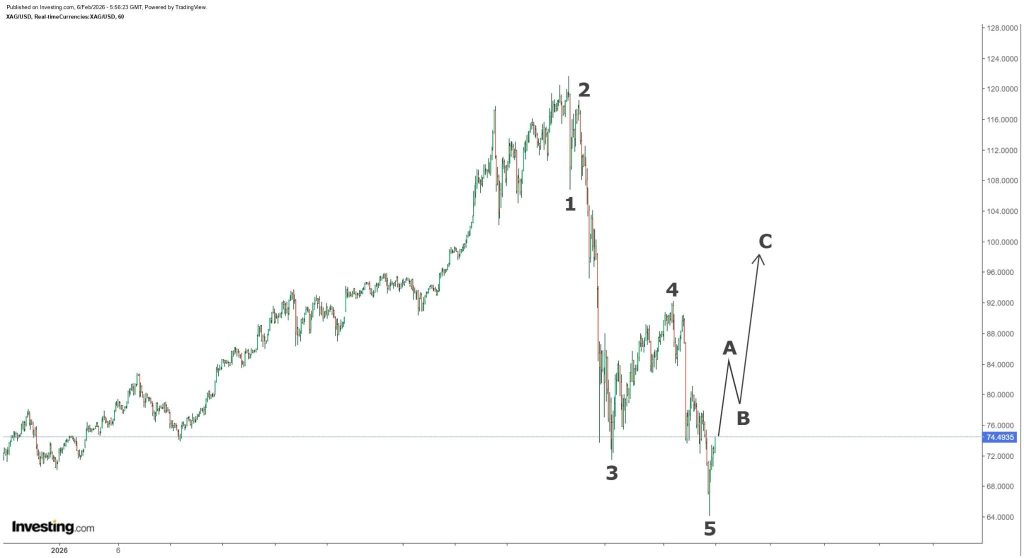
Silver Price Crash Is Over “For Real This Time,” Analyst Predicts a Surge Back Above $90

Silver Price Crash Is Over “For Real This Time,” Analyst Predicts a Surge Back Above $90

Silver has been taking a beating lately, and the Silver price hasn’t exactly been acting like a safe haven. After running up into the highs, the whole move reversed
Share
Captainaltcoin2026/02/07 03:15