In the context of yield compression and bear market in the crypto market, how can investors manage risks and adjust strategies to avoid falling into the trap of blindly chasing returns.In the context of yield compression and bear market in the crypto market, how can investors manage risks and adjust strategies to avoid falling into the trap of blindly chasing returns.

A practical guide to surviving a bear market: How to avoid the yield trap?

2025/04/07 14:30
4 min read

Author: Santisa , Crypto KOL

Compiled by: Felix, PANews

Before starting the content of this article, let’s take a look at the following story (or reality).

A “never-ending” list of tariffs was announced. Then the market crashed and altcoins collapsed.

Your original low-risk "mine" yield has dropped from 30% to near the level of a Treasury bill (note: T-bill, a short-term debt security issued by the government).

This is unacceptable to you. You originally planned to retire with $300,000, and the annual "mining" income is $90,000. Therefore, the rate of return must be high.

So you start moving down the risk curve, chasing imaginary levels of return that the market would favor you.

You traded your blue chip for an unknown new project; you increased your yield by deploying your assets into a riskier new fixed-term protocol or AMM. You started to feel secretly proud.

After a few weeks, you start to question why you were so risk-averse in the first place. This was apparently a “safe and sure” way to make money.

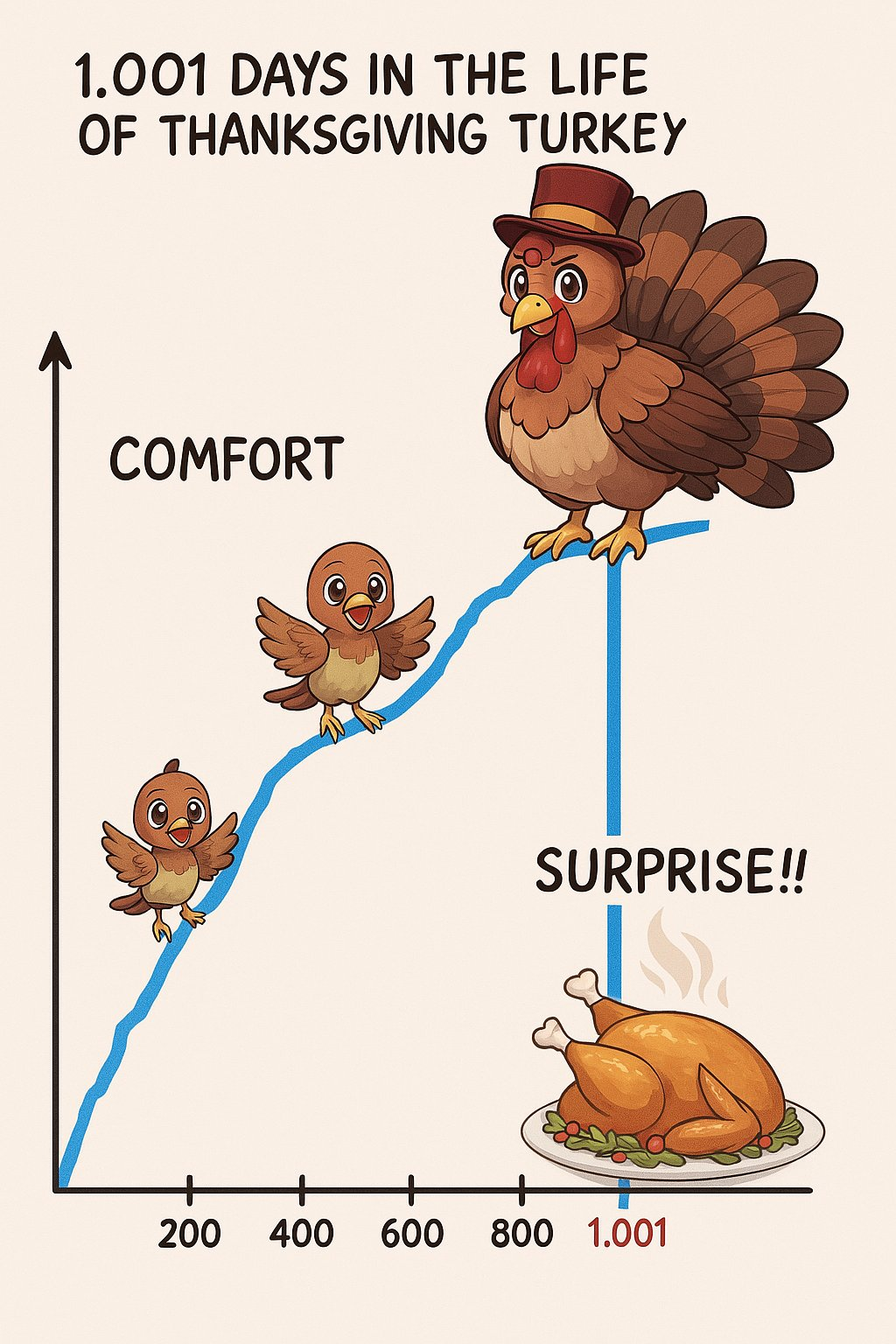
Then, the surprise came.
A practical guide to surviving a bear market: How to avoid the yield trap?

The custodial, leveraged, L2 wrapped, ultra-liquid foundational trading project you entrusted your life savings to collapsed, and now you have lost 70% of your PT-shitUSD-27AUG2025. You got some vested governance tokens, and a few months later the project was abandoned.

Although this story is exaggerated, it reflects the reality that has been played out many times during bear market when yields are compressed. Based on this, this article will try to provide a manual on how to survive a yield bear market.

As people try to adjust to the new reality, in the face of a market crash, they increase risk to make up for the difference in returns, while ignoring the potential costs of these decisions.

Market neutral investors are also speculators whose advantage is to find unadjusted interest rates. Unlike their directional trading partners, these speculators face only two outcomes: either making a little money every day or losing a lot of money all at once.

I personally believe that the neutral rate in the crypto market will be seriously misaligned on the way up, providing an alpha that is higher than its true risk, but the opposite is true on the way down, providing returns below the risk-free rate (RFR) while taking on a lot of risk.

Obviously, there is a time to take risks and a time to avoid them. Those who fail to see this will become someone else's "Thanksgiving dinner".

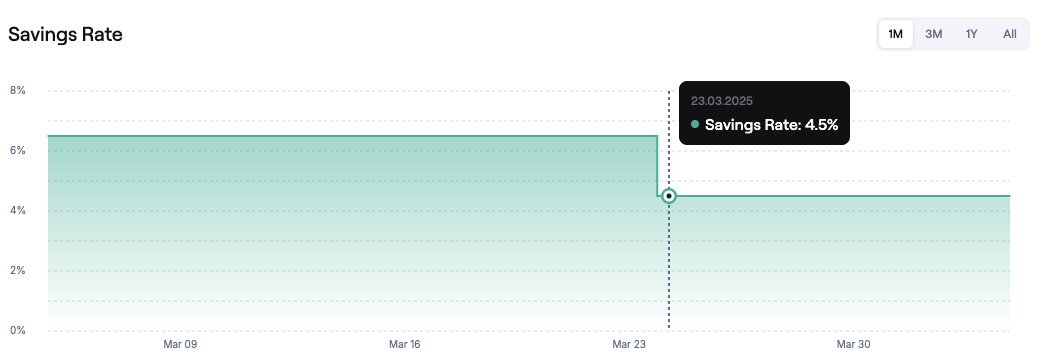
For example, at the time of writing, AAVE’s USDC yield is 2.7% and sUSDS yields 4.5%.

  • AAVE USDC bears 60% of the RFR and also assumes smart contract, oracle, custody and financial risks.

A practical guide to surviving a bear market: How to avoid the yield trap?

 source
  • Maker incurs fees 25 basis points above the RFR while taking on the risks of smart contracts, custody, and actively investing in higher-risk projects.
A practical guide to surviving a bear market: How to avoid the yield trap?

 source

When analyzing the interest rates of DeFi market-neutral investments, you need to consider:

  • Custody Risk
  • Financial risks
  • Smart Contract Risks
  • Risk-free rate

You can assign an annual risk percentage to each risk, add the RFR, and arrive at the required "risk-adjusted return" for each investment opportunity. Anything above that rate is alpha, and anything below that rate is not alpha.

Maker’s required risk-adjusted return was calculated a while ago and came up with a fair compensation of 9.56%.

Maker’s interest rate is currently around 4.5%.

Both AAVE and Maker hold secondary capital (~1% of total deposits), but even with significant insurance, yields below the RFR should not be acceptable to depositors.

In the age of Blackroll T-bills and regulated on-chain issuers, this is the result of laziness, lost keys, and stupid money.

So what to do? It depends on your size.

If you have a smaller portfolio (less than $5 million), there are still attractive options. Check out the safer protocols for all-chain deployments; they often offer incentives on lesser-known chains with lower TVL, or do some base trading on high-yield, low-liquidity perpetual contracts.

If you have a large sum of money (over $20 million):

Buy short-term Treasuries and wait and see. Favorable market conditions will eventually return. You can also search for OTC exchanges; quite a few projects are still looking around for TVL and are willing to significantly dilute their holders.

If you have LPs, let them know this and even ask them to exit. On-chain treasuries are still lower than real trading. Don't get carried away by the unadjusted risk-return. Good opportunities are obvious. Keep it simple and avoid greed. You should be here for the long term and manage your risk-return properly; if not, the market will figure it out for you.

Related reading: Comprehensive data analysis of the capital flows behind the trillion-dollar growth of stablecoins. If altcoins did not rise, where did the money go?


Disclaimer: The articles reposted on this site are sourced from public platforms and are provided for informational purposes only. They do not necessarily reflect the views of MEXC. All rights remain with the original authors. If you believe any content infringes on third-party rights, please contact service@support.mexc.com for removal. MEXC makes no guarantees regarding the accuracy, completeness, or timeliness of the content and is not responsible for any actions taken based on the information provided. The content does not constitute financial, legal, or other professional advice, nor should it be considered a recommendation or endorsement by MEXC.

You May Also Like

SEC Approves Generic ETF Standards for Digital Assets Market

SEC Approves Generic ETF Standards for Digital Assets Market

The United States Securities and Exchange Commission (SEC) has approved new rules for listing Commodity-Based Trust Shares, which now cover digital assets, including cryptocurrencies. The decision will now make it easier and faster for exchange-traded funds (ETFs) to get approved, allowing for more assets beyond just Bitcoin and Ethereum, while still protecting investors.  This recently announced action, under the leadership of Chairman Paul Atkins, represents a shift from previous approaches, making the market more transparent and more attractive to investors. SEC’s Landmark Rule Change The SEC’s new rules apply to major stock exchanges like Nasdaq, NYSE Arca, and Cboe BZX. These rules enable the listing and trading of exchange-traded funds (ETFs) and other similar products that hold real commodities, including digital assets, without requiring separate approval for each one. Qualifying security products can now be approved more quickly under Rule 19b-4(e). If specific requirements are met, the approval process can be completed in as little as 75 days. This method involves rigorous market monitoring, strict custody rules, and enhanced disclosures. To qualify for the faster process, a digital asset must be traded on a regulated market and should have at least six months of trading history on a designated futures market. Alternatively, it can be part of an existing ETF with at least 40% of its net asset value (NAV) in that asset. Impact on Digital Assets Market The change is essential because it shows that the SEC is being less cautious about crypto ETFs. In the past, the SEC took a long time to review these products because it was worried about market manipulation and wanted to protect investors. Now, new general standards will allow more crypto products to be approved without needing individual reviews for each one. The U.S. is moving closer to the European Union’s MiCA framework and Hong Kong’s crypto licensing rules. The shift will help to strengthen the U.S.’s role in regulating digital assets. Under Chairman Paul Atkins, the government has made it easier for investors in the crypto space by lowering regulatory hurdles. For example, earlier this month, in July, the SEC provided clear rules about what must be disclosed for crypto exchange-traded products. This guidance clarifies how federal securities laws apply, encouraging innovation while remaining compliant.  These actions, under Atkins’ leadership, represent a shift from previous approaches, making the market more transparent and more attractive for investors. The post SEC Approves Generic ETF Standards for Digital Assets Market appeared first on Cointab.
Share
Coinstats2025/09/18 15:24
MemeCon 2025: A Gala Night for Web3 Culture & Creativity in Singapore

MemeCon 2025: A Gala Night for Web3 Culture & Creativity in Singapore

The post MemeCon 2025: A Gala Night for Web3 Culture & Creativity in Singapore appeared on BitcoinEthereumNews.com. Singapore, September 29, 2025 – MemeCon is back to celebrate the power of creativity, culture, and humor in shaping Web3. Sponsored by the Global Blockchain Show, and powered by CryptoMoonPress, MemeCon transforms memes into cultural drivers and community-building tools. MemeCon is not just another conference. It is a movement where creators, marketers, and brands come together to explore how memes can influence markets, create identities, and spark conversations across the decentralized space. Past editions, including Meme Frenzy 2024, have proven that memes are much more than fleeting viral entertainment. In fact, they are tools of influence. This year’s event will feature panels, keynotes, and community-driven showcases. Attendees will experience how memes fuel engagement, strengthen communities, and transform crypto culture into a shared language. What makes MemeCon unique is its ability to elevate meme creators into cultural leaders. It goes beyond being one-off campaigns, and is about long-term storytelling and community engagement. From live activations to viral collaborations, MemeCon provides the platform where creative energy meets Web3 innovation. Who can join MemeCon: Web3 creators, marketers, and community builders NFT projects, DeFi teams, and crypto startups Influencers, KOLs, and social media strategists MemeCon envisions a world where memes shape the cultural heartbeat of Web3. By attending, participants gain access to a unique community that blends humor with innovation, where memes can move both markets and minds. Join us in Singapore for MemeCon where memes become movements and creativity leads connection. Venue: Guoco Midtown, Singapore Contact: [email protected] Disclaimer: The information presented in this article is part of a sponsored/press release/paid content, intended solely for promotional purposes. Readers are advised to exercise caution and conduct their own research before taking any action related to the content on this page or the company. Coin Edition is not responsible for any losses or damages incurred as a…
Share
BitcoinEthereumNews2025/09/19 16:03
Victra Named 2025 Recipient of Verizon’s Best Build Compliance Award

Victra Named 2025 Recipient of Verizon’s Best Build Compliance Award

Verizon Recognizes Victra for Industry-Leading Excellence in Store Design and Brand Compliance. RALEIGH, N.C., Feb. 3, 2026 /PRNewswire/ — Verizon has named Victra
Share
AI Journal2026/02/03 20:49