By BowTied Bull Compiled by: Vernacular Blockchain Throughout history, these dramatic booms and busts are nothing new. The only difference is that now, with the internet, these events are detected and amplified in seconds. Some people have assets exceeding $30 million and ended up with nothing. You know who else went bust? Isaac Newton—in the famous South Sea Bubble. A Game of Attrition – Avoiding Zero We can apply this to everything. People give up by the time they turn 25, indulging in cheap alcohol and shots from the bar. They work hard at their startup for three months at most before settling for annual salary increases that barely keep up with inflation. This even applies to dating. Most men either let things slide or refuse to venture abroad to find their ideal type (usually an attractive foreigner). In short, life isn't a sprint. While you'll experience huge step-up leaps, the foundation is laid during those seemingly steady months or even years. It's a long, brutal race of attrition (think of those boring games on the TV show "Survivor" where the only thing you have to do is stand still on a pole). It's a test of who can stand firm while others burn out, quit, or self-destruct. What's the difference between this game and those TV shows? You never have to go back to zero. You might have a bad year, month, or quarter. But that's okay. As long as you never go back to zero, there's no financial reset. There's an unwritten rule in every game worth playing (business, investing, fitness, relationships, etc.): The winner isn't the fastest or strongest runner in a given year, but the one who survives a decade of ever-changing circumstances. Recent crashes There are so many stories like this. How many of you have forgotten the following: 1) Sam Bankman-Fried—a thirty-year-old billionaire who ran one of the most profitable trading platforms at the time. His greed led him to embezzle client funds, ultimately leading to bankruptcy and imprisonment. 2) Do Kwon—who once ridiculously declared, "Hold on, guys, we're putting in more money," but actually doubled down on his Ponzi scheme and ultimately went bankrupt. 3) Long-Term Capital Management—a fund literally founded by a Nobel Prize winner. An overly leveraged bet at the wrong time? Goodbye. Even Isaac Newton lost his mind during the South Sea Bubble. After selling early for a profit, he reentered the market (at its peak) out of jealousy. He lamented, "I can calculate the motions of the heavenly bodies... but not the madness of human nature." It's a lesson that's been repeated for centuries. The plot is the same, the technology changes, but the outcome is exactly the same: greed, leverage, and an inability to stay in the game. The smartest people in the world have gotten so caught up in their own complex models that they forget that markets are driven by emotional humans, not numbers. The core strategy is a war of attrition: a game that rewards those who can overcome their own psychological weaknesses. For decades, Buffett has been mocked as "boring." He underperforms during manias, consistently buying things no one wants. Yet, he remains viable. His empire compounds relentlessly because he has only one rule: don't lose money. While we'd never ask him for technical advice, his strategy is conceptually sound. All you have to do is stay in the game and refuse to sell at a loss (which requires thorough research, a "diamond hand" of determination, and zero leverage—the interest alone can cause you to lose money). Jeff Bezos did the same thing. He raised $1 million by selling less than 20% of his company. He could have sold more, but he wanted to maintain control—stay in the game. It proved to be the smartest decision he ever made. Through the dot-com bust and years of heated board meetings, he remained firmly in control. By trading greed for endurance, he ultimately created an empire (Amazon) valued at over a trillion dollars. Elon Musk has been through this, too. He's not the best example, as he could have gone bankrupt. However, he remains a prime example of survival. After PayPal, he invested nearly all his wealth in Tesla and SpaceX, at one point teetering on the brink of bankruptcy. He borrowed money from friends to pay rent, but never gave up. He fought to survive, not to appear successful. Apple is another (surprising) example. In the 1990s, it faced bankruptcy. Most companies would have collapsed, but Apple didn't. They cut costs, rebuilt their business, and waited patiently. A few years later, the iPod came along, followed by the iPhone, and the compounding phase began. This is another trillion-dollar lesson in resilience. In short, think carefully about all of these examples before you decide to use leverage. Could you survive a real recession? A -50% to -60% drop? Losing your job? Adding an emergency expense? It's much easier to model your predictions through rose-colored glasses. Never make an investment you will regret Any investment you've thoroughly researched and believe in should be held forever. For example, for 20-30 years. This doesn't mean you should hold all of it, but you should always keep a portion. If you bought Bitcoin at $100 and sold it all at $200, you'll never be able to live with yourself again. We know plenty of people who did that. Someone bought Ethereum at $80, sold it all at $200, and watched it rise to over $4,000, while their S&P 500 performance lagged by over 1,000% during that time. In short, with any well-researched investment, you can sell some, but be sure to keep some in case you sell too soon. There is no point in actively choosing to reset to zero Most people aren't even defeated by leverage; they defeat themselves. They sell after their stock or token has increased tenfold, proud of having "locked in profits." They sell their startup for a few million dollars for peace of mind, only to watch it later go public and be valued at millions or even billions (Victoria's Secret is a famous example). They abandon a career, relationship, or idea before the exponential curve bends upward. The inflection point is where all the gains are! (Reminder: progress is nonlinear, and this applies to stocks, tokens, and any small business). To avoid this, you need to structure your life to absorb losses while retaining some high-risk positions that have already risen. Keep your overhead low and maintain enough liquidity to make large bets without feeling desperate. Protect your skills and equity. These two assets will continue to compound until the inflection point in the curve appears. Be willing to endure the boredom that comes before a breakthrough, and be willing to look wrong for years. The people who succeed are not those who have the best strategy... they are those who stick with it long enough until it starts working. Every major success story is a case study in pain tolerance and faith. Compound interest works only for the few who can stay solvent long enough to experience it. It's the ticket to the top 1%. Most people can't stand being underestimated or having delayed gratification. They need approval and attention, so they cash in to feed their egos. Their need for comfort leads them to forgo future possibilities. They mistake busyness for progress, and the approval of others for security. They voluntarily exit the game before it becomes advantageous for them. Ironically, their focus on survival and adaptability itself creates guaranteed success. If you stay in the arena long enough, the odds will eventually tilt in your favor. The longer you can endure pain, boredom, and obscurity, the more exposure you have to favorable "tail events." Life can't stop someone who refuses to leave. If you're in that "grinding" phase where you seem to be going nowhere, remember that it's all psychological. If you're making the right choices, momentum is quietly building. You shouldn't expect immediate rewards; you should focus on survival. Every month you stay above the bankrupt, every year you hold your ground, your probability of a breakthrough increases. This is the mathematics of attrition. People hate cockroaches, but they teach us a valuable lesson: Find ways to survive The more you want results today, the less you'll get. That's how Lady Luck works. The skill you really want is persistence. Stay at the table long enough, and Lady Luck will eventually think, "Well, this guy really doesn't seem to care, so I'll give him the pot of gold." Don't let yourself get crushed. Don't prematurely cash out of investments with the potential for asymmetric returns. Don't sell your future for comfort. Keep your expenses low, your ego smaller, and your runway longer. Because life doesn't reward the smartest player—it rewards the one who makes it to the final table. Think of it like playing poker. Your goal is to make the final table, not to dominate the field on day one. Live long enough and statistics will take care of the rest. A final note on survival—even if you screw up If you need some real-world examples of comebacks, here are a few names you’ll recognize today: Disney: In 1923, after his Laugh-O-Gram Films went bankrupt due to unpaid distributors, he moved to Hollywood, created Mickey Mouse and Snow White, and built an empire. Ford: He went bankrupt twice before founding Ford Motor Company. His first company, the Detroit Motor Company, collapsed due to overly expensive and inefficient products. He later created mass production and transformed manufacturing. Jobs: Fired from Apple in 1985, he then devoted himself to NeXT and Pixar, nearly leading to financial ruin. Apple eventually acquired NeXT in 1997, allowing Jobs to return...with the iMac, iPod, and iPhone. George Foreman: The famous boxer went bankrupt in the late 1970s but returned to the ring at age 38. Once he had earned enough money, he created the Foreman Grill, which earned him hundreds of millions of dollars. Milton Hershey: He had two failed candy businesses before founding Hershey's Chocolate. Even the most well-known brands have founders who failed multiple times, but they just kept trying. There are thousands of other stories we know about, and millions more we don't. The principle is the same: learn from others' mistakes. Don't go to zero, don't sell 100% of an investment you believe in, and don't use leverage. In the rare case that you do screw up… well, others have come out of worse situations. It’s just that given the outsized returns expected from tech, cryptocurrencies, and niche internet businesses in 2025, there’s no point putting yourself in that situation. However, this is just a cartoon character's point of view.By BowTied Bull Compiled by: Vernacular Blockchain Throughout history, these dramatic booms and busts are nothing new. The only difference is that now, with the internet, these events are detected and amplified in seconds. Some people have assets exceeding $30 million and ended up with nothing. You know who else went bust? Isaac Newton—in the famous South Sea Bubble. A Game of Attrition – Avoiding Zero We can apply this to everything. People give up by the time they turn 25, indulging in cheap alcohol and shots from the bar. They work hard at their startup for three months at most before settling for annual salary increases that barely keep up with inflation. This even applies to dating. Most men either let things slide or refuse to venture abroad to find their ideal type (usually an attractive foreigner). In short, life isn't a sprint. While you'll experience huge step-up leaps, the foundation is laid during those seemingly steady months or even years. It's a long, brutal race of attrition (think of those boring games on the TV show "Survivor" where the only thing you have to do is stand still on a pole). It's a test of who can stand firm while others burn out, quit, or self-destruct. What's the difference between this game and those TV shows? You never have to go back to zero. You might have a bad year, month, or quarter. But that's okay. As long as you never go back to zero, there's no financial reset. There's an unwritten rule in every game worth playing (business, investing, fitness, relationships, etc.): The winner isn't the fastest or strongest runner in a given year, but the one who survives a decade of ever-changing circumstances. Recent crashes There are so many stories like this. How many of you have forgotten the following: 1) Sam Bankman-Fried—a thirty-year-old billionaire who ran one of the most profitable trading platforms at the time. His greed led him to embezzle client funds, ultimately leading to bankruptcy and imprisonment. 2) Do Kwon—who once ridiculously declared, "Hold on, guys, we're putting in more money," but actually doubled down on his Ponzi scheme and ultimately went bankrupt. 3) Long-Term Capital Management—a fund literally founded by a Nobel Prize winner. An overly leveraged bet at the wrong time? Goodbye. Even Isaac Newton lost his mind during the South Sea Bubble. After selling early for a profit, he reentered the market (at its peak) out of jealousy. He lamented, "I can calculate the motions of the heavenly bodies... but not the madness of human nature." It's a lesson that's been repeated for centuries. The plot is the same, the technology changes, but the outcome is exactly the same: greed, leverage, and an inability to stay in the game. The smartest people in the world have gotten so caught up in their own complex models that they forget that markets are driven by emotional humans, not numbers. The core strategy is a war of attrition: a game that rewards those who can overcome their own psychological weaknesses. For decades, Buffett has been mocked as "boring." He underperforms during manias, consistently buying things no one wants. Yet, he remains viable. His empire compounds relentlessly because he has only one rule: don't lose money. While we'd never ask him for technical advice, his strategy is conceptually sound. All you have to do is stay in the game and refuse to sell at a loss (which requires thorough research, a "diamond hand" of determination, and zero leverage—the interest alone can cause you to lose money). Jeff Bezos did the same thing. He raised $1 million by selling less than 20% of his company. He could have sold more, but he wanted to maintain control—stay in the game. It proved to be the smartest decision he ever made. Through the dot-com bust and years of heated board meetings, he remained firmly in control. By trading greed for endurance, he ultimately created an empire (Amazon) valued at over a trillion dollars. Elon Musk has been through this, too. He's not the best example, as he could have gone bankrupt. However, he remains a prime example of survival. After PayPal, he invested nearly all his wealth in Tesla and SpaceX, at one point teetering on the brink of bankruptcy. He borrowed money from friends to pay rent, but never gave up. He fought to survive, not to appear successful. Apple is another (surprising) example. In the 1990s, it faced bankruptcy. Most companies would have collapsed, but Apple didn't. They cut costs, rebuilt their business, and waited patiently. A few years later, the iPod came along, followed by the iPhone, and the compounding phase began. This is another trillion-dollar lesson in resilience. In short, think carefully about all of these examples before you decide to use leverage. Could you survive a real recession? A -50% to -60% drop? Losing your job? Adding an emergency expense? It's much easier to model your predictions through rose-colored glasses. Never make an investment you will regret Any investment you've thoroughly researched and believe in should be held forever. For example, for 20-30 years. This doesn't mean you should hold all of it, but you should always keep a portion. If you bought Bitcoin at $100 and sold it all at $200, you'll never be able to live with yourself again. We know plenty of people who did that. Someone bought Ethereum at $80, sold it all at $200, and watched it rise to over $4,000, while their S&P 500 performance lagged by over 1,000% during that time. In short, with any well-researched investment, you can sell some, but be sure to keep some in case you sell too soon. There is no point in actively choosing to reset to zero Most people aren't even defeated by leverage; they defeat themselves. They sell after their stock or token has increased tenfold, proud of having "locked in profits." They sell their startup for a few million dollars for peace of mind, only to watch it later go public and be valued at millions or even billions (Victoria's Secret is a famous example). They abandon a career, relationship, or idea before the exponential curve bends upward. The inflection point is where all the gains are! (Reminder: progress is nonlinear, and this applies to stocks, tokens, and any small business). To avoid this, you need to structure your life to absorb losses while retaining some high-risk positions that have already risen. Keep your overhead low and maintain enough liquidity to make large bets without feeling desperate. Protect your skills and equity. These two assets will continue to compound until the inflection point in the curve appears. Be willing to endure the boredom that comes before a breakthrough, and be willing to look wrong for years. The people who succeed are not those who have the best strategy... they are those who stick with it long enough until it starts working. Every major success story is a case study in pain tolerance and faith. Compound interest works only for the few who can stay solvent long enough to experience it. It's the ticket to the top 1%. Most people can't stand being underestimated or having delayed gratification. They need approval and attention, so they cash in to feed their egos. Their need for comfort leads them to forgo future possibilities. They mistake busyness for progress, and the approval of others for security. They voluntarily exit the game before it becomes advantageous for them. Ironically, their focus on survival and adaptability itself creates guaranteed success. If you stay in the arena long enough, the odds will eventually tilt in your favor. The longer you can endure pain, boredom, and obscurity, the more exposure you have to favorable "tail events." Life can't stop someone who refuses to leave. If you're in that "grinding" phase where you seem to be going nowhere, remember that it's all psychological. If you're making the right choices, momentum is quietly building. You shouldn't expect immediate rewards; you should focus on survival. Every month you stay above the bankrupt, every year you hold your ground, your probability of a breakthrough increases. This is the mathematics of attrition. People hate cockroaches, but they teach us a valuable lesson: Find ways to survive The more you want results today, the less you'll get. That's how Lady Luck works. The skill you really want is persistence. Stay at the table long enough, and Lady Luck will eventually think, "Well, this guy really doesn't seem to care, so I'll give him the pot of gold." Don't let yourself get crushed. Don't prematurely cash out of investments with the potential for asymmetric returns. Don't sell your future for comfort. Keep your expenses low, your ego smaller, and your runway longer. Because life doesn't reward the smartest player—it rewards the one who makes it to the final table. Think of it like playing poker. Your goal is to make the final table, not to dominate the field on day one. Live long enough and statistics will take care of the rest. A final note on survival—even if you screw up If you need some real-world examples of comebacks, here are a few names you’ll recognize today: Disney: In 1923, after his Laugh-O-Gram Films went bankrupt due to unpaid distributors, he moved to Hollywood, created Mickey Mouse and Snow White, and built an empire. Ford: He went bankrupt twice before founding Ford Motor Company. His first company, the Detroit Motor Company, collapsed due to overly expensive and inefficient products. He later created mass production and transformed manufacturing. Jobs: Fired from Apple in 1985, he then devoted himself to NeXT and Pixar, nearly leading to financial ruin. Apple eventually acquired NeXT in 1997, allowing Jobs to return...with the iMac, iPod, and iPhone. George Foreman: The famous boxer went bankrupt in the late 1970s but returned to the ring at age 38. Once he had earned enough money, he created the Foreman Grill, which earned him hundreds of millions of dollars. Milton Hershey: He had two failed candy businesses before founding Hershey's Chocolate. Even the most well-known brands have founders who failed multiple times, but they just kept trying. There are thousands of other stories we know about, and millions more we don't. The principle is the same: learn from others' mistakes. Don't go to zero, don't sell 100% of an investment you believe in, and don't use leverage. In the rare case that you do screw up… well, others have come out of worse situations. It’s just that given the outsized returns expected from tech, cryptocurrencies, and niche internet businesses in 2025, there’s no point putting yourself in that situation. However, this is just a cartoon character's point of view.

Crypto investors should learn from Xiaoqiang and find ways to survive

2025/10/17 14:00
9 min read

By BowTied Bull

Compiled by: Vernacular Blockchain

Throughout history, these dramatic booms and busts are nothing new. The only difference is that now, with the internet, these events are detected and amplified in seconds. Some people have assets exceeding $30 million and ended up with nothing. You know who else went bust? Isaac Newton—in the famous South Sea Bubble.

A Game of Attrition – Avoiding Zero

We can apply this to everything. People give up by the time they turn 25, indulging in cheap alcohol and shots from the bar. They work hard at their startup for three months at most before settling for annual salary increases that barely keep up with inflation. This even applies to dating. Most men either let things slide or refuse to venture abroad to find their ideal type (usually an attractive foreigner).

In short, life isn't a sprint. While you'll experience huge step-up leaps, the foundation is laid during those seemingly steady months or even years. It's a long, brutal race of attrition (think of those boring games on the TV show "Survivor" where the only thing you have to do is stand still on a pole). It's a test of who can stand firm while others burn out, quit, or self-destruct.

What's the difference between this game and those TV shows? You never have to go back to zero. You might have a bad year, month, or quarter. But that's okay. As long as you never go back to zero, there's no financial reset.

There's an unwritten rule in every game worth playing (business, investing, fitness, relationships, etc.): The winner isn't the fastest or strongest runner in a given year, but the one who survives a decade of ever-changing circumstances.

Recent crashes

There are so many stories like this. How many of you have forgotten the following: 1) Sam Bankman-Fried—a thirty-year-old billionaire who ran one of the most profitable trading platforms at the time. His greed led him to embezzle client funds, ultimately leading to bankruptcy and imprisonment. 2) Do Kwon—who once ridiculously declared, "Hold on, guys, we're putting in more money," but actually doubled down on his Ponzi scheme and ultimately went bankrupt. 3) Long-Term Capital Management—a fund literally founded by a Nobel Prize winner. An overly leveraged bet at the wrong time? Goodbye.

Even Isaac Newton lost his mind during the South Sea Bubble. After selling early for a profit, he reentered the market (at its peak) out of jealousy. He lamented, "I can calculate the motions of the heavenly bodies... but not the madness of human nature."
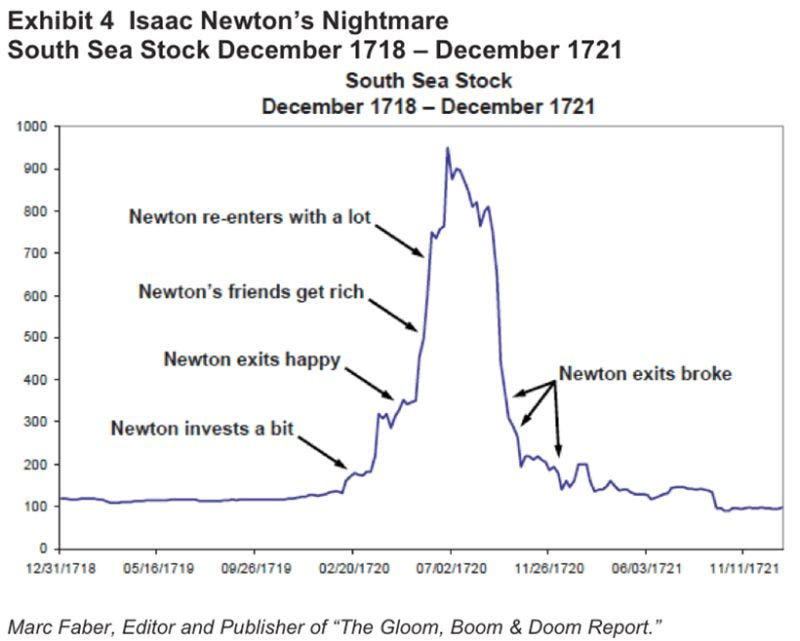
It's a lesson that's been repeated for centuries. The plot is the same, the technology changes, but the outcome is exactly the same: greed, leverage, and an inability to stay in the game.

The smartest people in the world have gotten so caught up in their own complex models that they forget that markets are driven by emotional humans, not numbers.

The core strategy is a war of attrition: a game that rewards those who can overcome their own psychological weaknesses. For decades, Buffett has been mocked as "boring." He underperforms during manias, consistently buying things no one wants. Yet, he remains viable. His empire compounds relentlessly because he has only one rule: don't lose money. While we'd never ask him for technical advice, his strategy is conceptually sound. All you have to do is stay in the game and refuse to sell at a loss (which requires thorough research, a "diamond hand" of determination, and zero leverage—the interest alone can cause you to lose money).

Jeff Bezos did the same thing. He raised $1 million by selling less than 20% of his company. He could have sold more, but he wanted to maintain control—stay in the game. It proved to be the smartest decision he ever made. Through the dot-com bust and years of heated board meetings, he remained firmly in control. By trading greed for endurance, he ultimately created an empire (Amazon) valued at over a trillion dollars.

Elon Musk has been through this, too. He's not the best example, as he could have gone bankrupt. However, he remains a prime example of survival. After PayPal, he invested nearly all his wealth in Tesla and SpaceX, at one point teetering on the brink of bankruptcy. He borrowed money from friends to pay rent, but never gave up. He fought to survive, not to appear successful.

Apple is another (surprising) example. In the 1990s, it faced bankruptcy. Most companies would have collapsed, but Apple didn't. They cut costs, rebuilt their business, and waited patiently. A few years later, the iPod came along, followed by the iPhone, and the compounding phase began. This is another trillion-dollar lesson in resilience.

In short, think carefully about all of these examples before you decide to use leverage. Could you survive a real recession? A -50% to -60% drop? Losing your job? Adding an emergency expense? It's much easier to model your predictions through rose-colored glasses.

Never make an investment you will regret

Any investment you've thoroughly researched and believe in should be held forever. For example, for 20-30 years. This doesn't mean you should hold all of it, but you should always keep a portion. If you bought Bitcoin at $100 and sold it all at $200, you'll never be able to live with yourself again. We know plenty of people who did that. Someone bought Ethereum at $80, sold it all at $200, and watched it rise to over $4,000, while their S&P 500 performance lagged by over 1,000% during that time.

In short, with any well-researched investment, you can sell some, but be sure to keep some in case you sell too soon.

There is no point in actively choosing to reset to zero

Most people aren't even defeated by leverage; they defeat themselves.

They sell after their stock or token has increased tenfold, proud of having "locked in profits." They sell their startup for a few million dollars for peace of mind, only to watch it later go public and be valued at millions or even billions (Victoria's Secret is a famous example). They abandon a career, relationship, or idea before the exponential curve bends upward. The inflection point is where all the gains are! (Reminder: progress is nonlinear, and this applies to stocks, tokens, and any small business).

To avoid this, you need to structure your life to absorb losses while retaining some high-risk positions that have already risen. Keep your overhead low and maintain enough liquidity to make large bets without feeling desperate. Protect your skills and equity. These two assets will continue to compound until the inflection point in the curve appears.

Be willing to endure the boredom that comes before a breakthrough, and be willing to look wrong for years. The people who succeed are not those who have the best strategy... they are those who stick with it long enough until it starts working.
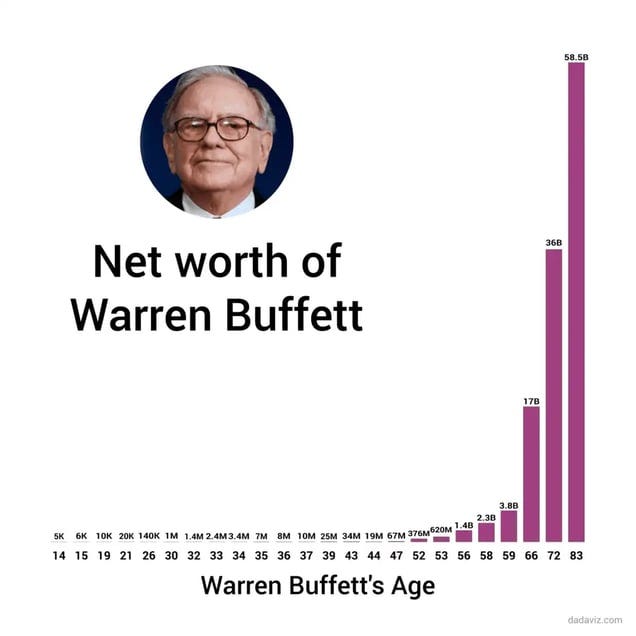
Every major success story is a case study in pain tolerance and faith. Compound interest works only for the few who can stay solvent long enough to experience it. It's the ticket to the top 1%.

Most people can't stand being underestimated or having delayed gratification. They need approval and attention, so they cash in to feed their egos.

Their need for comfort leads them to forgo future possibilities. They mistake busyness for progress, and the approval of others for security. They voluntarily exit the game before it becomes advantageous for them. Ironically, their focus on survival and adaptability itself creates guaranteed success.

If you stay in the arena long enough, the odds will eventually tilt in your favor. The longer you can endure pain, boredom, and obscurity, the more exposure you have to favorable "tail events." Life can't stop someone who refuses to leave.

If you're in that "grinding" phase where you seem to be going nowhere, remember that it's all psychological. If you're making the right choices, momentum is quietly building. You shouldn't expect immediate rewards; you should focus on survival.

Every month you stay above the bankrupt, every year you hold your ground, your probability of a breakthrough increases. This is the mathematics of attrition.

People hate cockroaches, but they teach us a valuable lesson: Find ways to survive

The more you want results today, the less you'll get. That's how Lady Luck works. The skill you really want is persistence. Stay at the table long enough, and Lady Luck will eventually think, "Well, this guy really doesn't seem to care, so I'll give him the pot of gold."

Don't let yourself get crushed. Don't prematurely cash out of investments with the potential for asymmetric returns. Don't sell your future for comfort. Keep your expenses low, your ego smaller, and your runway longer. Because life doesn't reward the smartest player—it rewards the one who makes it to the final table.

Think of it like playing poker. Your goal is to make the final table, not to dominate the field on day one.

Live long enough and statistics will take care of the rest.

A final note on survival—even if you screw up

If you need some real-world examples of comebacks, here are a few names you’ll recognize today:

Disney: In 1923, after his Laugh-O-Gram Films went bankrupt due to unpaid distributors, he moved to Hollywood, created Mickey Mouse and Snow White, and built an empire.

Ford: He went bankrupt twice before founding Ford Motor Company. His first company, the Detroit Motor Company, collapsed due to overly expensive and inefficient products. He later created mass production and transformed manufacturing.

Jobs: Fired from Apple in 1985, he then devoted himself to NeXT and Pixar, nearly leading to financial ruin. Apple eventually acquired NeXT in 1997, allowing Jobs to return...with the iMac, iPod, and iPhone.

George Foreman: The famous boxer went bankrupt in the late 1970s but returned to the ring at age 38. Once he had earned enough money, he created the Foreman Grill, which earned him hundreds of millions of dollars.

Milton Hershey: He had two failed candy businesses before founding Hershey's Chocolate. Even the most well-known brands have founders who failed multiple times, but they just kept trying.

There are thousands of other stories we know about, and millions more we don't. The principle is the same: learn from others' mistakes. Don't go to zero, don't sell 100% of an investment you believe in, and don't use leverage.

In the rare case that you do screw up… well, others have come out of worse situations. It’s just that given the outsized returns expected from tech, cryptocurrencies, and niche internet businesses in 2025, there’s no point putting yourself in that situation.

However, this is just a cartoon character's point of view.

Market Opportunity
Brainedge Logo
Brainedge Price(LEARN)
$0.005757
$0.005757$0.005757
+19.51%
USD
Brainedge (LEARN) Live Price Chart
Disclaimer: The articles reposted on this site are sourced from public platforms and are provided for informational purposes only. They do not necessarily reflect the views of MEXC. All rights remain with the original authors. If you believe any content infringes on third-party rights, please contact service@support.mexc.com for removal. MEXC makes no guarantees regarding the accuracy, completeness, or timeliness of the content and is not responsible for any actions taken based on the information provided. The content does not constitute financial, legal, or other professional advice, nor should it be considered a recommendation or endorsement by MEXC.
Tags:

You May Also Like

Unleash Potential: Flare Network’s FXRP Revolutionizes DeFi Access for XRP

Unleash Potential: Flare Network’s FXRP Revolutionizes DeFi Access for XRP

BitcoinWorld Unleash Potential: Flare Network’s FXRP Revolutionizes DeFi Access for XRP The world of decentralized finance (DeFi) is constantly evolving, and a major new development is set to excite XRP enthusiasts. Flare Network has just launched FXRP, an innovative solution designed to bring XRP directly into the heart of DeFi applications. This move opens up a wealth of new possibilities for XRP holders, allowing them to engage with lending, borrowing, and trading platforms like never before. It’s a significant step towards a more interconnected crypto ecosystem. What is FXRP and Why is it a Game-Changer for XRP? At its core, FXRP is an over-collateralized, wrapped version of XRP. Think of it as a digital twin of XRP, but one that lives on the Flare Network. This design is crucial because XRP itself doesn’t natively support smart contracts in the same way that Ethereum or other DeFi-centric blockchains do. Consequently, XRP has largely been excluded from the burgeoning DeFi sector. However, FXRP changes this narrative completely. By wrapping XRP, Flare Network creates a token that can interact with smart contracts on its own blockchain. This means XRP holders can now: Access a wider range of DeFi protocols. Participate in decentralized lending and borrowing. Engage in yield farming opportunities. Trade their XRP on decentralized exchanges. This initiative transforms XRP from a primarily transactional asset into a more versatile, programmable one within the DeFi landscape. How Can You Acquire and Utilize FXRP? Getting your hands on FXRP is straightforward, offering flexibility for users. You have two primary methods to acquire this wrapped token. First, users can mint FXRP directly on the Flare Network. This process typically involves locking up an equivalent amount of XRP as collateral, ensuring the wrapped token remains fully backed. Alternatively, if direct minting isn’t your preference, you can acquire FXRP on various decentralized exchanges (DEXs). Platforms like SparkDEX, BlazeSwap, and Enosys are among the initial venues where you can trade for FXRP. This accessibility makes it easy for existing DeFi users and new participants alike to join the Flare Network ecosystem and explore its offerings. The over-collateralization aspect adds an extra layer of security, providing confidence in the token’s backing. Expanding DeFi Horizons: The Broader Impact of FXRP The introduction of FXRP extends far beyond just enabling XRP holders to participate in DeFi. It has a much broader impact on the entire decentralized finance ecosystem. By integrating a widely adopted asset like XRP, Flare Network significantly boosts the total value locked (TVL) and liquidity available within DeFi. This influx of capital and users can lead to more robust and efficient markets. Moreover, FXRP positions Flare Network as a vital bridge between different blockchain ecosystems. It demonstrates how assets from one chain can gain new functionality and utility on another, fostering greater interoperability. This cross-chain capability is essential for the long-term growth and sustainability of decentralized finance, as it breaks down silos and encourages a more unified digital economy. The potential for future integrations with other tokens and protocols is immense, further solidifying Flare’s role. Navigating the Challenges and Future of FXRP While the launch of FXRP presents exciting opportunities, it’s also important to consider potential challenges. As with any new technology in the crypto space, security remains a paramount concern. The integrity of the wrapping mechanism and the underlying smart contracts must be rigorously maintained. Furthermore, user adoption and education will be key to the success of FXRP. New users need clear guidance on how to safely mint, acquire, and use the token in various DeFi applications. The competitive landscape also plays a role; other wrapped assets exist, and FXRP must demonstrate its unique value proposition. However, with its strong backing and the innovative approach of Flare Network, FXRP is well-positioned for growth. Its ability to unlock XRP’s potential for DeFi is a powerful differentiator, promising a vibrant future for both the token and the network. Actionable Insights: Getting Started with FXRP in DeFi If you’re an XRP holder looking to explore the new opportunities presented by FXRP, here are some actionable insights to help you get started: Do Your Research: Before engaging with any DeFi platform, thoroughly research its reputation, security audits, and user reviews. Understand how FXRP interacts with specific protocols. Understand the Risks: DeFi carries inherent risks, including smart contract vulnerabilities, impermanent loss, and market volatility. Familiarize yourself with these risks before committing funds. Start Small: Consider starting with a small amount of FXRP to familiarize yourself with the process of minting, acquiring, and using it in DeFi applications. Stay Informed: Follow official Flare Network channels and reputable crypto news sources to stay updated on new integrations, security announcements, and community developments related to FXRP. By taking these steps, you can confidently navigate the exciting new world that FXRP opens up for XRP within decentralized finance. In conclusion, the launch of FXRP by Flare Network is a monumental step forward for the XRP community and the broader DeFi ecosystem. It effectively bridges a gap, allowing one of the most widely held cryptocurrencies to participate actively in decentralized finance. This innovation not only expands the utility of XRP but also reinforces Flare Network’s commitment to building a more interconnected and functional blockchain world. As FXRP gains traction, we can expect to see a surge in innovative DeFi applications and a more vibrant, inclusive financial landscape for all. Frequently Asked Questions (FAQs) Q1: What exactly is FXRP? A1: FXRP is an over-collateralized, wrapped version of XRP, specifically designed to enable XRP holders to use their assets within decentralized finance (DeFi) applications on the Flare Network. Q2: How is FXRP different from standard XRP? A2: While FXRP is backed by XRP, its key difference is that it resides on the Flare Network and is compatible with smart contracts. This allows it to be used in DeFi protocols for lending, borrowing, and trading, which standard XRP cannot do natively. Q3: Where can I acquire FXRP? A3: You can acquire FXRP by minting it directly on the Flare Network by locking up XRP, or by purchasing it on decentralized exchanges such as SparkDEX, BlazeSwap, and Enosys. Q4: What are the main benefits of using FXRP in DeFi? A4: The primary benefits include gaining access to a wide array of DeFi services like lending, borrowing, and trading on DEXs, thereby increasing the utility and potential earning opportunities for XRP holders within the decentralized ecosystem. Q5: What is Flare Network’s role in the creation of FXRP? A5: Flare Network is the blockchain platform that hosts FXRP. It provides the smart contract functionality and infrastructure necessary to wrap XRP and enable its use in DeFi applications, acting as a bridge for XRP into the decentralized world. If you found this article insightful and believe in the potential of FXRP to revolutionize DeFi, please share it with your network! Help spread the word about how Flare Network is bridging the gap for XRP holders and expanding the possibilities within decentralized finance. Your support helps grow our community and keeps everyone informed about the latest crypto innovations. To learn more about the latest crypto market trends, explore our article on key developments shaping decentralized finance institutional adoption. This post Unleash Potential: Flare Network’s FXRP Revolutionizes DeFi Access for XRP first appeared on BitcoinWorld.
Share
Coinstats2025/09/24 22:45
Fed Lowers Rates By 25bps: How Bitcoin And Crypto Prices Responded And What’s Next
Fed Lowers Rates By 25bps: How Bitcoin And Crypto Prices Responded And What’s Next

The Federal Reserve (Fed) announced its first interest rate cut of the year, leading to an immediate reaction in the cryptocurrency market. Bitcoin (BTC) experienced a notable decline, dropping below the $115,000 threshold shortly after the announcement.  Expert Predicts Crypto Rally Fed Chair Jerome Powell addressed the current economic landscape, noting that while inflation has […]
Share
Bitcoinist2025/09/18 03:11
XRP Price Outlook As Peter Brandt Predicts BTC Price Might Crash to $42k

XRP Price Outlook As Peter Brandt Predicts BTC Price Might Crash to $42k

The post XRP Price Outlook As Peter Brandt Predicts BTC Price Might Crash to $42k appeared on BitcoinEthereumNews.com. XRP price led cryptocurrency losses on Friday
Share
BitcoinEthereumNews2026/02/06 19:06