The post Will the Senate’s leaked DeFi bill drain what’s left of US liquidity? appeared on BitcoinEthereumNews.com. A confidential draft bill circulating among Senate Democrats proposes sweeping new oversight of DeFi, extending Know-Your-Customer (KYC) and Anti-Money-Laundering (AML) duties to DeFi interfaces, validators, and even node operators. According to reports, the leaked bill was intended as the Democrats’ counterweight to the House-backed market-structure bill. However, internal backlash has reportedly stalled those broader discussions inside the Senate Banking Committee. Under the leaked framework, all DeFi applications enabling financial transactions must implement front-end KYC controls, potentially including browser-based wallets and liquidity interfaces. The leaked language also places new responsibility on oracle operators, potentially exposing them to enforcement if price feeds are linked to “sanctioned” protocols. The Treasury Department would also gain authority to create a “restricted list” of protocols deemed too risky for US users. Senator Ruben Gallego claimed that the Democrats’ bill represents the party’s attempt to build bipartisan consensus on crypto market structure. According to him: “Democrats have shown up ready to work… They asked for paper and substance, and we delivered.” Market impact The move has ignited a fresh round of partisan tension in Washington, with Republican lawmakers and crypto industry figures warning that it could cripple innovation and push US Bitcoin and Ethereum liquidity offshore. To understand the risk, one has to consider the current landscape where US-based platforms account for only a small fraction of global volume. According to Newhedge data, US crypto trading venues already capture less than 10% of global trading volume, while the top eight (mainly offshore) platforms account for roughly 90% of global market depth. Graph comparing the trading volume for US and offshore crypto exchanges from 2013 to 2025 (Source: Newedge) These numbers show that liquidity already gravitates to platforms with fewer regulatory constraints. The Senate proposal’s forced compliance at the protocol level could accelerate that flight. If US users… The post Will the Senate’s leaked DeFi bill drain what’s left of US liquidity? appeared on BitcoinEthereumNews.com. A confidential draft bill circulating among Senate Democrats proposes sweeping new oversight of DeFi, extending Know-Your-Customer (KYC) and Anti-Money-Laundering (AML) duties to DeFi interfaces, validators, and even node operators. According to reports, the leaked bill was intended as the Democrats’ counterweight to the House-backed market-structure bill. However, internal backlash has reportedly stalled those broader discussions inside the Senate Banking Committee. Under the leaked framework, all DeFi applications enabling financial transactions must implement front-end KYC controls, potentially including browser-based wallets and liquidity interfaces. The leaked language also places new responsibility on oracle operators, potentially exposing them to enforcement if price feeds are linked to “sanctioned” protocols. The Treasury Department would also gain authority to create a “restricted list” of protocols deemed too risky for US users. Senator Ruben Gallego claimed that the Democrats’ bill represents the party’s attempt to build bipartisan consensus on crypto market structure. According to him: “Democrats have shown up ready to work… They asked for paper and substance, and we delivered.” Market impact The move has ignited a fresh round of partisan tension in Washington, with Republican lawmakers and crypto industry figures warning that it could cripple innovation and push US Bitcoin and Ethereum liquidity offshore. To understand the risk, one has to consider the current landscape where US-based platforms account for only a small fraction of global volume. According to Newhedge data, US crypto trading venues already capture less than 10% of global trading volume, while the top eight (mainly offshore) platforms account for roughly 90% of global market depth. Graph comparing the trading volume for US and offshore crypto exchanges from 2013 to 2025 (Source: Newedge) These numbers show that liquidity already gravitates to platforms with fewer regulatory constraints. The Senate proposal’s forced compliance at the protocol level could accelerate that flight. If US users…

Will the Senate’s leaked DeFi bill drain what’s left of US liquidity?

A confidential draft bill circulating among Senate Democrats proposes sweeping new oversight of DeFi, extending Know-Your-Customer (KYC) and Anti-Money-Laundering (AML) duties to DeFi interfaces, validators, and even node operators.

According to reports, the leaked bill was intended as the Democrats’ counterweight to the House-backed market-structure bill. However, internal backlash has reportedly stalled those broader discussions inside the Senate Banking Committee.

Under the leaked framework, all DeFi applications enabling financial transactions must implement front-end KYC controls, potentially including browser-based wallets and liquidity interfaces.

The leaked language also places new responsibility on oracle operators, potentially exposing them to enforcement if price feeds are linked to “sanctioned” protocols.

The Treasury Department would also gain authority to create a “restricted list” of protocols deemed too risky for US users.

Senator Ruben Gallego claimed that the Democrats’ bill represents the party’s attempt to build bipartisan consensus on crypto market structure.

According to him:

Market impact

The move has ignited a fresh round of partisan tension in Washington, with Republican lawmakers and crypto industry figures warning that it could cripple innovation and push US Bitcoin and Ethereum liquidity offshore.

To understand the risk, one has to consider the current landscape where US-based platforms account for only a small fraction of global volume.

According to Newhedge data, US crypto trading venues already capture less than 10% of global trading volume, while the top eight (mainly offshore) platforms account for roughly 90% of global market depth.

Graph comparing the trading volume for US and offshore crypto exchanges from 2013 to 2025 (Source: Newedge)

These numbers show that liquidity already gravitates to platforms with fewer regulatory constraints. The Senate proposal’s forced compliance at the protocol level could accelerate that flight.

If US users are forced to interact only through KYC-verified front ends, or if the Treasury can block access to specific protocols, traders seeking anonymity, flexibility, and lower friction may migrate to bridges or foreign exchanges where those constraints are looser or unenforced.

Over time, that shift would entrench offshore platforms as liquidity hubs, deepen the dominance of already-large non-US exchanges, and fragment trading across jurisdictions.

At the same time, US liquidity pools would shrink due to fewer active counterparties, wider spreads, and reduced depth. That fragmentation would hamper innovation, worsen market inefficiencies, and weaken the US’s competitive position in the global crypto rails.

Moreover, implementing these rules could impact US crypto users’ interaction with the rapidly expanding DeFi sector.

A recent DeFi Funds report revealed that many Americans do not trust the traditional financial system.

As a result, they have become curious about the DeFi industry, which they believe offers them more benefits over the current system, including control over their money and lower transaction fees.

Industry backlash

Considering the significant market impact that this bill would have on the market, industry stakeholders have begun to speak against it.

Jake Chervinsky, the chief legal officer of Variant Fund, said:

Chervinsky furthered that this was an “unprecedented [and] unconstitutional government takeover of an entire industry.” He added:

Zack Shapiro, head of policy at the Bitcoin Policy Institute, echoed this view by pointing out that the draft “stretches illicit-finance laws to target software and software developers rather than criminal conduct.”

According to him, this sets a dangerous precedent for censoring lawful private exchange, similar to how the government has targeted Tornado Cash and Samourai Wallet developers.

Coinbase CEO Brian Armstrong said the bill would “set innovation back years” and block America from leading in crypto finance.

He stated:

Uniswap founder Hayden Adams added that the language “would kill DeFi” domestically.

Considering this, he called for “a huge shift from Democratic senators” if progress on market-structure reform is to continue.

Mentioned in this article

Source: https://cryptoslate.com/will-the-senates-leaked-defi-bill-drain-whats-left-of-us-liquidity/

Market Opportunity
DeFi Logo
DeFi Price(DEFI)
$0.000322
$0.000322$0.000322
+2.22%
USD
DeFi (DEFI) Live Price Chart
Disclaimer: The articles reposted on this site are sourced from public platforms and are provided for informational purposes only. They do not necessarily reflect the views of MEXC. All rights remain with the original authors. If you believe any content infringes on third-party rights, please contact service@support.mexc.com for removal. MEXC makes no guarantees regarding the accuracy, completeness, or timeliness of the content and is not responsible for any actions taken based on the information provided. The content does not constitute financial, legal, or other professional advice, nor should it be considered a recommendation or endorsement by MEXC.

You May Also Like

CME Group to Launch Solana and XRP Futures Options

CME Group to Launch Solana and XRP Futures Options

The post CME Group to Launch Solana and XRP Futures Options appeared on BitcoinEthereumNews.com. An announcement was made by CME Group, the largest derivatives exchanger worldwide, revealed that it would introduce options for Solana and XRP futures. It is the latest addition to CME crypto derivatives as institutions and retail investors increase their demand for Solana and XRP. CME Expands Crypto Offerings With Solana and XRP Options Launch According to a press release, the launch is scheduled for October 13, 2025, pending regulatory approval. The new products will allow traders to access options on Solana, Micro Solana, XRP, and Micro XRP futures. Expiries will be offered on business days on a monthly, and quarterly basis to provide more flexibility to market players. CME Group said the contracts are designed to meet demand from institutions, hedge funds, and active retail traders. According to Giovanni Vicioso, the launch reflects high liquidity in Solana and XRP futures. Vicioso is the Global Head of Cryptocurrency Products for the CME Group. He noted that the new contracts will provide additional tools for risk management and exposure strategies. Recently, CME XRP futures registered record open interest amid ETF approval optimism, reinforcing confidence in contract demand. Cumberland, one of the leading liquidity providers, welcomed the development and said it highlights the shift beyond Bitcoin and Ethereum. FalconX, another trading firm, added that rising digital asset treasuries are increasing the need for hedging tools on alternative tokens like Solana and XRP. High Record Trading Volumes Demand Solana and XRP Futures Solana futures and XRP continue to gain popularity since their launch earlier this year. According to CME official records, many have bought and sold more than 540,000 Solana futures contracts since March. A value that amounts to over $22 billion dollars. Solana contracts hit a record 9,000 contracts in August, worth $437 million. Open interest also set a record at 12,500 contracts.…
Share
BitcoinEthereumNews2025/09/18 01:39
China Blocks Nvidia’s RTX Pro 6000D as Local Chips Rise

China Blocks Nvidia’s RTX Pro 6000D as Local Chips Rise

The post China Blocks Nvidia’s RTX Pro 6000D as Local Chips Rise appeared on BitcoinEthereumNews.com. China Blocks Nvidia’s RTX Pro 6000D as Local Chips Rise China’s internet regulator has ordered the country’s biggest technology firms, including Alibaba and ByteDance, to stop purchasing Nvidia’s RTX Pro 6000D GPUs. According to the Financial Times, the move shuts down the last major channel for mass supplies of American chips to the Chinese market. Why Beijing Halted Nvidia Purchases Chinese companies had planned to buy tens of thousands of RTX Pro 6000D accelerators and had already begun testing them in servers. But regulators intervened, halting the purchases and signaling stricter controls than earlier measures placed on Nvidia’s H20 chip. Image: Nvidia An audit compared Huawei and Cambricon processors, along with chips developed by Alibaba and Baidu, against Nvidia’s export-approved products. Regulators concluded that Chinese chips had reached performance levels comparable to the restricted U.S. models. This assessment pushed authorities to advise firms to rely more heavily on domestic processors, further tightening Nvidia’s already limited position in China. China’s Drive Toward Tech Independence The decision highlights Beijing’s focus on import substitution — developing self-sufficient chip production to reduce reliance on U.S. supplies. “The signal is now clear: all attention is focused on building a domestic ecosystem,” said a representative of a leading Chinese tech company. Nvidia had unveiled the RTX Pro 6000D in July 2025 during CEO Jensen Huang’s visit to Beijing, in an attempt to keep a foothold in China after Washington restricted exports of its most advanced chips. But momentum is shifting. Industry sources told the Financial Times that Chinese manufacturers plan to triple AI chip production next year to meet growing demand. They believe “domestic supply will now be sufficient without Nvidia.” What It Means for the Future With Huawei, Cambricon, Alibaba, and Baidu stepping up, China is positioning itself for long-term technological independence. Nvidia, meanwhile, faces…
Share
BitcoinEthereumNews2025/09/18 01:37
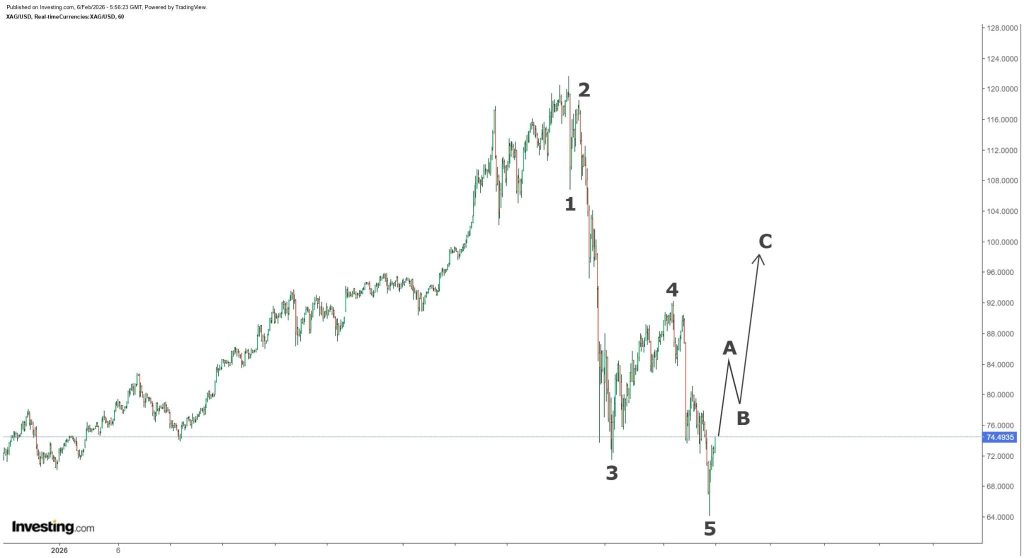
Silver Price Crash Is Over “For Real This Time,” Analyst Predicts a Surge Back Above $90

Silver Price Crash Is Over “For Real This Time,” Analyst Predicts a Surge Back Above $90

Silver has been taking a beating lately, and the Silver price hasn’t exactly been acting like a safe haven. After running up into the highs, the whole move reversed
Share
Captainaltcoin2026/02/07 03:15