

Federal Reserve Inflation Concerns Spike: AI Pushes PCE From 2.7% to 3.6%
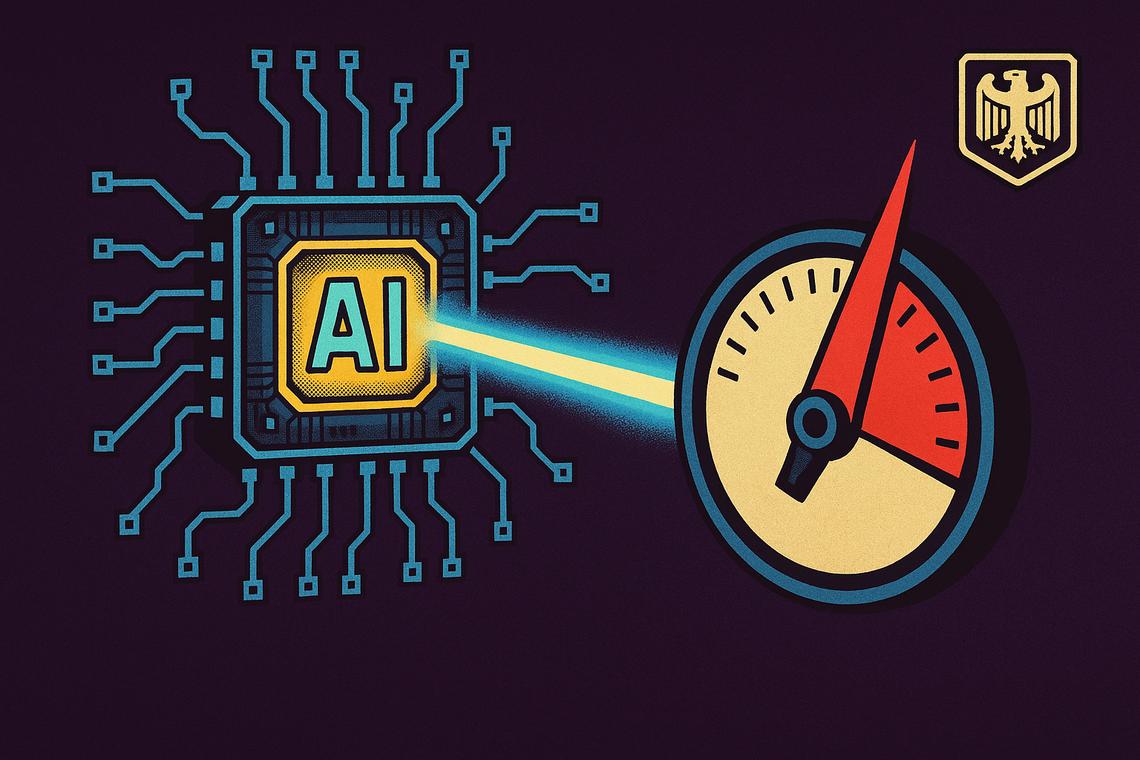
Something unusual is happening inside the Federal Reserve — and it goes well beyond the usual debate over a quarter-point move. Minutes from the central bank’s June 16-17 meeting, released Wednesday, reveal that a growing number of policymakers are pointing at the artificial intelligence boom as a direct driver of Federal Reserve inflation concerns, complicating what was already a fractious internal debate over where interest rates should go next.
Key takeaways
- The Fed raised its year-end Personal Consumption Expenditures inflation projection from 2.7% to 3.6%, citing AI-driven demand as a key factor.
- The benchmark rate was held at 3.5%–3.75% in June, but future hikes remain firmly on the table.
- Nine of 18 Fed committee members expect at least one rate hike before the end of 2026.
- Markets put the probability of a hike at the July 29 meeting at 30.5%, per CME FedWatch; Polymarket puts the odds of at least one hike this year at 59%.
- Geopolitical tensions involving Iran — and President Trump’s renewed threats of military action — are adding fresh volatility to both energy prices and the inflation outlook.
Federal Reserve Signals Inflation Concerns Fueled by AI Demand
The June meeting marked the first chaired by new Federal Reserve Chairman Kevin Warsh, who described the internal discussions afterward as “a good family fight.” That characterization turns out to be an understatement. The minutes show deep disagreement not just on the rate path, but on the very sources of inflation the Fed is now trying to contain.
At the center of the debate is a phenomenon market observers have started calling “chipflation” — the cascading price effect triggered by surging demand for semiconductors needed to power the AI data center buildout. Those elevated chip costs don’t stay in the server room. They ripple into consumer electronics, connected devices, and household electricity bills, making AI infrastructure expansion a surprisingly broad inflationary force.
AI-Driven ‘Chipflation’ and Inflation Projections
The Fed’s own numbers tell the story clearly. The institution’s year-end Personal Consumption Expenditures inflation estimate jumped from 2.7% to 3.6% — a revision that reflects how much the calculus has shifted since earlier this year.
Nick Ruck, director at LVRG Research, put it directly: the AI infrastructure expansion is “propelling elevated inflation through unprecedented demand for semiconductors, power resources, and data facilities, despite its potential for enhanced productivity in the future.” That productivity promise, in other words, doesn’t offset the near-term price pressure.
Adam Phillips, managing director of investments at EP Wealth Advisors, added that inflationary pressures are no longer limited to energy. Cost increases, he noted, are starting to show up in areas like electronics — a direct downstream effect of chipflation working its way through the supply chain. Phillips also flagged that year-over-year price growth will likely remain “uncomfortably high at around 4%” even with energy prices having eased since the June meeting.
AI Capital Expenditures May Entrench Inflationary Trends
The concern runs deeper than current price levels. A majority of participants at the June meeting flagged that AI-related business capital expenditures could fuel economic expansion in a way that keeps inflation entrenched rather than fading. This isn’t a temporary supply shock — it’s an investment-driven demand story that doesn’t have a clear expiration date.
That distinction matters for monetary policy. If inflation is being driven by a multi-year capital expenditure cycle tied to AI infrastructure, the Fed can’t simply wait it out. It has to decide whether to lean against the cycle or accept a prolonged period of above-target inflation — neither of which is an attractive option.
Interest Rate Decisions and Internal Fed Divisions
The Fed held its benchmark rate steady at 3.5%–3.75% in June, but the vote masked considerable disagreement about what should come next. The minutes described “many participants” saying the appropriate rate would be “within or slightly below the current target range” by year-end — but also “many other participants” who assessed that rates should be above where they are now. That’s not a nuanced split. It’s a committee genuinely pulled in opposite directions.
June Policy Meeting and Rate Holding Decision
The June session was Warsh’s debut as chairman, and it set a confrontational tone. Former St. Louis Fed President Jim Bullard, speaking to CNBC on Monday, made his skepticism of a one-and-done approach clear: “The committee does not generally do that. I mean, what’s the point of that?” His point — that the Fed historically moves in cycles rather than isolated adjustments — carries historical weight. Going back to 1990, single-move rate cycles have been rare. The last instance was 2015, and even then it was driven by unusual circumstances.
Several participants during the June deliberations argued conditions already warranted immediate rate increases, pointing to above-target inflation and a resilient labor market. The committee’s statement flatly declared: “The Committee will deliver price stability.” Warsh’s Fed also appears set to pull back on forward guidance, with Standard Chartered strategist Steve Englander noting the minutes may shift toward “a more anodyne listing of policy decisions” — less transparency, not more.
Committee Divisions on Future Rate Hikes and Market Expectations
Nine of the 18 committee members expect at least one rate hike before the end of 2026. Among those nine, six are forecasting two separate quarter-point increases. Meanwhile, Bank of America has gone further — raising its forecast to three quarter-point hikes before year-end, arguing the Fed will need to reverse its 2025 cuts “in short order.”
Markets are moving in line with at least the cautious end of that spectrum. According to CME FedWatch, the probability of a hike at the July 29 policy meeting stands at 30.5% — up from roughly 20% just one week earlier. Polymarket figures show a 59% probability of at least one hike occurring this year, a figure that climbed after President Trump announced potential military action against Iran.
Traders using CME futures are pricing in a hike as early as September, then expect the Fed to hold for at least the following year. But not everyone on Wall Street sees it playing out that neatly. Bullard’s warning is pointed: wait too long, and the Fed could find itself needing to move aggressively in early 2027 just to maintain credibility on inflation.
Impact of Geopolitical Tensions on Inflation and Fed Policy
Iran is now a second variable in the Fed’s inflation equation — and a volatile one. President Trump announced Tuesday that the U.S. had conducted “a series of powerful strikes” against Iran, then on Wednesday threatened further action. “We’ll probably hit them hard again tonight,” he said at the NATO summit in Ankara, Turkey, during a meeting with Ukrainian President Volodymyr Zelenskyy. Trump also declared the existing ceasefire “over.”
Role of Middle Eastern Conflicts and Strait of Hormuz
The immediate market reaction was sharp. Brent crude futures jumped 5.4% to $78.14 per barrel, while West Texas Intermediate rose 4.7% to $73.72. Airline stocks fell broadly — American Airlines dropped nearly 4%, United Airlines about 2.5%, with Delta, Southwest, and JetBlue each losing around 2%. European equities tumbled, with Germany’s DAX and France’s CAC 40 both closing more than 2% lower.
Benjamin Salisbury, director of research at Height Securities, attributed the flareup to a “grey area” left by the White House-Iran deal over the Strait of Hormuz, saying the Trump administration “faces two dueling imperatives” around Iranian control of maritime flows and nuclear ambitions. Tom Garretson of RBC Wealth Management argued markets are still pricing in “flare-ups” rather than a full return to conflict — but also noted that oil prices in the $70 to $90 range “can be probably moderately inflationary and kind of diminishes any chance of that disinflationary scenario playing out on a longer term basis.”
Effects on Inflation Outlook and Rate Hike Considerations
Some Fed participants during June had suggested conditions might improve if Middle Eastern tensions eased. That scenario now looks less likely, not more. Renewed hostilities push oil prices higher, feed into broader inflation expectations, and give hawkish committee members more ammunition heading into July 29. The New York Fed’s June consumer survey already showed the one-year inflation outlook at 3.7% — its highest since September 2023 — while the three-year outlook hit its peak since June 2022.
What This Means for Financial Markets and Cryptocurrency
The broader market felt the pressure on Wednesday. The Dow Jones Industrial Average lost 576.76 points, or 1.09%, settling at 52,348.39. The S&P 500 pulled back 0.28% to close at 7,482.71. The Nasdaq held up slightly better, rising 0.2% to 25,870.65 — a reflection of the tech sector’s dual identity in this story: simultaneously a driver of inflationary pressure and a beneficiary of the AI spending wave.
For cryptocurrency markets, the implications are harder to parse but significant. Elevated interest rates tighten liquidity, increase financing costs, and make traditional safe-haven assets like cash and government bonds comparatively more attractive. That typically weighs on risk assets, including digital currencies. Bank of America analysts flagged that the 10-year Treasury yield could reach as high as 4.82%, a level that would add further pressure to risk-on positioning. Some market observers noted, however, that digital asset markets could find support if the Fed were to intervene to stabilize equity markets during an economic downturn — a scenario that would shift the calculus quickly.
What makes this moment analytically interesting is the feedback loop at its center: AI investment drives chipflation, chipflation feeds inflation, inflation forces the Fed’s hand on rates, higher rates constrain the very capital flows that fund AI infrastructure. Whether that loop tightens or breaks open is, in large part, what the July 29 meeting will begin to answer.
FAQ
Why is the Federal Reserve concerned about AI’s impact on inflation?
AI sector demand is driving up semiconductor prices — a phenomenon dubbed “chipflation” — and fueling large capital expenditure cycles that could keep inflation entrenched. The Fed raised its year-end PCE inflation estimate from 2.7% to 3.6% in part because of these dynamics.
What was the Federal Reserve’s decision on interest rates in June 2026?
The Fed held its benchmark rate steady at 3.5%–3.75% during its June 16-17 meeting, the first chaired by new Chairman Kevin Warsh. The door to future rate hikes was explicitly left open, with nine of 18 committee members anticipating at least one increase before the end of 2026.
How likely is a rate hike at the upcoming July 29 meeting?
According to CME FedWatch data, the probability stands at approximately 30.5% as of early July — up from around 20% just one week earlier. Polymarket data puts the odds of at least one hike occurring before year-end at 59%.
How do geopolitical tensions affect Federal Reserve policy decisions?
Tensions involving Iran — including U.S. military strikes and the breakdown of a ceasefire — push oil prices higher, add uncertainty to the inflation outlook, and give hawkish Fed members additional justification for rate increases. Some June meeting participants had suggested the outlook could improve if Middle Eastern hostilities eased; that scenario has since become less probable.
Article produced with the assistance of artificial intelligence and reviewed by the editorial team.


You May Also Like
S&P 500 and Nasdaq Futures Rise as US-Iran Tensions Ease Thursday

Exclusive interview with Smokey The Bera, co-founder of Berachain: How the innovative PoL public chain solves the liquidity problem and may be launched in a few months

Moody’s Bitcoin Haircut: Forced-Selling Trigger



