Prabowo’s policy risks prompt global banks to pull cash out of Indonesia
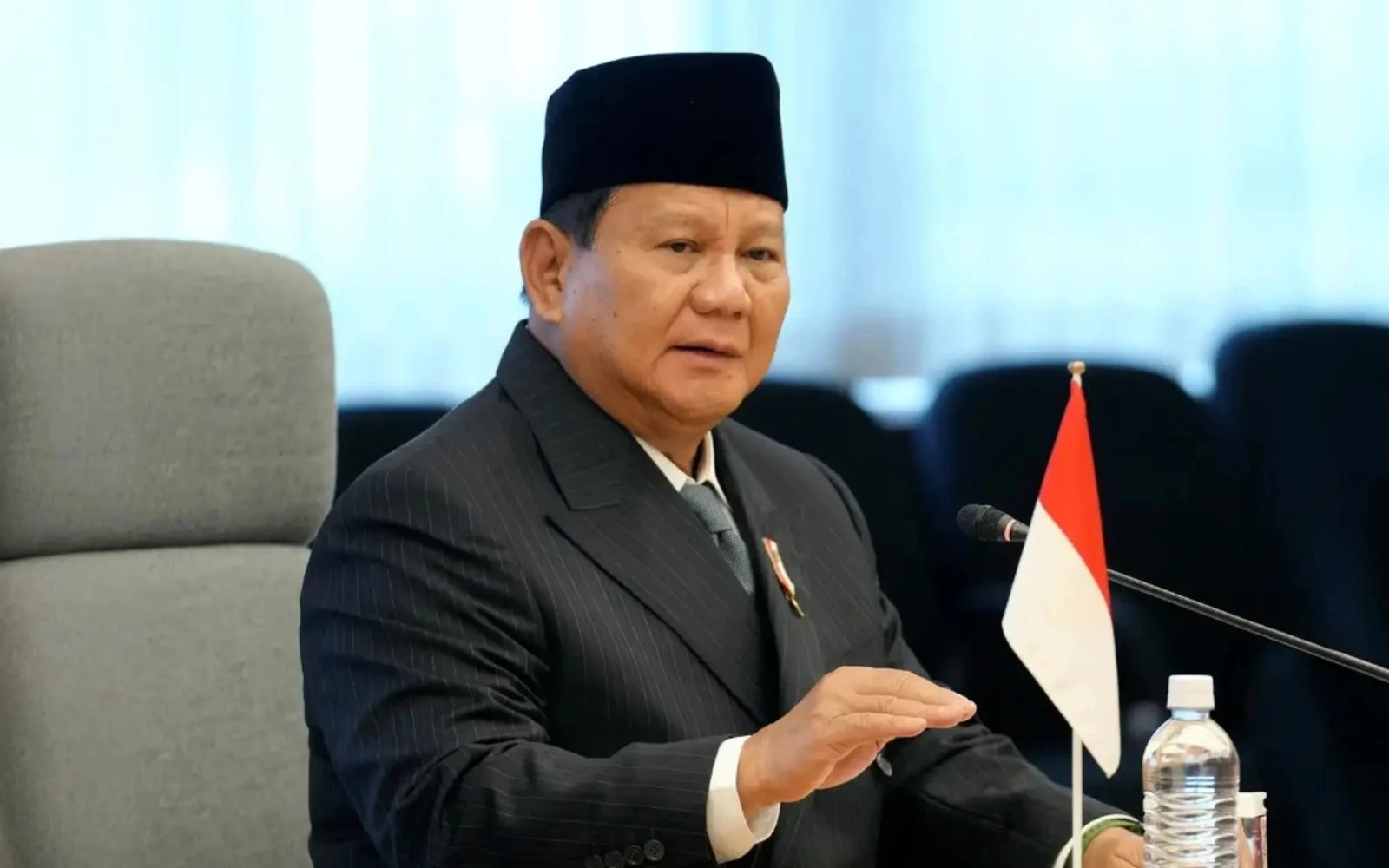 Indonesia’s President Prabowo Subianto has pushed for an increased role of the government, including expanding the economic power of its sovereign wealth fund Danantara. (Reuters pic)
JAKARTA: The three biggest foreign banks in Indonesia have shipped around US$640 million of their earnings out of Southeast Asia’s largest economy since 2024 as they pare exposure amid President Prabowo Subianto’s increasingly state-focused economic policies.
The Indonesian units of Citigroup Inc, Standard Chartered Plc and HSBC Holdings Plc remitted a total of Rp11.5 trillion (US$640 million) over the last two years, slightly exceeding their combined profits for the period, according to an analysis of their financial statements.
That surpassed the average 84% of profits that Citigroup shipped out to its parent firm in the decade before 2024 when Prabowo took office, keeping the rest in Indonesia to support growth and strengthen its capital buffer.
That also topped the average 48% for Standard Chartered during the same period and HSBC’s 87% for 2020-2023.
HSBC didn’t disclose the amount of funds it remitted to its parent before 2020 in its financial statements.
Some banks decided to curb exposure to Indonesia as they became increasingly concerned over the country’s policy direction that has dented foreign investors’ confidence, according to bankers familiar with the matter who asked not to be named discussing a private matter.
A bout of market turmoil that rattled Indonesian stocks and the rupiah early last year, months into Prabowo’s administration, contributed to the decision, the people said.
Prabowo, the 74-year-old former special forces commander who became president in October 2024, has pushed for an increased role of the government including expanding the economic power of its sovereign wealth fund Danantara.
Just over a year old, Danantara now oversees hundreds of state-owned enterprises and controls assets that officials value at roughly US$900 billion.
One of the earliest flashpoints for foreign banks came when Danantara sought commitments for a US$10 billion loan facility.
During a meeting in early 2025 with 10 banks, Danantara CIO Pandu Sjahrir encouraged each lender to contribute as much as US$1 billion to the package as a show of support for Indonesia and the sovereign wealth fund, according to people familiar with the discussions.
Pandu and Danantara didn’t respond to a request for comment.
Some executives viewed the request as an indication that financial institutions could face growing pressure to support government priorities.
Danantara raised Rp50 trillion last year from the nation’s tycoons via the so-called patriot bonds, an instrument paying a coupon of 2%, far below market yields.
Last week, Indonesia said it will exempt from legal and tax scrutiny purchases of bonds from Danantara, a move analysts warn could attract money with questionable origins and further erode the country’s reputation.
Among the three largest foreign lenders in Indonesia by assets, Standard Chartered has made the sharpest shift.
It remitted more than Rp1.1 trillion to its parent in 2024, equivalent to nearly four times its profit in Indonesia that year and funded partly by earnings accumulated in prior years, its financial statements showed.
Citigroup repatriated nearly all of its combined income in 2024 and 2025 to its parent firm.
HSBC sent back almost Rp3 trillion to its parent firm last year despite making less than Rp2.2 trillion in net income, according to its financial statements.
The repatriated amount was the bank’s largest since 2022, the statements from 2020 show.
“Indonesia brings scale to Asia’s next phase of growth. As the region rewires its trade maps, HSBC is uniquely positioned to connect Indonesia’s industrial ambitions to global capital and we will continue to focus on this growth,” a spokesman for HSBC said in response to a Bloomberg request for comment.
Representatives for Standard Chartered and Citigroup declined to comment.
The increase in remittances to their parent companies also comes as the global banks scale back on their Indonesian operations before Prabowo became leader.
Citigroup announced the sale of its retail banking businesses in Indonesia and three other Southeast Asian markets to United Overseas Bank Ltd in 2022 and Standard Chartered divested a retail loan portfolio to PT Bank Danamon Indonesia in 2023.
HSBC is selling its retail and wealth assets to Oversea-Chinese Banking Corp in a deal expected to close next year.
Falling Rupiah
The higher profit repatriation also coincides with the rupiah’s decline and expectations that it could weaken further, said Harry Su, managing director for research at PT Samuel Sekuritas Indonesia.
“That reduces the appeal of retaining earnings in Indonesia, particularly for foreign-owned banks,” Su said.
“With investor sentiment remaining cautious, there is little sign the trend will reverse in the near term,” Su added.
While the banks remain profitable and continue to operate in the country, the higher profit transfers overseas may underscore a broader effort to reshape their Indonesia businesses and raise questions on whether more capital is being redirected to higher-return opportunities elsewhere.
Bankers have also become increasingly concerned about discussions within the government over expanding the banking sector’s role in financing some of its priorities.
Indonesia’s financial services authority, known as OJK, has privately floated the idea of incorporating support for government programmes into lenders’ business plans, according to people familiar with the matter.
The discussions have included possible financing for Prabowo’s flagship free-meals programme as well as village cooperatives, the people said, asking not to be identified because the deliberations are private.
While no formal requirement has been issued, the prospect of greater policy-directed lending has added to worries among some bankers about capital allocation and risk management at a time when Indonesia’s economic outlook is already under close scrutiny, the people said.
The OJK said credit decisions by banks are based on business judgment, and lenders retain the flexibility to implement strategies aligned with their risk appetites and tolerances. “As the regulator and supervisor, we do not intervene in this process,” Dian Ediana Rae, the chief executive of banking supervision at OJK, said in response to a Bloomberg query.
“Decisions must be based on business prospects. Naturally, banks will evaluate these; if a government programme for instance, is viewed as offering excellent business prospects, the bank may well treat it as a standard business activity,” Dian said.


You May Also Like

AI spending boom accelerates as Big Tech pours trillions into infrastructure

Polymarket’s $3.3B World Cup boom exposes the longshot trap inside prediction markets