Pride March creates space for queer youth to be recognized, accepted, celebrated
MANILA, Philippines — In a country where faith shapes much of everyday life, members of the LGBTQIA+ community continue to carve out spaces where they are recognized, accepted, and celebrated.
On June 27, the streets of University of the Philippines Diliman came alive with rainbow colors, music, and thousands of people marching through the sweltering heat to call for equality and an end to discrimination.
For Eileen Ceron, who joined the march in support of her queer children, society must recognize LGBTQIA+ people as equals deserving of the same rights as their heterosexual counterparts.
“Their existence is of equal importance to ours. In the first place, they are humans too,” Ceron said in Filipino.
Despite the Philippines being named one of the most LGBTQIA+ friendly countries in Asia in a 2013 survey, the Sexual Orientation, Gender Identity and Expression (SOGIE) anti-discrimination bill has remained stalled in Congress for more than two decades.
With no legislation in place, Donna Jagodilla, who also attended the Pride festival with her family, believes the community must persevere in fighting for the full recognition of their rights.
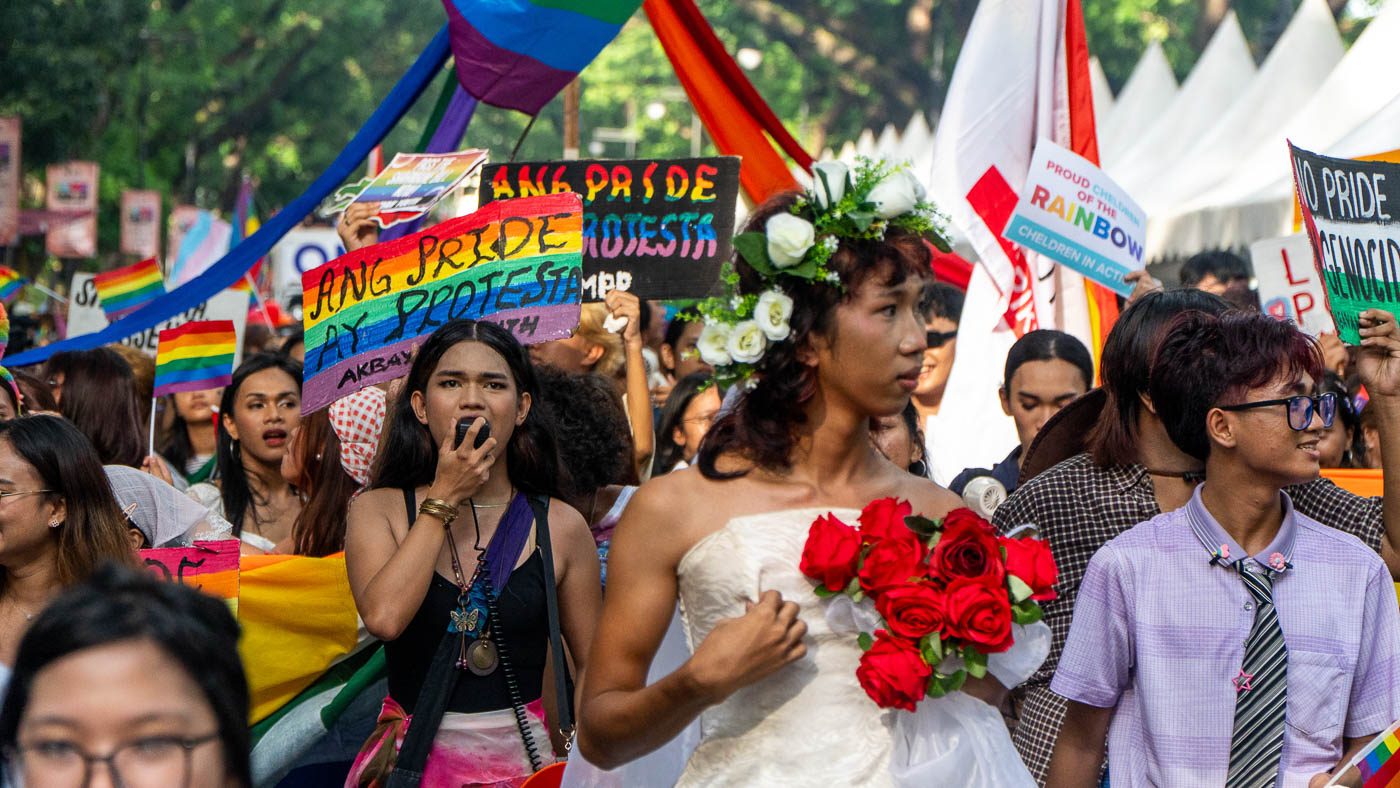 Queer Filipinos and their allies gather at UP Diliman on June 27, creating a space where LGBTQIA+ people can be seen, accepted, and celebrated. Photo by Patricia Fontilar/Rappler
Why showing up matters
When children understand SOGIE from an early age, they grow up with a better awareness of why the LGBTQIA+ community continues to take its calls to the streets.
Jagodilla made sure to explain to their children what a Pride march is and why it matters.
“We should also be able to impart [the concept of Pride] to our children to bring in a sense of purpose, so that there will be continuity to the advocacies already started. It will be nonsense if only adults will understand,” Jagodilla said in Filipino.
Supporting queer children allows their talents and skills to flourish, helping them reach their full potential.
Growing up surrounded by queer people, Ceron witnessed firsthand how they thrived in their chosen fields. That experience shaped the way she encourages her own children to pursue their dreams.
“It’s not their choice [to be queer]. We cannot complain, we cannot disagree, but rather we should support them. That is what I did to my children and now they are excelling,” Ceron said.
“I just can’t imagine the extent of their talent, skills, and artistry. The abilities [of the LGBTQIA+ community] are truly beyond compare,” she added.
In 2024, The Trevor Project identified family support as one of the most important factors in helping the LGBTQIA+ youth navigate life’s challenges.
Ceron emphasized how queer safe spaces must begin at home.
“Nobody else will understand or emphatize with them except us, parents. Because if we cannot accept our own children, how much more will other people in the outside world?” she said.
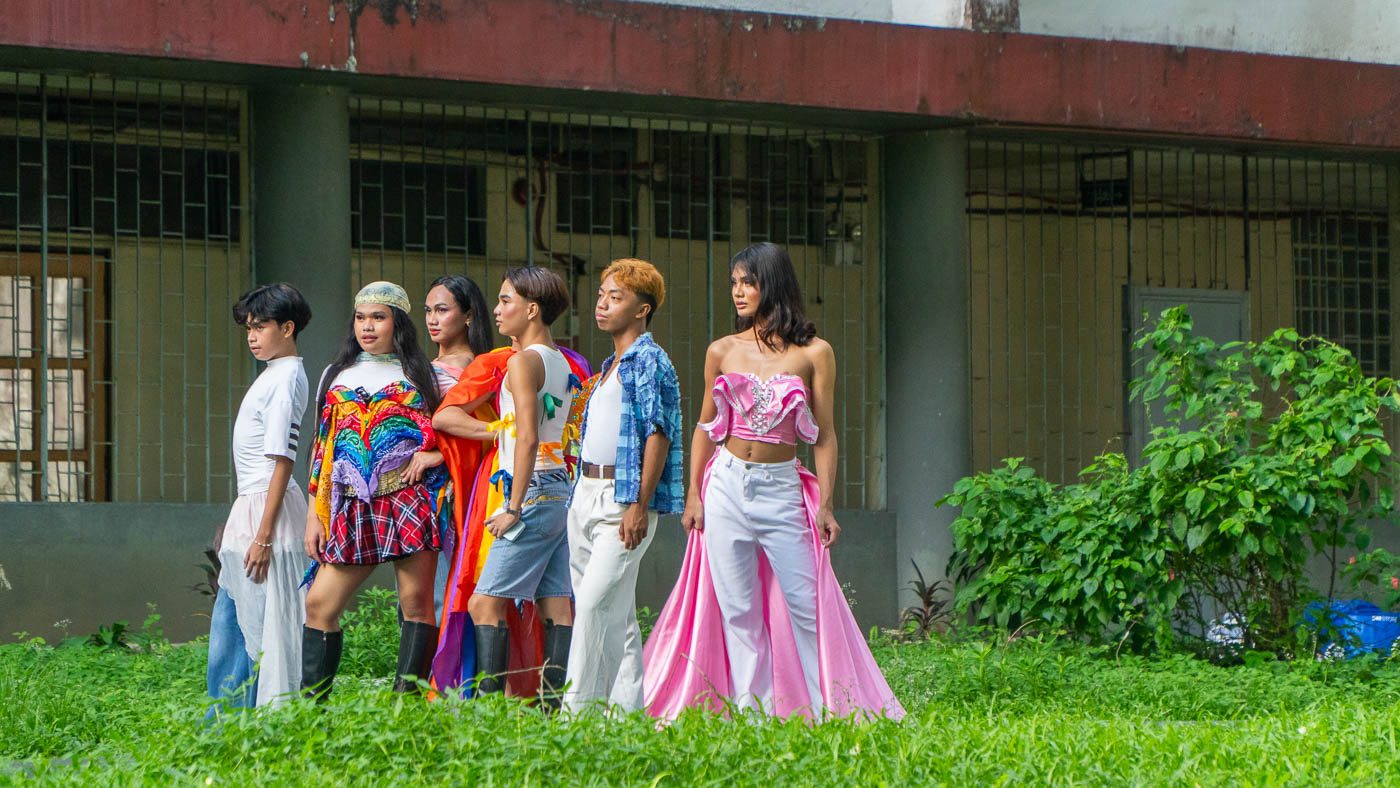 Pride marchers brave the heat during the June 27 celebration at UP Diliman, where thousands gathered to demand an end to discrimination against the LGBTQIA+ community. Photo by Patricia Fontilar/Rappler
What the future holds
Despite the heteronormative belief that only men and women must exist in society, Ceron said it is important to continue educating people about queer experiences while encouraging members of the community to persevere.
“Continue dreaming, continue hoping, continue to push for inclusivity in a society that has long denied you of spaces,” she said.
While for Jagodilla, society must also evolve. She said people should be more open to understanding others, regardless of their gender.
Jagodilla said the Philippines’ fight towards equal rights grows stronger as more allies join the LGBTQIA+ struggle.
“The celebration [of] Pride month is not just a celebration itself, but it is actually a protest,” she added.
You May Also Like

StakeStone (STO) Rockets 125%: What $981M Trading Volume Reveals

Why a $4 Million Nest Egg at 70 Really Only Buys $88,000 of Real Annual Spending

Fox's Peter Doocy mocked for hyping turnout for Trump event — in front of near-empty field