

Must Read
COTABATO, PHILIPPINES - APRIL 1, 2026: A family plays together as the sun sets behind the Cotabato Grand Mosque, the second largest mosque in the Philippines. PriorCOTABATO, PHILIPPINES - APRIL 1, 2026: A family plays together as the sun sets behind the Cotabato Grand Mosque, the second largest mosque in the Philippines. Prior
Trust between PH gov’t, MILF crucial for exit agreement in BARMM — women peacemakers
For feedback or concerns regarding this content, please contact us at crypto.news@mexc.com
MANILA, Philippines – An exit agreement to complete the Bangsamoro peace process requires trust and dialogue between the Philippine government and the Moro Islamic Liberation Front (MILF), especially as diminished confidence between the two parties threatens peace gains.
Former peace adviser Teresita Quintos Deles said that an exit agreement may be undertaken once the “most important pillars” of the peace process “are irreversible.”
“It does not have to be all done,” said Deles in a forum on Thursday, June 18. “We can sign an exit agreement even if it is not yet all done, as long as it is all in the way already. The most important pillars are irreversible.”
An exit agreement will mark the completion of the peace process in the Bangsamoro that started with the signing of the historic deal in 2014.
Deles stressed that the presence of a third-party facilitator and an independent third-party monitoring team is crucial to affirm that everything is in place for both parties before the end is drawn.
In the same forum, peace negotiator Miriam Coronel-Ferrer also underscored the need for trust between parties, saying that there are no specific terms for the agreement and instead will be the product of dialogue. Ferrer is the peace negotiator that oversaw the signing of the Comprehensive Agreement on the Bangsamoro (CAB).
Among issues Deles said are stalling the peace process and breaching trust: suspended decommissioning, a headless government peace implementation panel, and unspent normalization and peace-building funds.
“[The] commitment to an MILF-led political transition, as embodied in both the CAB and the Bangsamoro Organic Law, has been seriously breached, most markedly with the removal of MILF chair Al Haj Murad as interim chief minister in March last year,” said Deles.
President Ferdinand Marcos Jr. replaced Murad with Abdulraof Macacua as BARMM interim chief minister. Macacua ordered the removal of MILF peace negotiator Mohagher Iqbal from parliament over corruption allegations.
Weakened role, seeds for violence
A milestone in the peace process would be the successful conduct of the region’s first parliamentary elections. According to Deles, current developments had weakened MILF’s role after the elections.
“In the run-up to the thrice-postponed first parliamentary elections, now hopefully finally scheduled to be held on September 14, the MILF has split into two competing political parties, making the MILF’s post-election role even more tenuous,” Deles said in her lecture.
The former peace adviser pointed out that while some may regard the organizational breakup within the MILF as an internal problem, it is popularly perceived by the public as “orchestrated by the national government.”
The MILF’s political party for the elections is the United Bangsamoro Justice Party. Macacua — whom the MILF recently suspended as its military chief — is running independently and has been endorsed by a competing political party.
Deles was peace adviser during the Benigno Aquino III administration that made possible the Comprehensive Agreement on the Bangsamoro. Of her work then, Deles said peace “must not only be negotiated” but “institutionalized.” During her lecture on Thursday, she shared anecdotes of Aquino’s personal involvement in seeking peace in Mindanao.
“Twelve years after the signing of the Comprehensive Agreement on the Bangsamoro or the CAB in 2014, its implementation is in fact in a state of disarray,” she said.
The Bangsamoro peace deal drew two tracks: the political, which established the Bangsamoro Autonomous Region in Muslim Mindanao, and the normalization track, which focuses on former combatants and conflict-ridden communities.
According to Malacañang peace adviser Mel Sarmiento, an exit agreement by 2028 is a challenge but remains a possibility. – Rappler.com
Market Opportunity
Intuition Price(TRUST)
$0.05196
$0.05196$0.05196
USD
Intuition (TRUST) Live Price Chart


Disclaimer: The articles reposted on this site are sourced from public platforms and are provided for informational purposes only. They do not necessarily reflect the views of MEXC. All rights remain with the original authors. If you believe any content infringes on third-party rights, please contact crypto.news@mexc.com for removal. MEXC makes no guarantees regarding the accuracy, completeness, or timeliness of the content and is not responsible for any actions taken based on the information provided. The content does not constitute financial, legal, or other professional advice, nor should it be considered a recommendation or endorsement by MEXC.
You May Also Like

Jubi Exchange Collapse: Victims Face Race Against Time to Recover Funds
Jubi Exchange Recovery Strategy: Experts Say Focus on Freezing Funds, Not Chasing Individuals The collapse of Jubi Exchange, also known as JuCoin, has reignited
Share
Hokanews2026/06/21 03:48
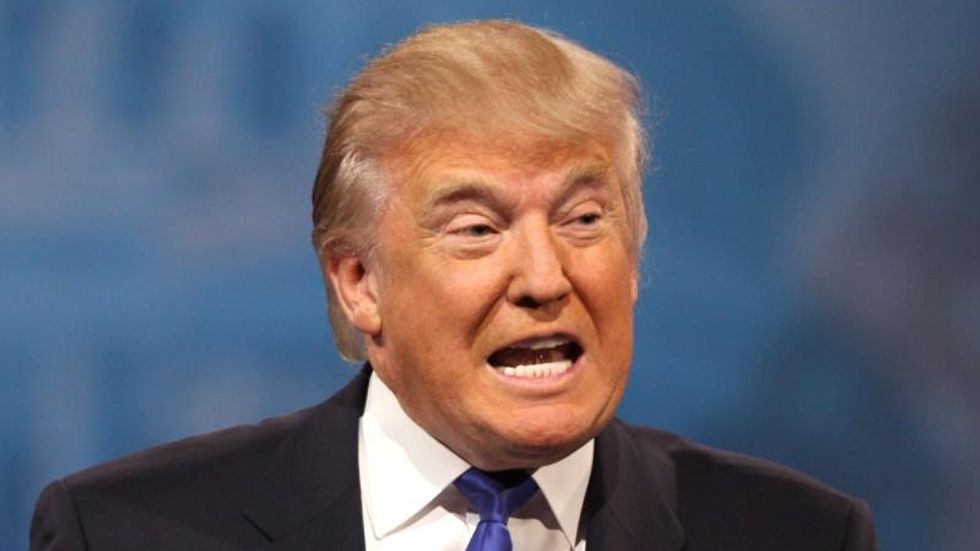
Trump floats new plan to impose his own tolls on Strait of Hormuz
President Donald Trump took to Truth Social to muse about who gets to charge ships for passing through the Strait of Hormuz — and landed on an answer that put the
Share
Rawstory2026/06/21 03:32

Robotics Automation Prototyping: Engineering Kinetic Agility into End-Effectors
Inertia is the invisible tax on modern industrial throughput. Every millisecond a robotic arm spends decelerating, or waiting for high-frequency vibrations to settle
Share
Techbullion2026/04/02 18:25



