

Circadify: How a 22-year-old and his health tech are fixing Uganda’s patient-to-doctor gap
For every 450,000 residents, there are only two medical doctors. Like much of the continent, still battling a severe patient-to-doctor ratio, this is the stark reality in the Buyende district, a sun-bleached rural region in Uganda. For these villagers, healthcare is not a matter of a quick clinic visit; it is a gruelling, multi-day pilgrimage down to Jinja.
Just to look a physician in the eye or feel the tightening squeeze of a blood pressure cuff, patients must sacrifice immensely. The true cost of this diagnostic journey isn’t just measured in the dust of the road, but in hard currency: a single routine check-up can consume up to a month’s wages, all to answer a question as basic as, ‘What is my blood pressure?’
When Ryan Anderson, a 22-year-old American researcher, lived among a local tribe during a fellowship with Washington and Lee University at the Jinja Regional Referral Hospital, he did not just see a systemic crisis; he saw a paradox. The village lacked running water and reliable electricity, yet its community centre was flanked by solar panels where locals gathered to charge smartphones. Lacking medical staff, residents were turning to ChatGPT to troubleshoot their physical ailments.
“People were using AI to ask quick questions about their health instead of making a multi-day journey,” Anderson recalls. “But the first and foremost part of every doctor’s visit is the vital signs collection process. You can’t diagnose without data.”
It was the catalyst for a profound professional pivot. Anderson had spent years meticulously building a resume tailored for medical school, driven by a lifelong ambition to become a physician. But standing in Buyende, looking at the structural deficit of human capital, the limits of that ambition became starkly clear.
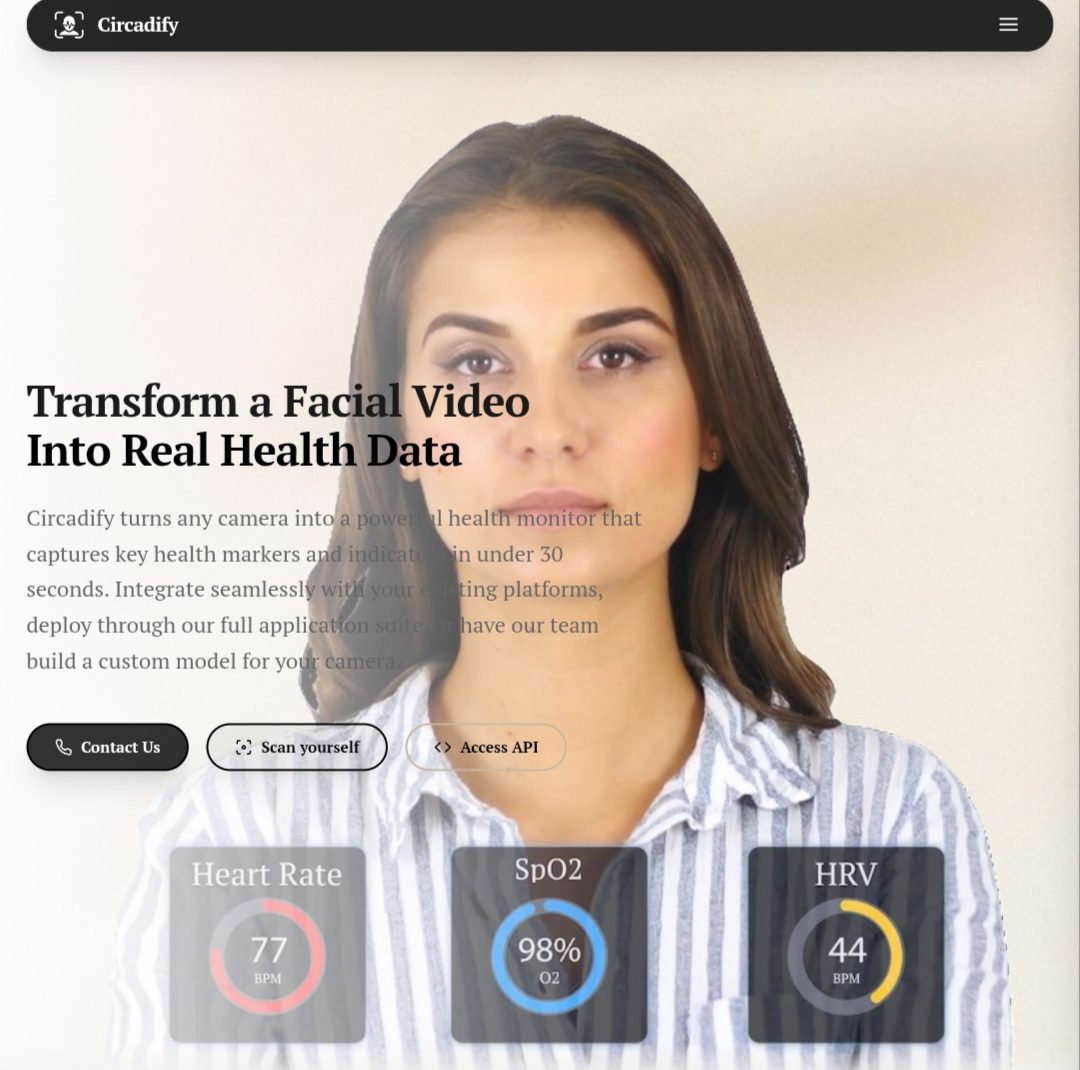 Circadify
“As a physician, you can only help one person at a time,” Anderson says. “But with technology, I could be reading millions of people’s vitals at the same time. The scaling of technology became the only viable route.”
Today, Anderson is the founder and CEO of Circadify, a health tech startup that turns any smartphone camera into a sophisticated, contactless vital signs monitor.
By analysing subtle, microscopic changes in light and colour on a user’s face, invisible to the naked eye, Circadify’s algorithms can calculate blood pressure, heart rate, respiration rate, heart rate variability, and blood oxygen levels in a matter of seconds.
Engineering for the Real World: The Fitzpatrick 6 Standard
While remote photoplethysmography (rPPG) has existed in research labs for over a decade, translating it into a rugged, real-world tool for sub-Saharan Africa presented formidable engineering hurdles. Most commercial wearables, from smartwatches to fitness trackers, are notoriously biased, engineered predominantly using datasets that favour lighter skin tones.
Circadify inverted this paradigm.
“We built our model specifically for the African continent,” Anderson explains. “We took Fitzpatrick type 6, the darkest skin tones on the Fitzpatrick scale, and trained our model on that data first.”
Beyond dermal optics, the software had to thrive in a low-connectivity environment. In remote regions, relying on cloud-based AI infrastructure is a non-starter due to volatile internet access. Circadify resolved this by engineering robust on-device processing. The heavy computational lifting occurs locally on the smartphone, meaning a patient’s biometric data never has to leave the device, a feature that doubles as a rigorous privacy safeguard.
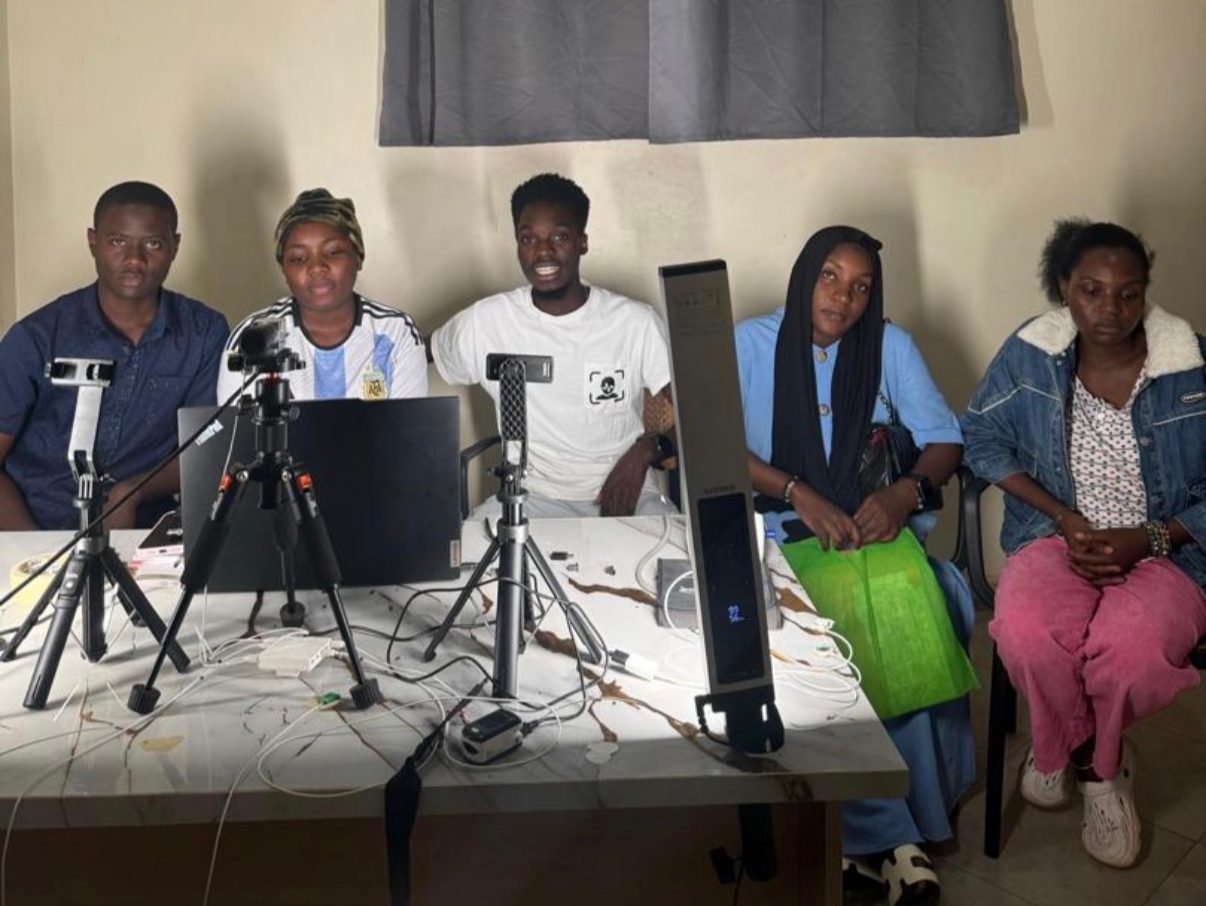 The Circadify team
For older or lower-spec smartphones that lack the processing power to execute these models locally, Circadify built a hybrid architecture that seamlessly switches to a highly optimised, cloud-based pipeline that transmits nothing but raw pixel data, stripping away identifiable facial imagery before it leaves the handset.
Also read: How this US-based Ghanaian engineer is automating the study abroad process with GoScholar for African students
Circadify Supplement does not replace the hospitals
In the high-stakes arena of health tech, a glitch is not merely an inconvenient user experience; it can be life-altering. Anderson is acutely aware of the ethical gravity that comes with deploying digital health tools in vulnerable ecosystems.
“First and foremost, we don’t use this as a replacement for traditional medical technology; we provide it as a supplement,” he emphasises. The gold standard for cardiovascular assessment remains a physical blood pressure cuff or an ECG at a medical facility. Circadify is explicitly positioned as a wellness and tracking tool while the company navigates the rigorous regulatory journey toward formal FDA approval.
This distinction is critical for local adoption and regulatory trust. Rather than staging pharmaceutical-style clinical trials that introduce foreign variables into a patient’s biology, Circadify’s team of eight researchers based in Uganda conducts strictly clinical observational studies. They test the software’s predictive accuracy alongside FDA-approved hardware in a laboratory environment, proving its efficacy one data point at a time.
This practical approach has already yielded profound validation. Anderson shares the story of a young mother in one of the villages who had recently given birth and was battling severe postpartum hypertension. Apprehensive about the crippling financial and time costs of frequent hospital visits, she found sanctuary in Circadify’s observational studies.
“For her to go to the doctor, it cost a lot, and she had to take a full day off work,” Anderson says. “Participating in our study allowed her to regularly monitor her blood pressure trends efficiently and cheaply. It showed us exactly why we are doing this.”
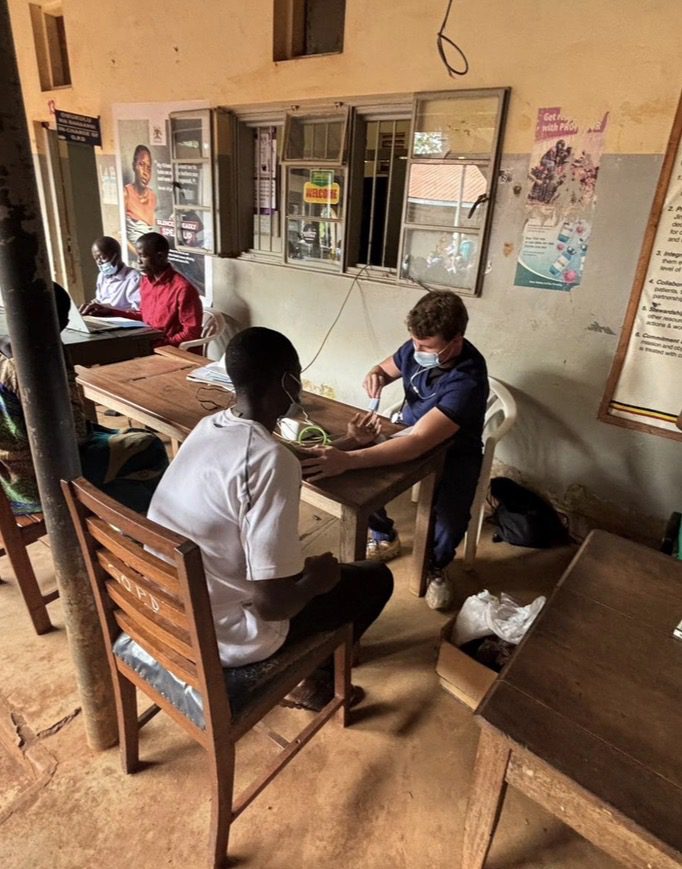 Ryan Anderson, founder and CEO of Circadify, attending to a patient during his fellowship at the Jinja Regional Referral Hospital
However, not every local is as receptive as the new mother. For many African communities, suspicion of Western tech intervention is deeply rooted and justified. The continent has long been treated as a testing ground for extractive data practices by global corporations. Securing trust among local populations required an airtight commitment to data sovereignty.
Circadify’s architecture treats consumer privacy as an immutable right. The application requires no names, no dates of birth, and no personal identifiers. “We don’t store health data, and we don’t extract raw video frames,” Anderson insists. “Once the pixel data is processed by the model, that information is immediately deleted.”
Furthermore, to protect users from corporate overreach, Anderson enforces an invite-only B2B distribution model. Every enterprise buyer, whether a global health initiative, an insurance provider, or a remote monitoring platform, is personally vetted by Anderson and undergoes an extensive organisational background check before gaining API access.
“There is no way we would provide a powerful tool like this to a potentially nefarious player in any market,” he assures.
For now, Circadify’s immediate deployment strategy relies on a localised Android APK distributed directly to Village Health Teams (VHTs) and Community Health Workers in East Africa. By placing this software in the hands of frontline healthcare volunteers, the startup is creating an essential triage layer where none existed.
True to its foundational mission, the global health iteration of the application is, and will always remain, entirely free for individual consumers. To sustain the business, Circadify monetises its platform globally through enterprise API integrations within less critical verticals, such as automotive safety, where car mirrors can track a driver’s heart rate to detect fatigue.
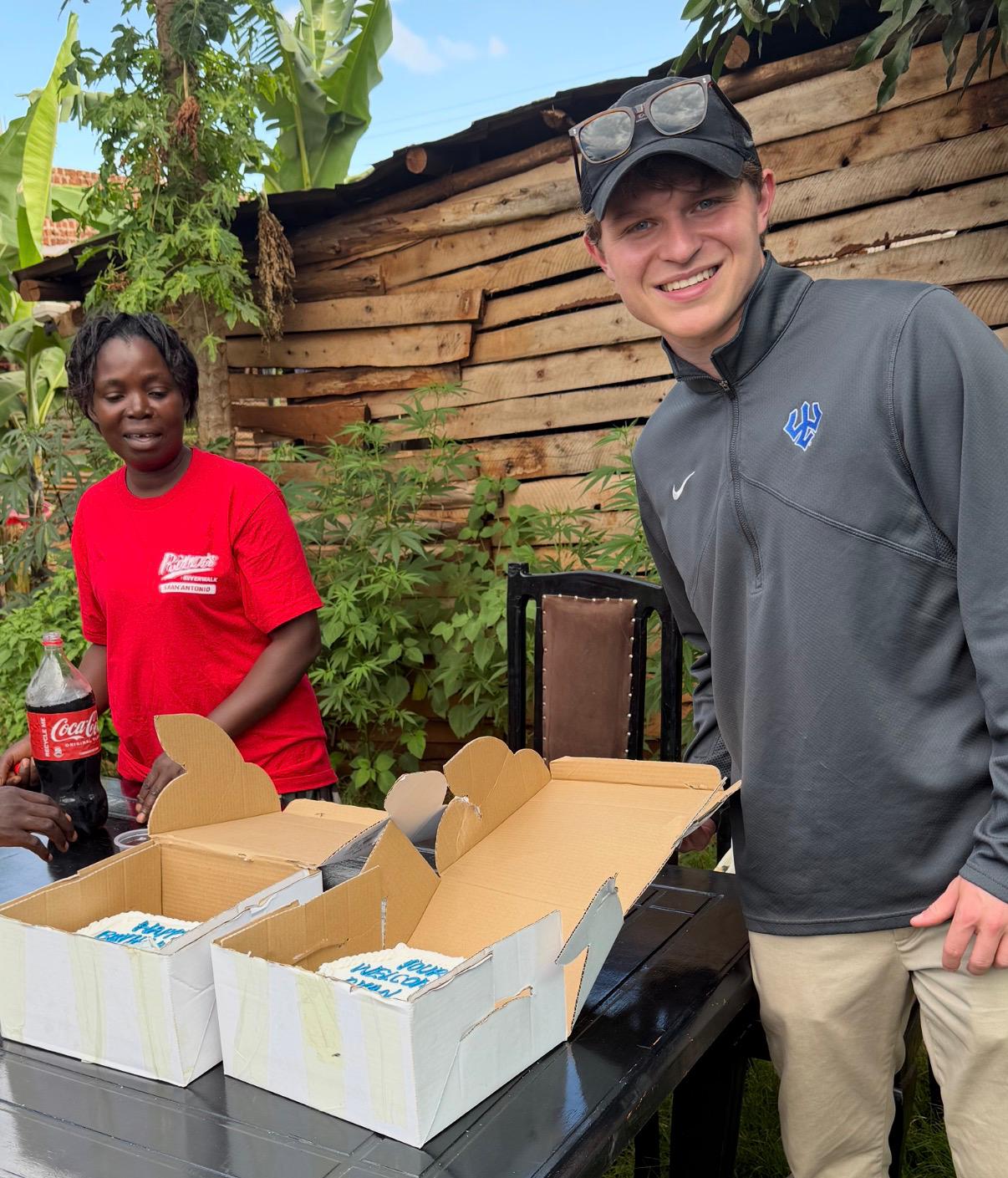 Ryan Anderson, founder and CEO of Circadify during his 22nd birthday in Uganda
“A healthy business needs money to grow, but you can’t look to monetise a product from individuals who cannot afford a basic blood pressure cuff,” Anderson notes with characteristic pragmatism. “If you create great technology that solves a genuine human problem, the monetisation will always follow.”
Looking ahead to the next decade, Anderson’s vision extends far beyond cardiovascular metrics. The ultimate roadmap includes conquering non-invasive blood glucose tracking through the phone’s lens, eliminating the need for diabetic patients to prick their fingers.
It is an audacious milestone, but for a founder who left behind a predictable medical career to rewrite the rules of diagnostic accessibility, it is simply the logical next step.
“Even if we are just pushing the field in a positive direction, it’s worth the risk,” Anderson says. “We are giving this our absolute best effort, because the people in these villages deserve nothing less.”


You May Also Like

Why Businesses Need Professional Machine Design and Development Services

EUR/JPY Stalls: Critical 184.00 Level Holds as Markets Decipher ECB and BoJ Policy Signals

Japanese Tech Giant’s Ambitious Bitcoin Accumulation



