Toncoin (TON) Shows Promise But Faces Critical Challenges Investors Must Consider
Key Points
- Telegram is set to assume the TON Foundation’s primary responsibilities and will operate as TON’s dominant validator
- The network hosts $752 million in stablecoin liquidity and generates $39.7 million in daily DEX trading volume, demonstrating genuine network usage
- Chain fees total approximately $8,086 daily, revealing poor monetization compared to the network’s overall scale
- Monthly unlocks from the TON Believers Fund release around 36.59 million TON, with the upcoming unlock valued at roughly $75 million
- Validator participation requires a minimum stake of 300,000 TON, while Telegram’s expanding influence creates centralization risks
Unlike most blockchain networks that struggle to build user bases, Toncoin benefits from an inherent distribution advantage. While competing projects allocate resources toward user acquisition campaigns, funding programs, and reward mechanisms, TON operates with a fundamentally different model.
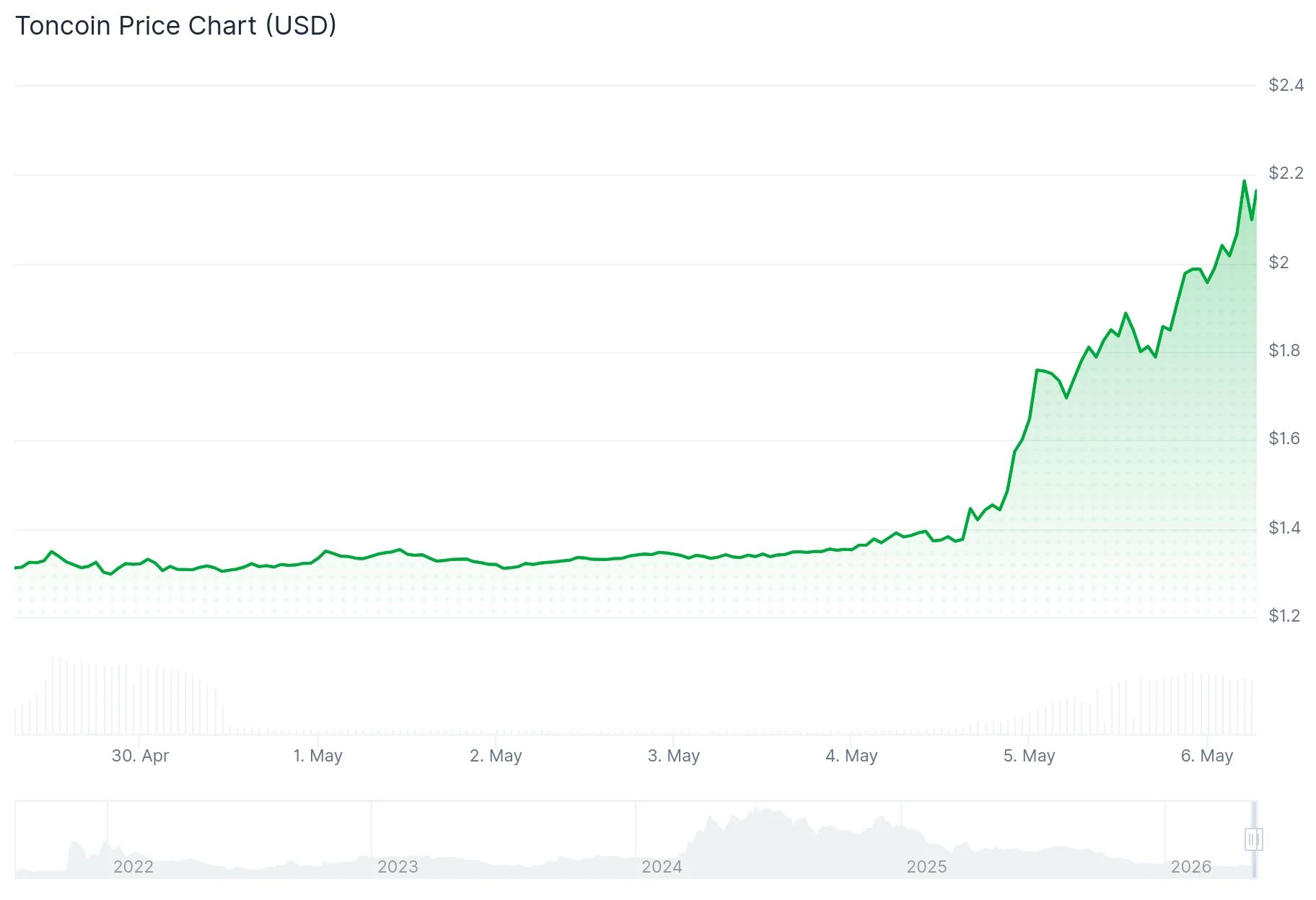 Toncoin (TON) Price
The TON Wallet exists natively within Telegram’s ecosystem. Users maintain custody of their private keys while experiencing streamlined mobile functionality. This blend of security and ease-of-use represents an uncommon achievement in cryptocurrency.
With Telegram’s registered user count exceeding one billion, TON possesses immediate access to an audience size that remains beyond reach for nearly every other blockchain initiative.
During May 2026, Pavel Durov, Telegram’s founder, revealed plans for Telegram to succeed the TON Foundation as the network’s primary developmental authority. Additionally, Telegram will assume the position of largest network validator.
This declaration generated significant interest around TON while emphasizing the deepening integration between these two platforms.
Evaluating Network Activity Through On-Chain Metrics
Current DeFiLlama statistics indicate approximately $752 million in stablecoin deposits residing on TON infrastructure. The network processes roughly $39.7 million in daily decentralized exchange volume alongside approximately $1.48 million in perpetual futures trading volume over the same timeframe.
These figures demonstrate that both development teams and end users are actively selecting TON for their operations. Capital is flowing into the ecosystem, accompanied by legitimate trading behavior.
Nevertheless, daily network fees amount to just $8,086, while chain revenue approaches $4,043. When assessed against a market capitalization ranging from $5.6 billion to $5.7 billion, this fee production appears substantially inadequate.
Fee economics carry significance because they indicate how much value the protocol actually retains. Substantial transaction activity paired with minimal fee generation suggests users are engaging with the network without the protocol effectively capturing economic value from that engagement.
Supply Releases and Validator Centralization
CoinGecko data indicates roughly 2.7 billion TON tokens currently exist in active circulation. The project’s foundational documentation established an initial maximum supply of 5 billion tokens, with subsequent incremental expansion occurring through validator compensation mechanisms.
The TON Believers Fund presents an additional consideration. Based on Messari’s analysis, this fund distributes approximately 36.59 million TON monthly. Roughly 1.098 billion TON tokens await future distribution through approximately October 2028.
DeFiLlama’s unlock monitoring system values the forthcoming scheduled release at approximately $75 million. This persistent introduction of supply generates continuous downward market pressure.
Regarding validation infrastructure, TON network participation mandates a minimum commitment of 300,000 TON. Reports suggest practical entry requirements typically exceed this baseline threshold.
With Telegram positioned to become the dominant validator, network control is consolidating around a singular organization. While this arrangement may enhance operational coordination and system stability, it simultaneously reduces the network’s decentralized characteristics.
Telegram’s emergence as TON’s primary validator represents the latest factor influencing how market participants and builders evaluate the network’s trajectory.
The post Toncoin (TON) Shows Promise But Faces Critical Challenges Investors Must Consider appeared first on Blockonomi.


You May Also Like

ekko Launches the Nature Footprint, Enabling Payment Providers to Embed Environmental Impact Insights and Action Into Everyday Spending

Ripple CEO Says CLARITY Act Is a Done Deal as Senate Prepares Markup