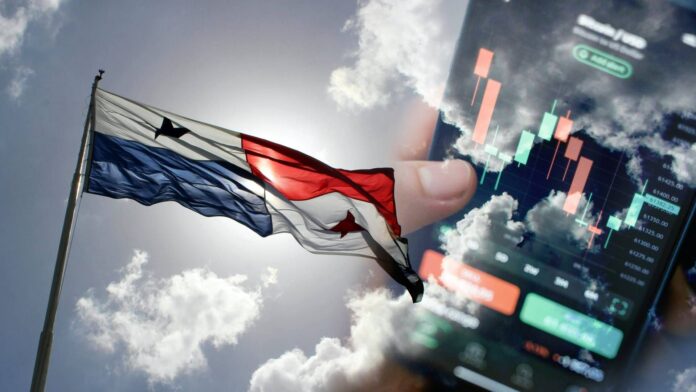
The post Big U.S. banks cut prime rate to 7.25% after Fed’s interest rate cut appeared on BitcoinEthereumNews.com. Big U.S. banks have lowered their prime lending rate to 7.25%, down from 7.50%, after the Federal Reserve announced a 25 basis point rate cut on Wednesday, the first adjustment since December. The change directly affects consumer and business loans across the country. According to Reuters, JPMorgan Chase, Citigroup, Wells Fargo, and Bank of America all implemented the new rate immediately following the Fed’s announcement. The prime rate is what banks charge their most trusted borrowers, usually large companies. But it’s also the base for what everyone else pays; mortgages, small business loans, credit cards, and personal loans. With this cut, borrowing gets slightly cheaper across the board. Inflation still isn’t under control. It’s above the 2% goal, and the impact of President Donald Trump’s tariffs remains uncertain. Fed reacts to rising unemployment concerns Richard Flynn, managing director at Charles Schwab UK, said jobless claims are at their highest in almost four years, despite the Fed originally planning to keep rates unchanged through the summer. “Although the summer began with expectations of holding rates steady, the labor market has shown more signs of weakness than anticipated,” Flynn said. Hiring has slowed because of uncertainty around Trump’s trade policy. Companies are hesitating to add staff, which is why job growth has nearly stalled. As fewer people are hired, spending starts to shrink. And that’s when things start to unravel. That’s what the Fed is trying to get ahead of with this rate cut. The cut also helps banks directly. Lower rates mean more people may qualify for loans again. During the previous rate hikes, lending standards got tighter. Now, with cheaper credit, smaller businesses could get approved again. If well-funded businesses feel confident, they may hire again. That could eventually help the consumer side of the economy bounce back, but that’s… The post Big U.S. banks cut prime rate to 7.25% after Fed’s interest rate cut appeared on BitcoinEthereumNews.com. Big U.S. banks have lowered their prime lending rate to 7.25%, down from 7.50%, after the Federal Reserve announced a 25 basis point rate cut on Wednesday, the first adjustment since December. The change directly affects consumer and business loans across the country. According to Reuters, JPMorgan Chase, Citigroup, Wells Fargo, and Bank of America all implemented the new rate immediately following the Fed’s announcement. The prime rate is what banks charge their most trusted borrowers, usually large companies. But it’s also the base for what everyone else pays; mortgages, small business loans, credit cards, and personal loans. With this cut, borrowing gets slightly cheaper across the board. Inflation still isn’t under control. It’s above the 2% goal, and the impact of President Donald Trump’s tariffs remains uncertain. Fed reacts to rising unemployment concerns Richard Flynn, managing director at Charles Schwab UK, said jobless claims are at their highest in almost four years, despite the Fed originally planning to keep rates unchanged through the summer. “Although the summer began with expectations of holding rates steady, the labor market has shown more signs of weakness than anticipated,” Flynn said. Hiring has slowed because of uncertainty around Trump’s trade policy. Companies are hesitating to add staff, which is why job growth has nearly stalled. As fewer people are hired, spending starts to shrink. And that’s when things start to unravel. That’s what the Fed is trying to get ahead of with this rate cut. The cut also helps banks directly. Lower rates mean more people may qualify for loans again. During the previous rate hikes, lending standards got tighter. Now, with cheaper credit, smaller businesses could get approved again. If well-funded businesses feel confident, they may hire again. That could eventually help the consumer side of the economy bounce back, but that’s…

Big U.S. banks cut prime rate to 7.25% after Fed’s interest rate cut

2025/09/18 16:32

Big U.S. banks have lowered their prime lending rate to 7.25%, down from 7.50%, after the Federal Reserve announced a 25 basis point rate cut on Wednesday, the first adjustment since December.

The change directly affects consumer and business loans across the country. According to Reuters, JPMorgan Chase, Citigroup, Wells Fargo, and Bank of America all implemented the new rate immediately following the Fed’s announcement.

The prime rate is what banks charge their most trusted borrowers, usually large companies. But it’s also the base for what everyone else pays; mortgages, small business loans, credit cards, and personal loans.

With this cut, borrowing gets slightly cheaper across the board. Inflation still isn’t under control. It’s above the 2% goal, and the impact of President Donald Trump’s tariffs remains uncertain.

Fed reacts to rising unemployment concerns

Richard Flynn, managing director at Charles Schwab UK, said jobless claims are at their highest in almost four years, despite the Fed originally planning to keep rates unchanged through the summer.

“Although the summer began with expectations of holding rates steady, the labor market has shown more signs of weakness than anticipated,” Flynn said.

Hiring has slowed because of uncertainty around Trump’s trade policy. Companies are hesitating to add staff, which is why job growth has nearly stalled.

As fewer people are hired, spending starts to shrink. And that’s when things start to unravel. That’s what the Fed is trying to get ahead of with this rate cut.

The cut also helps banks directly. Lower rates mean more people may qualify for loans again. During the previous rate hikes, lending standards got tighter.

Now, with cheaper credit, smaller businesses could get approved again. If well-funded businesses feel confident, they may hire again. That could eventually help the consumer side of the economy bounce back, but that’s still a big if.

Jamie Dimon, CEO of JPMorgan Chase, is not optimistic. Last week, he said that the true effects of tariffs, immigration policies, and Trump’s fiscal strategy are still unknown.

The tax-and-spending decisions made under Trump’s administration could bring unexpected consequences. Dimon didn’t say anything reassuring—he just made it clear the situation is still foggy.

David Solomon, CEO of Goldman Sachs, agreed. Speaking to CNBC, he said: “There’s no question in my mind that it’s having an impact on growth.” He was referring to tariffs, but the message was broader. No one running a major financial institution is confident about what’s next.

Fed board split while markets remain cold

The Fed vote to cut rates was almost unanimous. The only pushback came from Stephen Miran, who had just joined the board after being picked by Trump and confirmed earlier that same week.

He wanted a half-point cut, not a quarter-point. Before the meeting, there had been speculation that Michelle Bowman and Christopher Waller, both also appointed by Trump, would argue for a deeper cut too. But they ended up backing the smaller move.

Even though most of the board was on the same page, the markets didn’t respond much. Investors were waiting to see if Trump’s pressure for a 100 basis point cut would be answered. It wasn’t. The Fed chose a more cautious approach.

The Fed’s internal dot plot—which shows where board members see rates heading—revealed more uncertainty. Most of them expect only one rate cut in 2026. Traders were betting on more. That mismatch explains the weak market reaction.

Jerome Powell, the Fed chair, called the move “risk management.” That means the Fed didn’t act because things are already falling apart, but because they might soon. That’s not confidence. That’s hedging.

Get seen where it counts. Advertise in Cryptopolitan Research and reach crypto’s sharpest investors and builders.

Source: https://www.cryptopolitan.com/big-us-banks-cut-prime-rate-to-7-25-post-fed/
Disclaimer: The articles reposted on this site are sourced from public platforms and are provided for informational purposes only. They do not necessarily reflect the views of MEXC. All rights remain with the original authors. If you believe any content infringes on third-party rights, please contact service@support.mexc.com for removal. MEXC makes no guarantees regarding the accuracy, completeness, or timeliness of the content and is not responsible for any actions taken based on the information provided. The content does not constitute financial, legal, or other professional advice, nor should it be considered a recommendation or endorsement by MEXC.

You May Also Like

U.S. Court Finds Pastor Found Guilty in $3M Crypto Scam

U.S. Court Finds Pastor Found Guilty in $3M Crypto Scam

The post U.S. Court Finds Pastor Found Guilty in $3M Crypto Scam appeared on BitcoinEthereumNews.com. Crime 18 September 2025 | 04:05 A Colorado judge has brought closure to one of the state’s most unusual cryptocurrency scandals, declaring INDXcoin to be a fraudulent operation and ordering its founders, Denver pastor Eli Regalado and his wife Kaitlyn, to repay $3.34 million. The ruling, issued by District Court Judge Heidi L. Kutcher, came nearly two years after the couple persuaded hundreds of people to invest in their token, promising safety and abundance through a Christian-branded platform called the Kingdom Wealth Exchange. The scheme ran between June 2022 and April 2023 and drew in more than 300 participants, many of them members of local church networks. Marketing materials portrayed INDXcoin as a low-risk gateway to prosperity, yet the project unraveled almost immediately. The exchange itself collapsed within 24 hours of launch, wiping out investors’ money. Despite this failure—and despite an auditor’s damning review that gave the system a “0 out of 10” for security—the Regalados kept presenting it as a solid opportunity. Colorado regulators argued that the couple’s faith-based appeal was central to the fraud. Securities Commissioner Tung Chan said the Regalados “dressed an old scam in new technology” and used their standing within the Christian community to convince people who had little knowledge of crypto. For him, the case illustrates how modern digital assets can be exploited to replicate classic Ponzi-style tactics under a different name. Court filings revealed where much of the money ended up: luxury goods, vacations, jewelry, a Range Rover, high-end clothing, and even dental procedures. In a video that drew worldwide attention earlier this year, Eli Regalado admitted the funds had been spent, explaining that a portion went to taxes while the remainder was used for a home renovation he claimed was divinely inspired. The judgment not only confirms that INDXcoin qualifies as a…
Share
BitcoinEthereumNews2025/09/18 09:14