MEXC Crude Oil Trading: How to Trade Brent and WTI Perpetual Futures with USDT
Crude oil is one of the world’s most closely watched macro assets. It reacts quickly to geopolitical tension, supply disruptions, inflation trends, refinery outages, and changes in global demand. For active traders, that combination of liquidity and volatility makes oil a market worth watching every day.
On MEXC, crude oil trading currently focuses on two USDT-margined perpetual contracts: OIL(BRENT)USDT and OIL(WTI)USDT. These two products give traders exposure to the two most important global oil benchmarks without needing to deal with physical delivery or traditional commodity brokerage infrastructure.
If you want to trade oil on MEXC, the real question is not just whether these products exist. It is how they work, what moves them, and when each contract makes more sense.
What MEXC Crude Oil Trading Offers
MEXC’s crude oil offering is straightforward. At the moment, the platform provides two core oil perpetual futures contracts, both margined in USDT.
`OIL(WTI)USDT` tracks West Texas Intermediate, the leading US crude benchmark.
`OIL(BRENT)USDT` tracks Brent, the benchmark that plays a central role in global seaborne oil pricing.
This matters because WTI and Brent do not always react in the same way. They are influenced by different regional flows, inventory patterns, transport bottlenecks, and geopolitical pressures. If you are new to the energy market, it helps to first understand the difference between WTI and Brent before choosing which contract fits your strategy.
From a trader’s perspective, the structure is familiar: perpetual futures allow directional exposure without an expiry date, while settlement and margin are handled in USDT. That makes the products easier to integrate into an existing crypto-native trading workflow.
Why Crude Oil Appeals to Active Traders
Oil is not a passive market. It can reprice sharply on a headline, especially when the market is caught off guard. A weekend escalation in the Middle East, an unexpected OPEC+ policy signal, a surprise US inventory build, or a sudden shift in recession expectations can all create immediate volatility.
That is one reason oil attracts short-term and event-driven traders. Another is that it sits at the intersection of macro, geopolitics, inflation, and risk sentiment. Oil is not just an energy market. It is also a signal for the broader global economy.
For traders already operating in crypto, oil can also serve a different role. Crypto and macro risk often collide during inflation shocks and liquidity squeezes. In those periods, following crude oil closely can offer a broader framework for market positioning rather than relying only on coin-specific narratives.
Brent vs WTI: Which Contract Should You Watch?
The answer depends on what kind of information you trade.
OIL(WTI)USDT is often more relevant when your view is driven by US-specific data. Weekly EIA inventory numbers, US production trends, shale activity, and domestic storage conditions can all matter here. If your process is built around scheduled data and macro calendars, WTI is often the cleaner instrument.
OIL(BRENT)USDT tends to become more important when global supply risk is the main story. Brent is typically the benchmark traders watch when maritime routes, sanctions, OPEC+ discipline, or Middle East developments dominate the narrative. If your trading style is more headline-driven and geopolitical, Brent often reacts faster and more aggressively.
There is no universal “better” contract. The better contract is the one that matches the source of your edge.
What Actually Moves Crude Oil Prices
A weak oil article usually stops at “supply and demand.” A useful one gets more specific.
Several forces repeatedly move oil prices:
- OPEC+ production decisions
- US crude inventory data
- war risk and sanctions
- refinery maintenance and outages
- shipping disruptions and freight bottlenecks
- global growth expectations
- inflation and central bank policy
- US dollar strength
If you want the macro picture in more detail, MEXC’s guide to factors affecting crude oil prices is a solid companion read.
The key point is that oil rarely moves for just one reason. It usually trades at the intersection of physical supply, financial positioning, and market expectations. That is why disciplined traders do better when they combine chart structure with macro context instead of relying on either one alone.
How to Trade Crude Oil on MEXC with USDT
For most users, the appeal of MEXC’s oil products is accessibility. You are trading oil exposure through USDT-margined perpetuals inside a platform environment that already feels familiar to crypto derivatives users.
At a practical level, the workflow is simple:
1. Choose your market: Brent or WTI.
2. Decide whether your idea is short-term momentum, mean reversion, or event-driven.
3. Set position size based on volatility, not conviction alone.
4. Define invalidation before entering the trade.
5. Use leverage carefully and treat liquidation risk as central, not secondary.
If you want a product-specific walkthrough, MEXC also has a dedicated guide on how to trade crude oil with USDT.
One important principle deserves emphasis here: leverage can improve capital efficiency, but it also compresses your margin for error. In oil, price moves can be fast and headline-driven. That means poor sizing is often a bigger problem than poor analysis.
Risk Management Matters More in Oil Than Most New Traders Expect
Crude oil can look deceptively clean on a chart right before it becomes violent. Many of the biggest moves happen when traders are overly confident in a consensus narrative.
A disciplined oil trader usually asks four questions before entering:
- What is the catalyst?
- What level proves me wrong?
- How much can I lose if volatility expands suddenly?
- Am I trading the right benchmark for this thesis?
Those questions sound basic, but they help separate structured trading from impulsive trading.
This is also where credibility matters. Oil is not a market that rewards vague opinions. If you cannot explain why Brent should move more than WTI, or why a US inventory release matters for one contract more than the other, you probably do not have a trade yet. You only have a headline.
Who MEXC Crude Oil Trading Is Best For
MEXC crude oil trading is best suited to users who already understand futures basics and want exposure to macro-driven volatility through a crypto-native setup.
It may be especially relevant for:
- short-term traders who follow economic calendars
- macro traders who react to geopolitical news
- crypto-native users who want access to oil without leaving a USDT-based trading environment
- traders looking to diversify beyond crypto-only narratives
It is less suitable for users who are new to leverage, trade without a defined stop, or confuse volatility with opportunity. Oil can create strong setups, but it punishes sloppy execution very quickly.
Final Thoughts
MEXC currently keeps crude oil trading focused on the two contracts that matter most: Brent and WTI. That is a good thing. It gives users clean access to the two benchmarks that dominate global oil pricing rather than overwhelming them with low-priority products.
For traders, the choice is straightforward. If your edge comes from US data and inventory-driven moves, WTI often makes more sense. If your edge comes from global supply shocks and geopolitical headlines, Brent may be the better market to watch.
Either way, the quality of the trade will depend less on excitement and more on preparation. Know what moves the contract, know why you are in the position, and know your risk before the market tests you.
Popular Articles
View More
DJT Stock: Is Trump Media a Turnaround Trade or a Political Meme Stock?
DJT stock is one of the strangest names in the U.S. equity market. Trump Media & Technology Group, the company behind Truth Social, trades like a media company, a political proxy, a meme stock, a

F Stock: Is Ford Becoming an AI Power Trade or Still a Truck Cycle Story?
Ford Motor Company has spent years being treated like an old-economy automaker: cyclical, capital-heavy, dividend-sensitive, and closely tied to U.S. truck demand. That view is not wrong, but it may

NuScale Power (SMR): Is the Nuclear AI Power Trade Still Early?
Key Takeaways NuScale Power is a U.S. small modular reactor company trading under the ticker SMR. The bull case is tied to AI data-center power demand, nuclear policy support, and NuScale’s

Hot Crypto Updates
View More
Who Is Ansem? The Solana Trader Behind The Black Bull ($ANSEM)
Who is Ansem? Discover the real identity of Solana's most influential crypto trader, how he built his reputation, and what you need to know about the $ANSEM (The Black Bull) memecoin that exploded
Is Solana Memecoin Season Back? What On-Chain Data Reveals
Is Solana Memecoin Season back? Pump.fun DEX volume hit a record $2B in a single day, on-chain wallets surged, and the Solana meme market cap climbed 31% in weeks. Here is what the data actually

What Is Ansem? Why Did $ANSEM Explode — And What Comes Next?
What is Ansem, and why did $ANSEM explode 17,000%+ in June 2026? A deep-dive into the Solana influencer's background, the Black Bull memecoin surge, the airdrop catalyst, and the real risks behind

Trending News
View More
Anchorage Digital Adds Off-Exchange Settlement for Binance
Anchorage Digital says it has integrated its off-exchange settlement system with Binance, enabling select institutional clients to trade on Binance without depositing
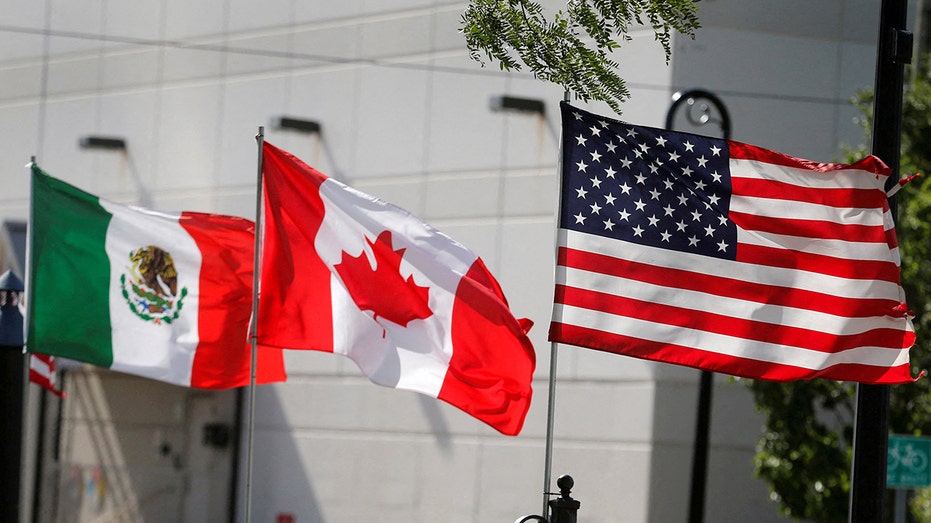
What are the main sticking points in the Trump admin's trade negotiations with Canada, Mexico?
A senior Trump administration official cites Canada's retaliatory tariffs and dairy restrictions as key obstacles, with bilateral talks with Mexico set for July

Related Articles
View More
Open USD Stablecoin (OUSD): Why the New Stablecoin Alliance Matters
Open USD Stablecoin, also referred to as OUSD, has quickly become one of the most important stablecoin stories of 2026. Unlike many new digital assets that begin inside a small crypto-native community
DJT Stock: Is Trump Media a Turnaround Trade or a Political Meme Stock?
DJT stock is one of the strangest names in the U.S. equity market. Trump Media & Technology Group, the company behind Truth Social, trades like a media company, a political proxy, a meme stock, a cryp

Trump Meme Coin: What Traders Should Know About TRUMP, Politics, and Meme-Coin Risk
Trump meme coin is not a normal crypto asset. It is part meme coin, part political brand, part speculative trading vehicle, and part controversy. Since its launch in January 2025, TRUMP has become one