Google Stock Up 114% in 12 Months! Can Alphabet Reach $515? GOOGL/GOOG Price Target and Analyst Forecast
- As of June 2026, the consensus 12-month Google price target is $429.87, with 61 analysts rating Alphabet a "Buy", per S&P Global Market Intelligence.
- Individual firm targets span from $340 at the low to $515 at the high, with recent upgrades from Mizuho ($460), Piper Sandler ($445), and Loop Capital ($490).
- GOOGL (Class A) and GOOG (Class C) trade on NASDAQ at nearly identical prices; the only practical difference is that GOOGL carries one vote per share and GOOG carries none.
- Alphabet's Q1 2026 revenue rose 22% year-over-year to $109.9 billion, with EPS up 82% to $5.11 and Google Cloud growing 63% to $20 billion, per its SEC 8-K filing.
- Google Cloud's backlog reached over $460 billion in Q1 2026, nearly doubling quarter-over-quarter, giving analysts an unusually concrete foundation for future revenue forecasts.
- Alphabet completed an $84.75 billion equity raise in June 2026, including a $10 billion private placement from Berkshire Hathaway, to fund AI infrastructure expansion.
What Is Alphabet? Google, GOOGL, and GOOG Explained
Google Price Target and GOOG Price Target: $340 to $515
Inside the GOOGL Price Target Range: $340 Floor, $515 Ceiling
Who Raised the GOOGL Analyst Price Target and Why: $445 to $490
Alphabet Stock Price Prediction: The AI and Cloud Data Moving Targets Higher
Q1 2026 Earnings Beat: $109.9B Revenue, EPS Up 82%
Google Cloud Grows 63%: The AI Thesis Behind the Alphabet Stock Price Forecast
Alphabet Stock Price Prediction for 2030: What the Bull Case Looks Like
FAQ
Conclusion
Popular Articles
View More
MSTR Stock Fell Nearly 60%! So Why Is the Analyst Strategy Price Target Still $351?
Strategy Inc. was once a software company. Today it is the world's largest publicly listed corporate Bitcoin holder by volume, with a treasury strategy that has become a benchmark for institutional
The James Howells Bitcoin Story: How 8,000 BTC Got Lost in a Landfill
Somewhere beneath 1.4 million tonnes of garbage in Newport, Wales, sits a hard drive holding the private key to 8,000 Bitcoin. The man who put it there — Welsh IT engineer James Howells — did it by
How SpaceX Reusable Rockets Reshape the Space Economy: From Falcon 9 to Starship, and the Road to SPCX's Trillion-Dollar Valuation
Key Takeaways SpaceX reusable rockets fundamentally rewrote the economics of commercial spaceflight: On December 21, 2015, Falcon 9's first-stage booster completed the world's first orbital-class

Hot Crypto Updates
View More
Strategy Bought the Dip Below Its Own Cost Basis — and Triggered a $504M Short Squeeze
Strategy bought 1,550 BTC at $65,332 — below its own average cost for the first time. Bitcoin rebounded above $63,000 and wiped out $504 million in short positions in 24 hours. Here's what actually
Where to Buy SpaceX IPO Stock: The Complete Guide (June 2026)
SpaceX IPO (SPCX) hits Nasdaq on June 12, 2026, targeting a $1.75 trillion valuation. Here's every way to buy — and why global investors are turning to MEXC Realstock as the simplest alternative.
Bitcoin's Worst Week of 2026: How AI and Stocks Are Draining Capital from Crypto
For years, the financial landscape treated cryptocurrency as the ultimate destination for rapid growth. Investors seeking massive returns routinely ignored traditional assets in favor of digital
Zcash (ZEC) Orchard Vulnerability Explained: A 4-Year Counterfeiting Bug, a 40% Crash, and an Emergency Hard Fork
Zcash (ZEC) was climbing toward $700 and outperforming much of the market when a single disclosure flipped the narrative. On June 5, 2026, word spread that Zcash's Orchard shielded pool had carried a
Trending News
View More
Oil Pulls Back but Analysts Warn Triple-Digit Prices Are Still Coming
TLDR Brent crude dropped 1.4% to $92.92 and WTI fell 1.9% to $89.57 after Iran and Israel said they halted attacks Trump told reporters a deal could come “one or
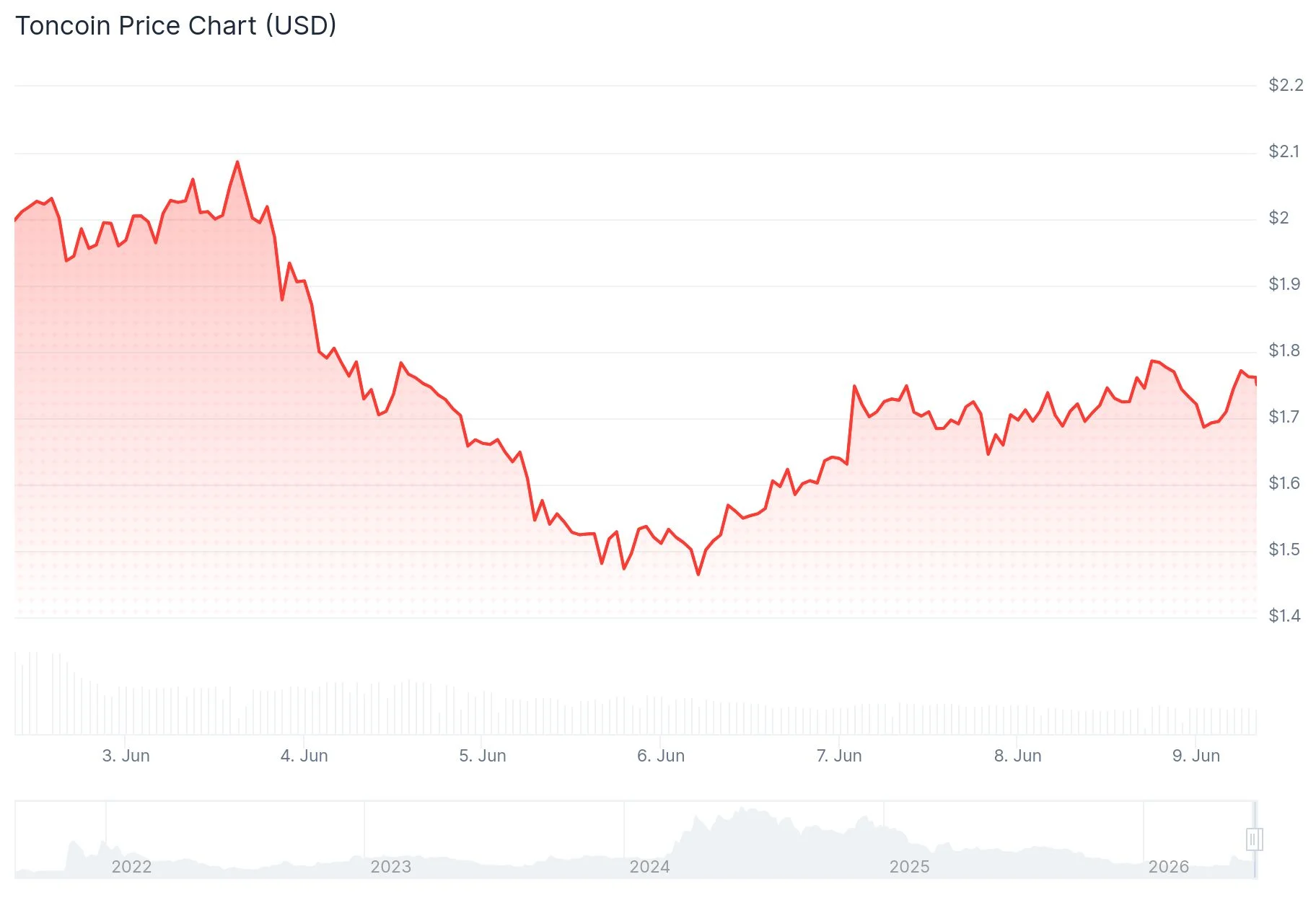
TON Strategy Generates $5.6M Through May Staking as Toncoin (TON) Network Undergoes Major Enhancements
TON Strategy reports $5.6M in May staking rewards with 17.80% annualized yield as Toncoin network upgrades boost validator efficiency and throughput on June 4.

Related Articles
View MoreMSTR Stock Fell Nearly 60%! So Why Is the Analyst Strategy Price Target Still $351?
Strategy Inc. was once a software company.Today it is the world's largest publicly listed corporate Bitcoin holder by volume, with a treasury strategy that has become a benchmark for institutional BTC
SpaceX Starship 2026: Latest Launches, Flight Test Timeline and What Comes Next
Starship Is Not Just a Rocket Test — It Is the Future Cost Curve of SpaceXSpaceX Starship is often covered as a launch spectacle. The rocket lifts off, the booster separates, the vehicle reenters, som
How Much Money Does SpaceX Get From Government Contracts? NASA Funding, Starshield and Defense Revenue Explained
SpaceX’s IPO Story Is Also a Government Revenue StorySpaceX’s IPO story is usually framed around three things: Starlink revenue, reusable rockets and Elon Musk’s long-term Mars vision.That framing is