In the world of crypto trading, risk control is often misunderstood as a set of restrictions imposed on users by platforms. In reality, it is the financial industry's safety net, a critical mechanismIn the world of crypto trading, risk control is often misunderstood as a set of restrictions imposed on users by platforms. In reality, it is the financial industry's safety net, a critical mechanism
Learn/Cryptocurrency Knowledge/Security Knowledge/First Line ...t Integrity

First Line of Defense: How Risk Controls Protect Users and Market Integrity

Beginner
May 20, 2026MEXC
0m
Bitcoin
BTC$63,873.47+1.28%
Levare
LVR$5.5179-30.11%
Ethereum
ETH$1,728.38+1.54%

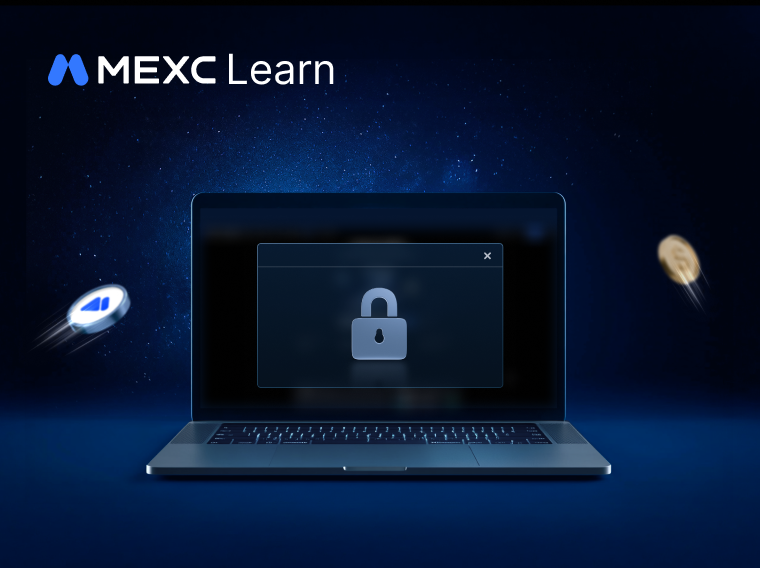
In the world of crypto trading, risk control is often misunderstood as a set of restrictions imposed on users by platforms. In reality, it is the financial industry's safety net, a critical mechanism that protects user assets, maintains market order, and ensures the stability of trading systems. Risk controls act as a digital firewall within the trading ecosystem, defending against hacking, fraudulent trades, money laundering, and other threats, all while keeping platforms secure and user funds safe.

Put simply, only by effectively managing risk can users and investors be fully protected. That is why risk control is a fundamental standard for all mature financial institutions and crypto exchanges should be no exception.

1. Whom Does Risk Control Protect? Users, Markets, and Exchanges


1.1 Protecting User Assets: The First Line of Defense


The most direct and essential role of risk control is safeguarding user accounts and funds.

Whether it's monitoring unusual logins, preventing account theft, intercepting suspicious trades, or stopping users from falling victim to scams, risk control prioritizes keeping user funds secure. In 2025, malicious activity in crypto markets has intensified. According to CertiK, losses due to hacking and other attacks exceeded $2.1 billion in the first half of 2025. These cases highlight that without risk control, user assets are constantly at risk.

Securing user assets is the foundation for a stable and reliable trading experience, making it the primary goal of risk control.

1.2 Maintaining Market Fairness: Preventing Price Manipulation and Rigged Trades


Risk control also serves to uphold market integrity. By monitoring and restricting abnormal trading behavior in real time, risk systems can effectively prevent market manipulation, wash trading, and other illegal actions that distort the market.

For example, the Hyperliquid POPCAT incident illustrates how platform rules can be exploited. Attackers initially injected around $3 million to inflate prices and lure long positions, then drove prices down during low liquidity, triggering mass liquidations. Margin shortfalls were partially covered by the platform's HLP fund, causing losses to both the fund and ordinary users. This was not a technical flaw but rule arbitrage exploiting gaps in the risk system.

By continuously improving risk controls, exchanges can truly protect market fairness, block manipulation, and create a transparent and trustworthy environment for all investors.

1.3 Stabilizing the Trading Ecosystem: Protecting All Users


Risk control is not just about protecting the platform itself, it safeguards the stability of the entire trading system.

Any security breach, rule exploitation, or abnormal capital inflow can affect not just individual accounts but the entire user base: delayed matching, price deviations, failed orders, and withdrawal issues quickly ripple across the system. Risk control is therefore an essential part of an exchange's safety infrastructure, a standard protection that compliant exchanges invest heavily in.

In short, risk controls are valuable for users, markets, and exchanges, ensuring all users can trade in a stable, continuous, and trustworthy environment. It is not opposed to users, it protects the interests of all parties.

2. What Risks Does Risk Control Target?


Exchange risk control systems focus on several key threat scenarios:

  • Behavioral Risks: Primarily from human market manipulation. Examples include pump-and-dump schemes, wash trading through self-dealing accounts, and abnormal trading patterns such as sudden high-frequency large orders. These behaviors distort true market conditions and mislead ordinary users. Risk systems detect unusual price trajectories and trading patterns and intervene promptly to maintain fairness.

  • Technical Risks: Malicious attacks or improper exploitation of the trading system. Common examples include high-speed hacking, bot scraping of market data, or excessive API calls. Such actions disrupt order matching and trading experience. Risk systems filter these behaviors to ensure platform stability.

  • Compliance Risks: Involves transactions with illicit or illegal funds. Scammers and hackers often attempt to launder stolen assets via exchanges. Cross-border funds may also introduce sanctions or regulatory risks. Without risk control, these funds could mix with normal transactions, creating legal risks for users and platforms. Leading platforms therefore use on-chain analysis and blacklist systems to monitor suspicious addresses and fund flows. Suspected illicit activity is immediately frozen and reported to protect law-abiding users.

It is important to note that triggering a security review during normal activity doesn't automatically imply suspicious behavior. It often means the platform requires further verification.

This reflects the platform's security mechanisms working as intended, with the system continuously carrying out risk detection and prevention measures. In most cases, once the required information is submitted, the account can be restored quickly.

If the platform deems further risk assessment necessary during the verification process, we will conduct a careful review in accordance with relevant rules and may require you to provide additional materials or information.The final outcome is subject to the platform's sole discretion.

Overall, these security check mechanisms are designed to protect the assets of all users and maintain a safe, stable, and reliable trading environment for our regular users.

3. How Does a Mature Risk Control System Work?


Given the complexity of threats, a robust risk control system functions like a layered, collaborative safety net, revolving around four key components:

Capital Screening: Blocks illegal funds from entering the platform, protecting compliant users and maintaining market legitimacy.
Trade Monitoring: Real-time, 24/7 monitoring detects price manipulation, wash trading, or other abnormal behaviors and intervenes to prevent losses for ordinary investors.
Asset Protection: Regular penetration tests and third-party audits ensure asset segregation and effective security measures, safeguarding user funds.
Continuous Optimization: Risk systems are dynamically updated to adapt to market changes and regulatory requirements.

These components work together seamlessly. Temporary account restrictions or additional trade verification often reflect the system validating risk signals and reinforcing an invisible protective barrier across the market.

Conclusion


No one wants their hard-earned assets wiped out by a hack or scam. Yet in the first half of 2025, the crypto industry lost over $2.1 billion to security incidents. Recent attacks such as Hyperliquid's cross-platform arbitrage and COAI token scams have cost platforms and users hundreds of millions more. These events demonstrate that crypto market threats are persistent, increasingly sophisticated, and often invisible. From simple phishing sites to complex arbitrage exploits to complex AI-assisted Ponzi schemes, attacks now surpass the defensive capabilities of ordinary investors.

In this environment, risk control is indispensable. A professional, mature system can detect and block potential threats, significantly reducing losses and providing a solid line of defense in the crypto space. Today, risk control is no longer an optional feature of exchanges, it is a core competitive advantage and foundation for sustainable growth. Even a small security lapse can have catastrophic consequences. Exchanges entrusted with user funds can only build trust and ensure industry stability by effectively protecting assets and trading safety.

Market Opportunity
Bitcoin Logo
Bitcoin Price(BTC)
$63,870.41
$63,870.41$63,870.41
-0.43%
USD
Bitcoin (BTC) Live Price Chart

Popular Articles

View More
Bitcoin Bank: What It Is and How to Move Money Between BTC and Your Bank

Bitcoin Bank: What It Is and How to Move Money Between BTC and Your Bank

Bitcoin and banks used to feel like opposites. One was built to bypass the financial system — the other is the financial system. But that divide is closing fast, and if you own Bitcoin or plan to buy

What Is the Bitcoin Rate? BTC Price, History, and How to Track It

What Is the Bitcoin Rate? BTC Price, History, and How to Track It

The Bitcoin rate changes every second, and most people have no idea why. Whether you're checking the BTC rate today or trying to make sense of your first trade, understanding what drives the Bitcoin

ETH/BTC Ratio: What It Means, How It Moves, and Why It Matters

ETH/BTC Ratio: What It Means, How It Moves, and Why It Matters

The ETH/BTC ratio is one of the most closely watched numbers in crypto — and for good reason. It tells you, at a glance, whether Ethereum is gaining ground on Bitcoin or falling behind, without ever

Michael Saylor Bitcoin Holdings, Strategy, and Price Prediction Guide

Michael Saylor Bitcoin Holdings, Strategy, and Price Prediction Guide

Michael Saylor is one of the most influential — and polarizing — names in Bitcoin today. As the executive chairman of Strategy (formerly MicroStrategy), he has become one of the most prominent

Hot Crypto Updates

View More
Strategy Bought the Dip Below Its Own Cost Basis — and Triggered a $504M Short Squeeze

Strategy Bought the Dip Below Its Own Cost Basis — and Triggered a $504M Short Squeeze

Strategy bought 1,550 BTC at $65,332 — below its own average cost for the first time. Bitcoin rebounded above $63,000 and wiped out $504 million in short positions in 24 hours. Here's what actually
Bitcoin Reclaims $60K: Why This Level Is the Most Important Number in Crypto Right Now

Bitcoin Reclaims $60K: Why This Level Is the Most Important Number in Crypto Right Now

Bitcoin dipped below $60,000 for the first time since Trump's 2024 election win — then clawed back. Here's why this level matters, what the rebound signals, and why BTC's long-term case remains

Bitcoin Crashes Below $66K: $1.86B Liquidated — Perfect Storm or Buying Signal?

Bitcoin Crashes Below $66K: $1.86B Liquidated — Perfect Storm or Buying Signal?

Bitcoin crashed to $65,000–$66,000 in 24 hours, triggering over $1.86B in liquidations. Strategy's first BTC sale in 4 years, record ETF outflows, US-Iran tensions, and an AI stock rotation all

Congress Moves to Lock Bitcoin Into U.S. Law: What the ARMA Bill Actually Does

Congress Moves to Lock Bitcoin Into U.S. Law: What the ARMA Bill Actually Does

The U.S. Congress introduced the ARMA bill on May 21, 2026, proposing to codify a Strategic Bitcoin Reserve into federal law, authorizing the Treasury to acquire up to 1 million BTC over five years.

Trending News

View More
Bitdeer Sells All Mined Bitcoin Since February — Over 3,231 BTC Liquidated

Bitdeer Sells All Mined Bitcoin Since February — Over 3,231 BTC Liquidated

Bitdeer has sold every Bitcoin mined since February, totaling over 3,231 BTC worth $205M. The post Bitdeer Sells All Mined Bitcoin Since February — Over 3,231 BTC

Why Isn’t Robert Kiyosaki Buying the Dip in BTC, ETH, Gold, and Silver?

Why Isn’t Robert Kiyosaki Buying the Dip in BTC, ETH, Gold, and Silver?

The popular investor and author believes the environment is more important.
CryptoQuant data shows Bitcoin to altcoin capital flows have weakened sharply since 2021

CryptoQuant data shows Bitcoin to altcoin capital flows have weakened sharply since 2021

🚨 CryptoQuant data shows capital flowing from Bitcoin to altcoins has dropped sharply since 2021. 📉 Investors now rotate into fewer altcoins despite strong $BTC

Saylor’s Bitcoin Comeback: How Strategy Turned Debt Fear Into a $48B Cushion

Saylor’s Bitcoin Comeback: How Strategy Turned Debt Fear Into a $48B Cushion

Strategy’s Bitcoin comeback shows reserves now exceed debt by $48B after raising $60B and adding 716,000+ BTC since 2022. Michael Saylor’s latest remarks place

Related Articles

View More
MEXC Restricted Countries: Complete List of Prohibited & Limited Regions

MEXC Restricted Countries: Complete List of Prohibited & Limited Regions

MEXC is committed to providing users with a convenient, efficient, and secure trading platform, empowering crypto enthusiasts worldwide to explore the digital asset ecosystem. We uphold the highest st

How to Identify SMS Phishing

How to Identify SMS Phishing

SMS Phishing are fraudulent activities that use SMS (Short Message Service) as a medium to steal users' sensitive information (such as wallet private keys, login credentials) or deceive them into givi

Honeypot Token Prevention Guide

Honeypot Token Prevention Guide

New projects and cryptocurrencies in the digital currency market are constantly emerging. Due to their potential for high returns, they also hide significant risks for investors. The term "Honeypot To

What is a Phishing Attack?

What is a Phishing Attack?

In the cryptocurrency trading market, phishing attacks are a common form of fraud. Attackers disguise themselves as legitimate cryptocurrency platforms or customer service representatives, offering fa

Sign Up on MEXC
Sign Up & Receive Up to 10,000 USDT Bonus
Predict World Cup, Share 8M USDT
Predict World Cup, Share 8M USDTPredict World Cup, Share 8M USDT
Share 200K USDT daily. Win more with streaks