Kiyosaki Bitcoin: why he backs scarce assets like Bitcoin, Ethereum, gold and silver
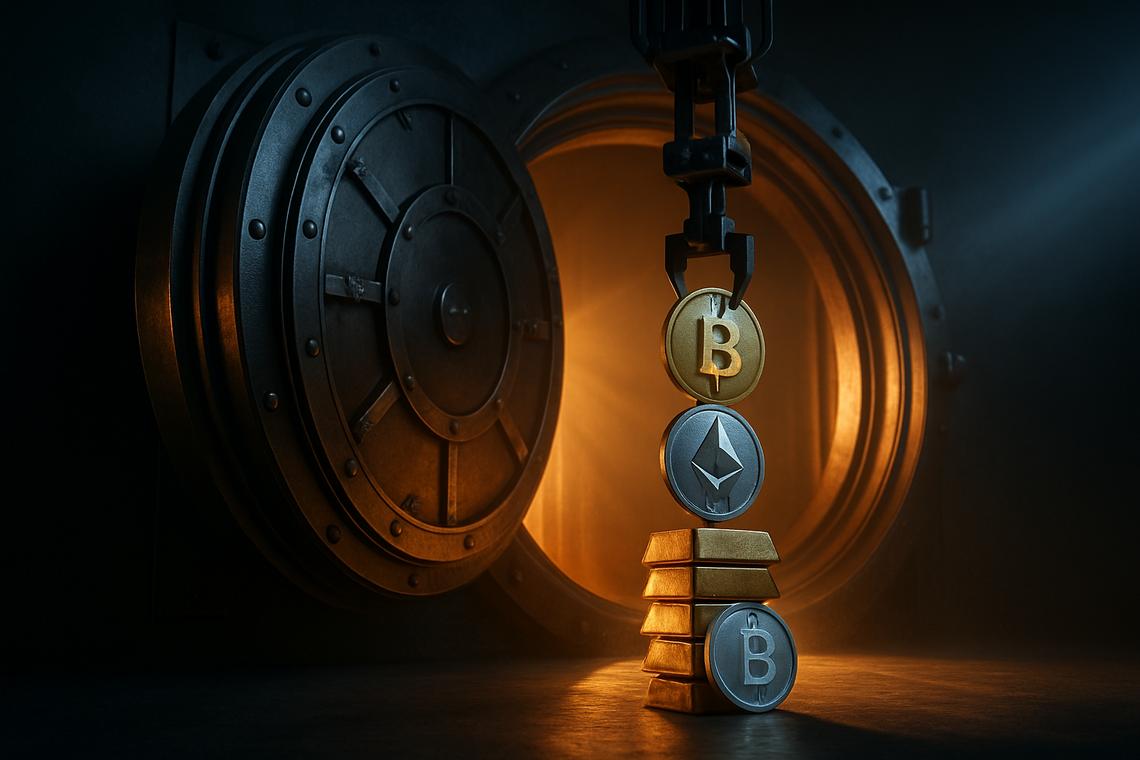
Investor concern over inflation and financial instability is fueling fresh interest in Kiyosaki Bitcoin views on scarce assets as a long-term shield for capital.
Robert Kiyosaki doubles down on non-printable assets
Robert Kiyosaki has reiterated that he refuses to invest in anything governments, banks, or Wall Street can print. Instead, he focuses on tangible and digital assets such as gold, silver, Bitcoin, and Ethereum, which he considers resistant to fiat dilution and monetary expansion.
According to a quote shared by Cointelegraph on March 27, 2026, he said he only allocates capital to assets that cannot be created at will by central authorities. This stance reflects his long-held belief that fiat currencies lose value over time. In his view, printed money steadily erodes savings and purchasing power.
Moreover, Kiyosaki argues that by concentrating on scarce stores of value, investors can better navigate periods of economic uncertainty. Gold and silver remain, in his opinion, traditional safe havens during market stress. However, he now places Bitcoin and Ethereum in the same strategic bucket as digital-era hard assets.
Bold post-crash price targets for Bitcoin and Ethereum
Kiyosaki has attached aggressive long-term targets to the leading cryptocurrencies. He predicts that, after an anticipated financial crash around or after 2026, Bitcoin could climb as high as $750,000. In parallel, he sees Ethereum potentially reaching $95,000, underscoring his conviction in their upside.
He links these projections directly to scarcity. In his framework, limited-supply assets become more valuable as fiat-based systems expand their money supply. That said, he stresses that this is not simply a speculative call but a response to what he sees as structural risks in the global financial system.
For Kiyosaki, scarcity acts as a form of protection against unpredictable government policies and central bank interventions. His post-crash crypto forecast is therefore built on the idea that investors will migrate away from assets tied to monetary printing toward those with verifiable supply limits.
Bitcoin and Ethereum as digital hard assets
A key pillar of his thesis is Bitcoin’s fixed supply. The protocol caps issuance at 21 million coins, a feature he believes makes it structurally resistant to inflation. Unlike fiat currencies, new units cannot be printed indefinitely, which Kiyosaki views as core to protecting long-term holders.
Ethereum, by contrast, operates with a more flexible monetary policy that can evolve through network upgrades. This adaptability supports innovation but also raises questions among some analysts about whether it qualifies as a pure hard asset. The ongoing ethereum hard asset debate centers on how these design choices influence scarcity over time.
Supporters of Kiyosaki’s approach argue that both networks still represent a clear alternative to traditional financial instruments. They say that programmable digital assets can offer transparency and autonomy not available in conventional markets. However, critics counter that even scarce cryptocurrencies carry significant volatility and remain vulnerable to sharp price swings.
Despite these concerns, Kiyosaki maintains that digital assets with constrained supply are safer than instruments directly dependent on fiat issuance. He frames the kiyosaki bitcoin position as a logical extension of his long-running skepticism toward debt-driven monetary systems and a way to diversify away from currency risk.
Investor reactions and divided opinions
Reactions to Kiyosaki’s strategy are mixed across the investment community. Some market participants praise his unwavering focus on scarcity and non-printable assets, seeing it as a disciplined response to inflation and policy uncertainty. They also point to his early advocacy of alternative stores of value as validation.
Others remain cautious, warning that Bitcoin and Ethereum still entail elevated risk levels compared with more established asset classes. Moreover, they argue that even if supply is constrained, price discovery in crypto can be driven by sentiment, liquidity shocks, and regulatory developments, which may lead to abrupt downturns.
That said, Kiyosaki’s consistency has helped him build a loyal following. For years, he has urged investors to hold wealth in assets largely outside direct government control. This philosophy appeals especially to those who question traditional monetary policy and seek alternatives to conventional savings vehicles.
Scarcity narrative and competition with fiat
Kiyosaki’s comments also tie into a broader narrative around bitcoin ethereum vs fiat in modern portfolios. More investors are exploring digital assets as a kind of on-chain equivalent to hard commodities. They view this as a way to diversify away from exposure to central bank balance sheet expansion.
Moreover, his forecasts highlight the perceived role of cryptocurrencies as a hedge. Advocates see digital scarcity as an answer to inflationary pressure that can affect wages, savings, and bonds. While critics question the reliability of these assets in severe downturns, debate itself underscores their growing relevance in macro discussions.
In that context, Kiyosaki’s emphasis on non printable asset investment reinforces a wider shift. Investors are increasingly weighing whether allocating to gold, silver, Bitcoin, and Ethereum can complement or substitute exposure to fiat-denominated products, particularly in uncertain macro cycles.
Positioning ahead of a potential 2026 crash
As the year 2026 approaches, Kiyosaki continues to warn about possible economic turbulence and market dislocations. He recommends that investors prepare by building core positions in gold, silver, Bitcoin, and Ethereum, which he believes combine scarcity with resilience across cycles.
According to this view, a portfolio anchored in such assets may better protect wealth from inflation and policy shocks than one concentrated in fiat-based instruments. However, Kiyosaki also implicitly acknowledges that any allocation to volatile crypto markets should be made with awareness of risk tolerance and time horizon.
Ultimately, his focus on non-printable, scarcity-driven investments outlines a clear strategy for navigating an uncertain financial landscape. Whether his ambitious Bitcoin and Ethereum price targets materialize or not, the framework continues to influence global investors and keeps digital hard assets at the center of modern finance debates.
추천 콘텐츠

Today’s Wordle #1552 Hints And Answer For Thursday, September 18th

Metaplanet Forms Bitcoin-Focused Subsidiaries in Japan and the U.S.