

Bitcoin Steadies Near $63K While Oil Surges on Middle East Tensions and Stock Futures Decline
Key Highlights
- Bitcoin peaked at $64,400 during overnight trading before retreating to approximately $63,170, maintaining a weekly increase of roughly 6%
- Strategy executed its biggest Bitcoin sale since abandoning its hold-forever approach, offloading 3,588 BTC for approximately $216 million
- Ether surged 11.6% across the week, while XRP and Solana preserved the majority of their seven-day advances
- A military strike targeting a gas tanker near the Strait of Hormuz drove crude oil prices upward and intensified geopolitical tensions
- US equity futures declined on Tuesday following Monday’s Dow record, with Nasdaq 100 futures dropping 0.9%
Bitcoin retreated from its overnight peak on Tuesday but continues to maintain substantial weekly momentum. US equity futures indicated a downward trend after Wall Street’s record-breaking session, while fresh turmoil in Middle Eastern energy markets emerged.
The leading cryptocurrency climbed to $64,400 during early Tuesday morning hours before pulling back to approximately $63,170. This positioned it essentially unchanged for the day while preserving around 6% in weekly gains.
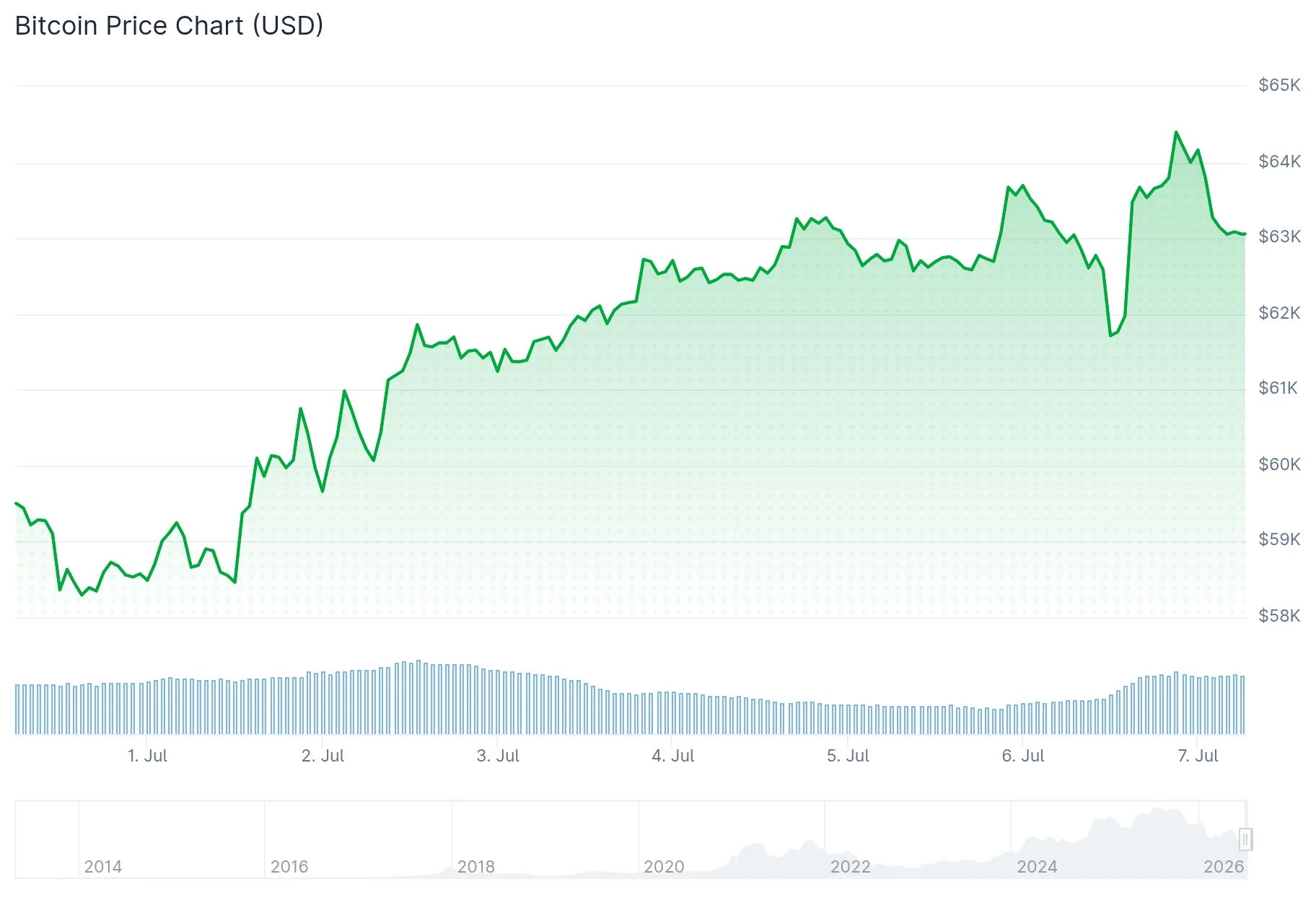 Bitcoin (BTC) Price
The price action occurred despite Strategy’s disclosure of selling 3,588 bitcoin for roughly $216 million. This represents the company’s most significant divestment since reversing its perpetual hold strategy. Markets digested the announcement without experiencing significant downward pressure.
Ether remained stable around $1,770, posting an 11.6% weekly advance. XRP and Solana retained the bulk of their week-long gains, trading at $1.13 and $80 respectively.
Bitcoin had touched a 21-month bottom near $58,000 at June’s conclusion. Since then, it has rebounded into the lower $60,000 range. The year’s first half witnessed Bitcoin closing approximately 20% lower, marking its first weekly settlement beneath the 200-week moving average since 2023.
Options Markets Indicate Potential Bottom
Several market participants interpret the recent downturn as nearing completion rather than initiating a fresh bear cycle.
Yusuf Fakhro, partner at ARP Digital, highlighted that CME futures open interest has reached a 32-month minimum. The term structure has also compressed to its tightest configuration since early 2023.
Fakhro emphasized that six-month options skew has jumped to its fourth-highest reading on record. Comparable measurements only appeared in June and November 2022, both coinciding with significant cycle bottoms.
When hedging against downside becomes this costly, it often suggests the worst-case scenarios are already reflected in pricing, according to Fakhro.
Energy Markets React to Strike, Equities Face Headwinds
A missile attack hit a liquefied natural gas vessel near Oman’s coastline as it departed the Strait of Hormuz. Brent crude climbed 0.6% to approximately $72.45 per barrel following the incident.
This development introduces fresh uncertainty to the late-June peace agreement. Earlier in 2025, energy market disruptions linked to Iranian conflicts pressured cryptocurrency valuations before diplomatic efforts stabilized conditions.
Asian technology equities experienced significant declines. South Korea’s Kospi plummeted 6.7%. Samsung Electronics dropped 8.3% despite announcing increased quarterly earnings. SK Hynix fell by an identical margin as it initiated preparations for a US public offering.
US equity futures signaled weakness on Tuesday. Dow futures remained flat, S&P 500 futures decreased 0.3%, and Nasdaq 100 futures fell 0.9%. This followed Monday’s record-setting performance for the Dow, fueled by renewed optimism surrounding artificial intelligence investments after June’s semiconductor stock correction.
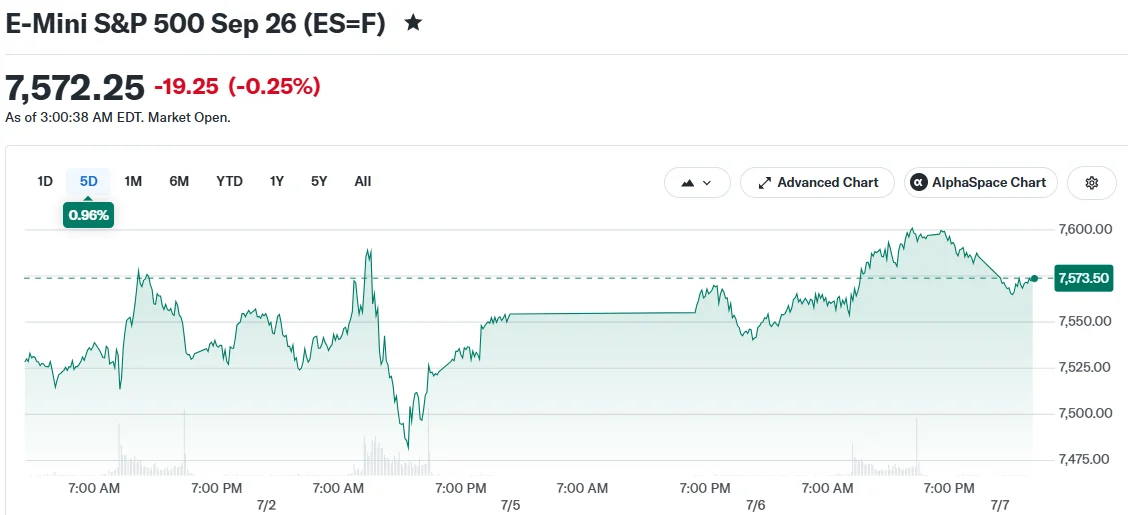 E-Mini S&P 500 Sep 26 (ES=F)
Market participants will monitor earnings releases from Samsung Electronics and Penguin Solutions on Tuesday for additional insights into the semiconductor industry’s health.
Throughout much of 2025, weakness in artificial intelligence and chip-related equities has historically dragged cryptocurrency prices lower. This week has shown divergence between these asset classes, with Bitcoin maintaining stability while traditional equities experienced selling pressure.
The post Bitcoin Steadies Near $63K While Oil Surges on Middle East Tensions and Stock Futures Decline appeared first on Blockonomi.


You May Also Like

Samsung’s Record Chip Profits Mask a Looming Question: Is the Memory Boom Over?

Robotics Automation Prototyping: Engineering Kinetic Agility into End-Effectors
Trump reveals crypto shift was driven by politics and profit potential



