

Aster Token Rockets 20% Higher Following Aggressive 99% Fee Buyback Strategy
Key Highlights
- Starting June 17, Aster will allocate 99% of all platform fees toward purchasing ASTER tokens from the open market.
- Every token buyback triggers an equivalent burn from reserve supplies, generating a dual 198% deflationary mechanism.
- The initiative aims to reduce ASTER’s total supply from 8 billion down to 3 billion tokens through systematic burns.
- Tokens acquired through buybacks flow directly to veASTER stakers through the platform’s Loyalty Rewards system.
- ASTER pierced the $0.65 resistance barrier and is now testing the $0.81 threshold.
On June 17, 2026, Aster unveiled a transformative tokenomics restructuring that propelled its native ASTER token upward by more than 20% within 24 hours.
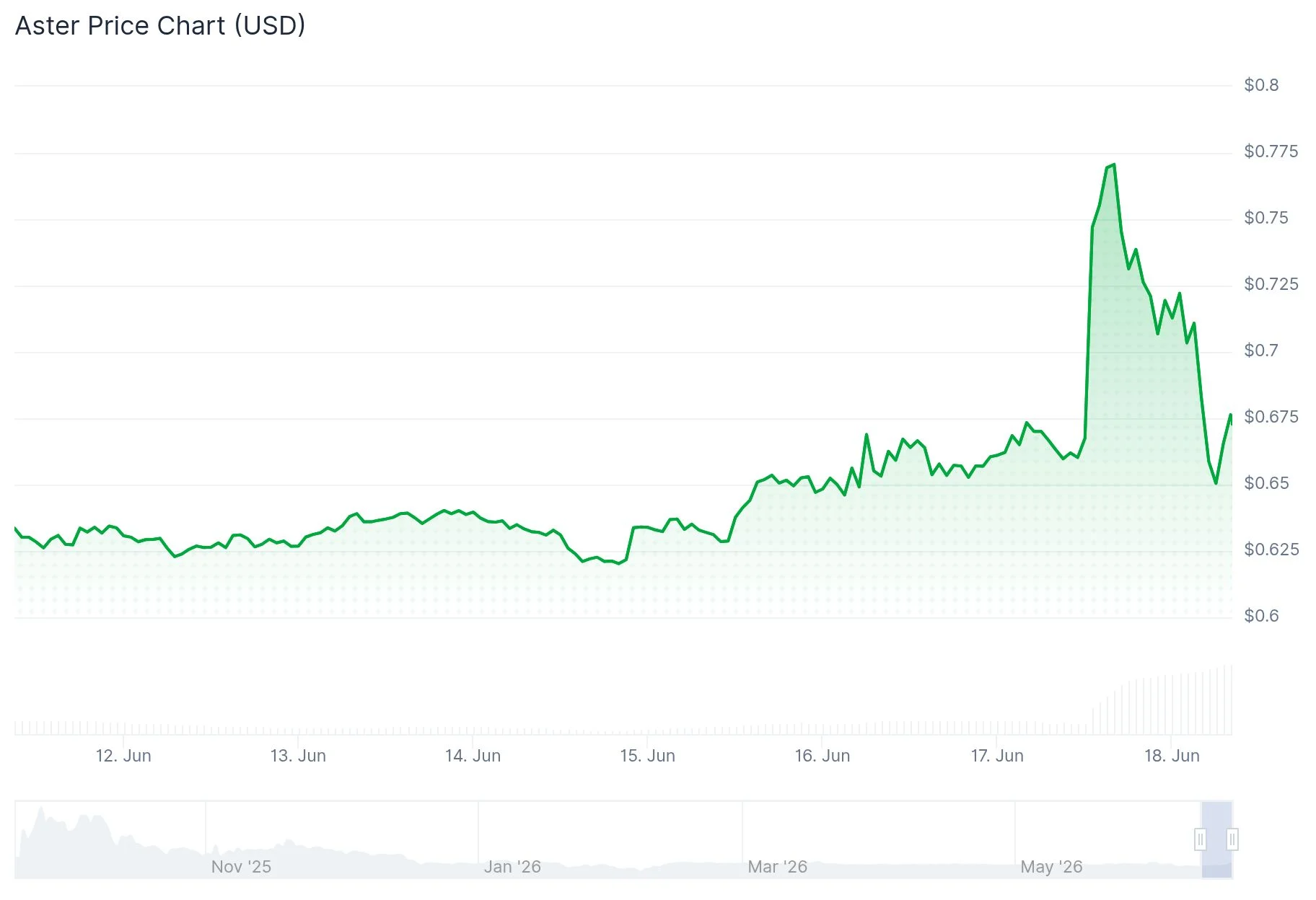 Aster Price
The mechanism behind this surge is clear-cut: virtually all daily platform revenue—99% to be exact—will now fuel direct ASTER token purchases from secondary markets.
These buyback operations run automatically through a time-weighted average pricing mechanism, with all transactions recorded on-chain for full transparency. The protocol has made public the dedicated wallet address (0xa0edBaBcb48034e368de286b49F9603C7AfA1b60) to enable community verification of all purchases.
In a unique twist, each ASTER token repurchased from the market triggers the permanent destruction of an equivalent token amount from the project’s reserve wallet, beginning with team-allocated holdings.
This dual-action approach creates what the protocol terms a “198% combined deflationary pressure,” simultaneously reducing circulating supply through market removal and total supply through permanent burns.
Aggressive Supply Contraction Plan
Token burns occur every two weeks and will persist until the maximum supply contracts from its current 8 billion to a final target of 3 billion ASTER.
As of the June 17 implementation date, the total supply registered at roughly 7.82 billion tokens, while circulating supply hovered between 2.68 and 2.70 billion.
Every ASTER token acquired via buybacks enters the Loyalty Rewards distribution pool. Each reward cycle features a baseline allocation of 300,000 ASTER tokens, supplemented by all tokens purchased during that period’s buyback operations, then distributed proportionally to veASTER holders according to their lock-up weights.
Additional buying pressure stems from Aster Spot’s listing mechanism. Each permissionless token listing carries a 50,000 USDT listing fee, with 100% of these proceeds channeled into the same buyback infrastructure.
Market Reaction and Technical Analysis
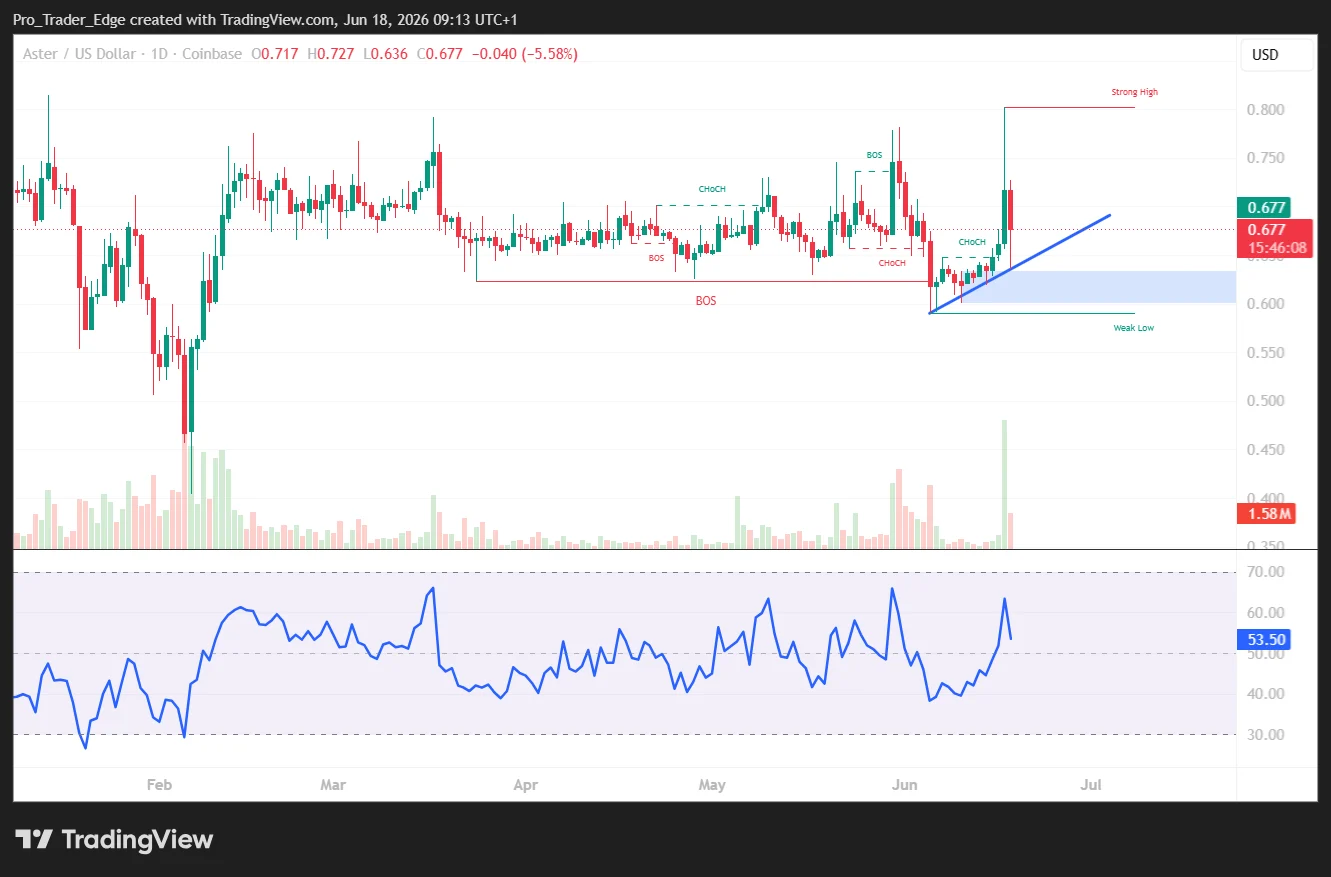
ASTER peaked near $0.80 immediately following the announcement before encountering profit-taking activity. At last check, the token traded around $0.74, representing a roughly 13% daily gain.
 Source: TradingView
Examining the daily timeframe, ASTER successfully breached the $0.65 price level that had served as a ceiling since April.
The Relative Strength Index climbed beyond 65, while the MACD indicator generated a bullish signal with expanding green histogram bars.
The critical resistance zone now lies at $0.81, a level that has previously rejected multiple advance attempts. A decisive break above this barrier would push ASTER into price ranges unseen since the final months of 2025.
Should the price retrace, the former resistance at $0.65 is expected to provide support.
This enhanced program represents a significant evolution from earlier iterations that directed between 70–80% of platform fees toward buybacks, now capturing nearly total revenue for token economics optimization.
The post Aster Token Rockets 20% Higher Following Aggressive 99% Fee Buyback Strategy appeared first on Blockonomi.


You May Also Like

ECB: Iran Peace Deal Won't Erase Europe's Energy Price Shock

Gold Spot Volume on Binance Surges to $80M as Demand Extends Beyond Futures

Tether to Shut Down aUSDT as It Ends Support for Gold-Backed Platform



