

SEC Proposal to Scrap NMS Rules 611 and 610(e) Could Reshape Tokenized U.S. Stock Trading in DeFi
The U.S. Securities and Exchange Commission has proposed rescinding Regulation NMS Rules 611 and 610(e), a move that could ripple into the growing market for tokenized U.S. stocks traded on decentralized finance platforms.
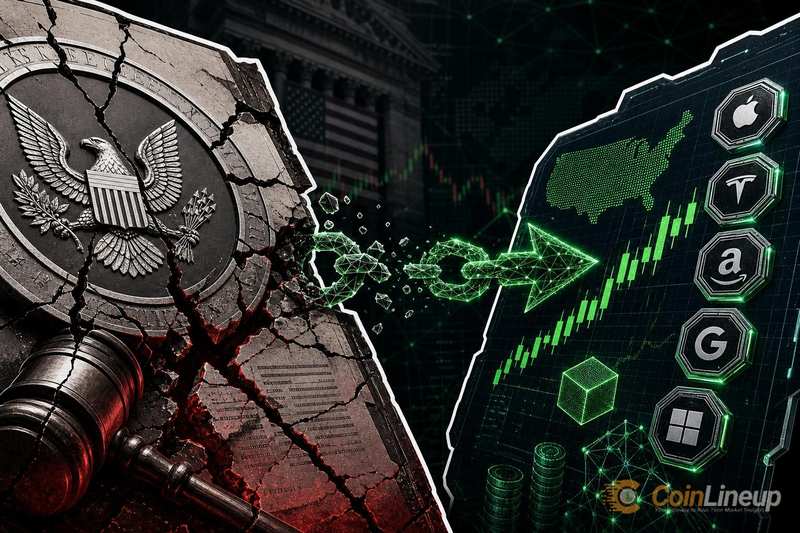
The proposal, announced via an SEC press release, targets two rules that have shaped how U.S. equities are routed and priced for nearly two decades. If finalized, the changes would alter foundational assumptions that tokenized stock products inherit from traditional markets.
What Rules 611 and 610(e) Actually Do
Rule 611, commonly known as the Order Protection Rule, requires trading venues to route orders to whichever exchange displays the best price. It prevents “trade-throughs,” where a broker executes at an inferior price when a better one is available elsewhere.
Rule 610(e) regulates access fees that exchanges can charge for executing against their displayed quotes. Together, these rules create a framework where price competition across venues follows predictable, enforced standards.
For traditional equity traders, these rules ensure a baseline of best-execution discipline. For anyone building tokenized versions of U.S. stocks on blockchain rails, these rules define how the underlying asset’s price is discovered and validated in the first place.
Why Tokenized U.S. Stocks in DeFi Could Feel the Impact
Tokenized equities, whether issued as synthetic assets or backed by custodied shares, derive their pricing from the traditional U.S. stock market. Platforms offering tokenized versions of stocks like Apple or Tesla rely on real-time equity prices as reference points for minting, redemption, and arbitrage.
If Rule 611 is rescinded, the centralized guarantee of best-price routing disappears. Price fragmentation across traditional venues could widen spreads on underlying stocks, complicating the pricing oracles and reference feeds that DeFi protocols use to maintain accurate tokenized stock valuations.
Removing Rule 610(e) could shift exchange fee structures in ways that change where liquidity concentrates. DeFi issuers and brokers offering crypto-native exposure to traditional assets would need to reassess how they source pricing data and manage execution risk.
Arbitrageurs who keep tokenized stock prices aligned with their traditional counterparts could face wider or less predictable spreads. This matters for protocols that depend on tight arbitrage loops to maintain peg stability, a mechanism not unlike how stablecoin issuers on networks like XRP Ledger rely on redemption arbitrage to hold value.
What Crypto Traders and Platforms Should Watch Next
The SEC proposal is not yet final. As Yahoo Finance reported, the rulemaking process includes a public comment period before any rules are officially rescinded. No changes take effect until the Commission votes on a final rule.
Platforms offering tokenized U.S. equities should monitor three things: the comment period timeline, any proposed replacement mechanisms for best-execution oversight, and whether the SEC signals broader changes to how alternative trading systems interact with registered exchanges.
DeFi protocols that use equity price feeds should evaluate whether their oracle infrastructure can handle increased price dispersion across traditional venues. If best-price guarantees erode, the reliability of any single exchange feed as a reference price weakens.
For traders holding tokenized stock positions, the practical impact depends on whether the proposal becomes final and how quickly traditional market structure adapts. Until then, the proposal represents a regulatory signal worth tracking, particularly for anyone building at the intersection of traditional finance infrastructure and crypto markets.
Disclaimer: This article is for informational purposes only and does not constitute financial or investment advice. Cryptocurrency and digital asset markets carry significant risk. Always do your own research before making decisions.


You May Also Like

SpaceX IPO live: Shares soar 30% on debut, Elon Musk becomes first trillionaire

Circle Moves $4.4 Billion USDC to Coinbase via HyperEVM in Record On-Chain Transfer

Fed Governor Calls For Strong Stablecoin Oversight As CLARITY Act’s Final Text Gets Delayed



