Nigeria’s crypto market tells a curious story. Two stablecoins sit at the centre of it, one dominant, one…Nigeria’s crypto market tells a curious story. Two stablecoins sit at the centre of it, one dominant, one…

Keeping value at home: How Nigeria’s cNGN stablecoin can strengthen the economy

2025/11/25 18:27
4 min read

Nigeria’s crypto market tells a curious story. Two stablecoins sit at the centre of it, one dominant, one emerging. Foreign, dollar-pegged tokens handle most of the activity, moving billions in cross-border trade, shielding savers from local currency swings, and delivering the speed that traditional banking still struggles to match.

Yet every time a Nigerian buys either USDT or USDC, a small piece of the country’s financial base slips quietly offshore.

That’s where the disintermediation risk emerges: capital exits the Nigerian system and reappears in the U.S. Treasury markets. It’s efficient for users but costly for the country. Enter cNGN, Nigeria’s first compliant, naira-pegged stablecoin.

Unlike foreign stablecoins, cNGN is backed exclusively by onshore Nigerian assets, with each token collateralised 1:1 with Naira reserves held in regulated commercial banks as well as government securities.
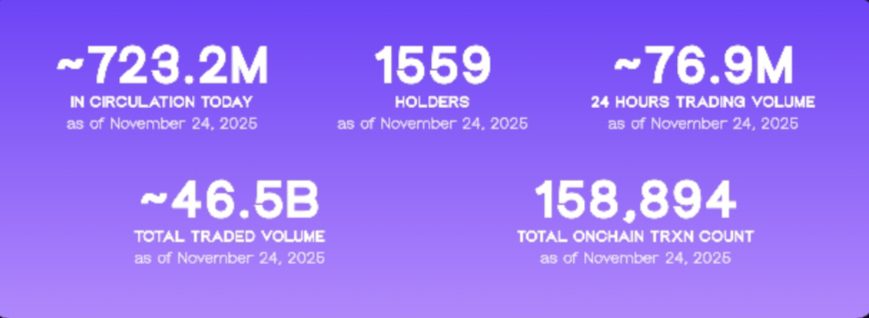
Keeping value at home: How cNGN, a compliant naira stablecoin, strengthens the Nigerian economycNGN’s transactions as of Nov. 24th 2025.

As of November 24th, it has approximately 723.2 million in circulation, with over 158,894 on-chain transactions and a total trading volume of over 46.5 billion cNGN. 

The hidden cost of dollar-denominated stablecoins 

Nigeria posted over $92 billion in on-chain volume from mid-2024 to mid-2025. Most of that liquidity flowed through foreign stablecoins. Their utility is undeniable. For traders, manufacturers, or freelancers, USDT and USDC feel like the rails of global commerce.

But each transaction carries an overlooked consequence. When someone buys $100 of a foreign stablecoin, the issuer invests those reserves abroad, not in Nigerian banks, not in local money markets, and not in government securities. Multiply that by millions of users. The result is persistent capital flight, a slow bleed that weakens the domestic financial system over time.

To be candid, no regulator can ban or bluster its way out of that structural reality. The asset is too useful. The incentives are too strong. The smarter approach is to build a domestic alternative that addresses local needs without trying to replace what the dollar already does well.

The difference between cNGN and eNaira- expert opinion on potentials, adoptioncNGN Stablecoin

A Naira-pegged stablecoin like the cNGN does not necessarily compete with dollar stablecoins on global liquidity. It shouldn’t try to. Its advantage lies at home. The Naira is the currency of daily life. Embedding it directly onto the blockchain makes it programmable, traceable, and interoperable with modern financial tools.

Users can access on-chain investments, payments, credit markets, or smart contracts without first buying dollars. That alone cuts friction and gives the local currency a digital life it currently lacks.

For a country that wants deeper financial inclusion, this matters. cNGN offers the speed of crypto but the regulatory certainty of the banking system. For everyday users, that combination reduces risk and expands access.

Reversing the flow of capital

The most overlooked opportunity is what happens when money moves into Nigeria, not out, diaspora remittances.

Nigerians abroad send home more than $20 billion every year. The process is slow, fragmented, and expensive. Routing those flows into a compliant digital Naira collapses the settlement time to minutes and bypasses the traditional “last mile” bottlenecks.

When the remittances may come in as cNGN, they are ready for spending, saving, or investing immediately.

Keeping value at home: How cNGN, a compliant naira stablecoin, strengthens the Nigerian economy

Investors face friction when accessing Nigerian markets. A regulated digital naira can compress settlement cycles and make it easier to buy local assets. Faster access reduces uncertainty, a key factor in emerging-market investment decisions.

The cNGN reserve model outlook

The cNGN reserve structure is the critical difference. Each token is backed 1:1 by Naira-denominated assets held within Nigeria. That structure does three important things:

1. Strengthens the banks: Reserves are held in local commercial banks, adding liquidity rather than draining it. Foreign stablecoins do the opposite.

2. Supports government financing: A portion of the reserves sits in Nigerian Treasury Bills and regulated money-market funds. That demand helps stabilise state borrowing costs—a tangible fiscal benefit.

3. Reduces capital flight: The money stays in the domestic economy. It funds local credit creation. It reinforces the financial system instead of hollowing it out.

This model anchors digital assets in real-world national value. It ties the growth of on-chain activity to domestic financial strength, not offshore securities.

With it, cNGN isn’t just for sending money; it’s being plugged into financial products. For instance, users can invest in a cNGN-denominated money market fund via Xend Finance, with yield rates as high as 20.25% annually.

But to make this count, cNGN needs scale, not just in tokens, but in trust. Its backers will have to prove they can manage reserves responsibly, and regulators must walk a fine line, encouraging innovation without turning a blind eye to risk.

Disclaimer: The articles reposted on this site are sourced from public platforms and are provided for informational purposes only. They do not necessarily reflect the views of MEXC. All rights remain with the original authors. If you believe any content infringes on third-party rights, please contact service@support.mexc.com for removal. MEXC makes no guarantees regarding the accuracy, completeness, or timeliness of the content and is not responsible for any actions taken based on the information provided. The content does not constitute financial, legal, or other professional advice, nor should it be considered a recommendation or endorsement by MEXC.

You May Also Like

What Is an Uncontested Divorce and How Does It Work?

What Is an Uncontested Divorce and How Does It Work?

Divorce continues to be a common legal matter for families across Washington, reflecting broader shifts in how relationships change over time. Recent statewide
Share
Techbullion2026/02/12 18:08
Google's AP2 protocol has been released. Does encrypted AI still have a chance?

Google's AP2 protocol has been released. Does encrypted AI still have a chance?

Following the MCP and A2A protocols, the AI Agent market has seen another blockbuster arrival: the Agent Payments Protocol (AP2), developed by Google. This will clearly further enhance AI Agents' autonomous multi-tasking capabilities, but the unfortunate reality is that it has little to do with web3AI. Let's take a closer look: What problem does AP2 solve? Simply put, the MCP protocol is like a universal hook, enabling AI agents to connect to various external tools and data sources; A2A is a team collaboration communication protocol that allows multiple AI agents to cooperate with each other to complete complex tasks; AP2 completes the last piece of the puzzle - payment capability. In other words, MCP opens up connectivity, A2A promotes collaboration efficiency, and AP2 achieves value exchange. The arrival of AP2 truly injects "soul" into the autonomous collaboration and task execution of Multi-Agents. Imagine AI Agents connecting Qunar, Meituan, and Didi to complete the booking of flights, hotels, and car rentals, but then getting stuck at the point of "self-payment." What's the point of all that multitasking? So, remember this: AP2 is an extension of MCP+A2A, solving the last mile problem of AI Agent automated execution. What are the technical highlights of AP2? The core innovation of AP2 is the Mandates mechanism, which is divided into real-time authorization mode and delegated authorization mode. Real-time authorization is easy to understand. The AI Agent finds the product and shows it to you. The operation can only be performed after the user signs. Delegated authorization requires the user to set rules in advance, such as only buying the iPhone 17 when the price drops to 5,000. The AI Agent monitors the trigger conditions and executes automatically. The implementation logic is cryptographically signed using Verifiable Credentials (VCs). Users can set complex commission conditions, including price ranges, time limits, and payment method priorities, forming a tamper-proof digital contract. Once signed, the AI Agent executes according to the conditions, with VCs ensuring auditability and security at every step. Of particular note is the "A2A x402" extension, a technical component developed by Google specifically for crypto payments, developed in collaboration with Coinbase and the Ethereum Foundation. This extension enables AI Agents to seamlessly process stablecoins, ETH, and other blockchain assets, supporting native payment scenarios within the Web3 ecosystem. What kind of imagination space can AP2 bring? After analyzing the technical principles, do you think that's it? Yes, in fact, the AP2 is boring when it is disassembled alone. Its real charm lies in connecting and opening up the "MCP+A2A+AP2" technology stack, completely opening up the complete link of AI Agent's autonomous analysis+execution+payment. From now on, AI Agents can open up many application scenarios. For example, AI Agents for stock investment and financial management can help us monitor the market 24/7 and conduct independent transactions. Enterprise procurement AI Agents can automatically replenish and renew without human intervention. AP2's complementary payment capabilities will further expand the penetration of the Agent-to-Agent economy into more scenarios. Google obviously understands that after the technical framework is established, the ecological implementation must be relied upon, so it has brought in more than 60 partners to develop it, almost covering the entire payment and business ecosystem. Interestingly, it also involves major Crypto players such as Ethereum, Coinbase, MetaMask, and Sui. Combined with the current trend of currency and stock integration, the imagination space has been doubled. Is web3 AI really dead? Not entirely. Google's AP2 looks complete, but it only achieves technical compatibility with Crypto payments. It can only be regarded as an extension of the traditional authorization framework and belongs to the category of automated execution. There is a "paradigm" difference between it and the autonomous asset management pursued by pure Crypto native solutions. The Crypto-native solutions under exploration are taking the "decentralized custody + on-chain verification" route, including AI Agent autonomous asset management, AI Agent autonomous transactions (DeFAI), AI Agent digital identity and on-chain reputation system (ERC-8004...), AI Agent on-chain governance DAO framework, AI Agent NPC and digital avatars, and many other interesting and fun directions. Ultimately, once users get used to AI Agent payments in traditional fields, their acceptance of AI Agents autonomously owning digital assets will also increase. And for those scenarios that AP2 cannot reach, such as anonymous transactions, censorship-resistant payments, and decentralized asset management, there will always be a time for crypto-native solutions to show their strength? The two are more likely to be complementary rather than competitive, but to be honest, the key technological advancements behind AI Agents currently all come from web2AI, and web3AI still needs to keep up the good work!
Share
PANews2025/09/18 07:00
The FRS 102 Deadline Is Accelerating Finance Modernisation Across the UK

The FRS 102 Deadline Is Accelerating Finance Modernisation Across the UK

By Artie Minson, CEO of Trullion Every major change in accounting standards presents finance leaders […] The post The FRS 102 Deadline Is Accelerating Finance Modernisation
Share
ffnews2026/02/12 18:43