

Uruguay, UTE pulls the plug on Tether: debt of approximately 5 million USD
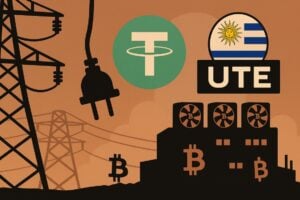
On July 25, 2025, the state electricity provider UTE cut off power supply to two mining sites connected to Tether in Uruguay, due to an accumulated debt of about 5 million USD Montevideo.com.uy.
Tether’s presence and investment plans in Uruguay were announced in 2023 and documented by international media at the launch of the local project CNBC.
The measure had an immediate impact on local activities and reignites the debate on the relationship between a major global player in crypto finance and a public utility.
According to the data collected by our editorial team, based on local sources and consulted documents, the defaults are reported to have started in May 2025 and the total amount reported is consistent with the publicly reported figures (approximately 5 million USD).
Industry analysts we spoke with note that, in similar cases, a negotiated resolution with a state utility typically requires days or weeks and depends on the availability of guarantees and compliance with local administrative procedures.
Suspension and Arrears: The Essential Facts
According to communications and documents reported by local sources, the missed payments would have started in May 2025.
In June 2025, the president of UTE, Andrea Cabrera, signed a Memorandum of Understanding (MoU) to initiate a negotiated solution, conditioned on the regularization of payments. In this context, the suspension occurred on July 25, 2025 due to the use of the security deposit and the continuation of defaults.
Quick Timeline
- May 2025: initiation of missed payments.
- June 2025: signing of the MoU, conditional on the settlement of arrears.
- July 25, 2025: suspension of electricity supply to the two sites.
- Indicated debt: approximately 5 million USD.
Who is Microfin and how is it connected to Tether
The local company Microfin is identified as the commercial operator of the two sites involved and is noted in the documents as part of the initiatives related to Tether in the country. It should be noted that the exact nature of the corporate relationship—whether it is a subsidiary, a partner, or a local vehicle—has not yet been clearly defined publicly.
In 2023, Tether announced investments in energy production and Bitcoin mining in Uruguay through the “Tether Energy” project, focusing on the use of renewable sources by Tether.
Operational Impact on Mining Sites
The interruption of the electricity supply compromises the continuity of the computing nodes, resulting in a reduction of the hash rate, delays in expansion plans, and possible additional costs both for restarting the plants and for renegotiating contracts.
That said, the speed in restoring the service remains a critical element to limit losses.
Economic and Reputational Effects
Beyond the operational impact, the episode raises questions about local solvency and the management of the relationship with a state supplier.
While remaining a significant global player in the field of stablecoins, Tether must now quickly identify solutions to regularize accounts and restore the electricity supply.
Why Uruguay Attracts Mining: Data and Context
Uruguay stands out in the region for its high share of electricity produced from renewable sources: according to the IEA, about 95% of the national electricity generation comes from non-fossil energies (wind, solar, hydroelectric, biomass), helping to reduce cost volatility and making “low-carbon” plants competitive. Indeed, the energy profile favors more predictable industrial plans.
The “green” advantage does not eliminate the risks related to contracts, payments, and the management of guarantees, aspects that make the dispute between UTE and Microfin a testing ground for the operational sustainability of the sector.
Key Data at a Glance
- Sites involved: 2 mining facilities in Uruguay.
- Indicated debt: approximately 5 million USD (publicly reported, update July 2025).
- Counterparties: UTE (state provider), Microfin (local operator) and initiative linked to Tether.
- MoU: signed in June 2025, subject to the payment of arrears.
Official Positions and Documents
As of today, no detailed official statements have been made public by Tether or Microfin regarding the suspension. UTE has confirmed that it has taken the measure in the presence of defaults and after resorting to the guarantees provided by the standard utility procedures, in line with the practice applied to defaulting customers.
FAQ — quick questions and answers
How does energy debt impact activities in Uruguay?
The interruption of the electricity supply compromises the operational continuity of the sites, resulting in a decrease in hash rate and revenues, delays in expansion plans, and additional costs related to the reactivation of the service. In this scenario, each day of downtime impacts the accounts.
What did the MoU between UTE and the local operator entail?
The MoU provides for a negotiated solution, contingent upon the settlement of arrears, before being able to review new tariff terms or authorize any expansions of the facilities. Only after regularization is it possible to discuss the next steps.
Why are fees and contractual stability crucial for mining?
The cost of energy is the most sensitive component of the economic model of mining: price stability and contractual predictability are essential to ensure the sustainability of the facilities. Otherwise, profitability quickly becomes uncertain.
Does the renewable component reduce risks?
Even while reducing cost volatility and carbon footprint, the use of renewable sources does not eliminate the need for proper management of payments, guarantees, and contractual relationships with the energy supplier. Financial discipline remains central.
Is the UTE cut an extraordinary measure?
No, it is a standard practice when credits are unpaid and the guarantees have already been enforced or are insufficient. It is the standard procedure applied in similar cases.
The Corner That Sparks Debate
The suspension of supply to an operator linked to Tether highlights the existing tension between the promises of innovation in the crypto sector and the rules and procedures of the public system.
Indeed, it serves as a testing ground for the governance of those intending to bring foreign capital into critical infrastructures like the power grid.
Editorial Note: At the moment, the full text of the MoU, the detailed invoice debt, or the MW values related to the sites are not publicly available. Links to official documents and statements from the parties will be added as soon as this information becomes accessible.
You May Also Like

CEO Sandeep Nailwal Shared Highlights About RWA on Polygon

TRM Labs Becomes Unicorn with 70M$: BTC Fraud Risk
