Overview
Tesla has already delivered a far-stronger-than-expected quarter, but the report that actually decides the stock's direction does not arrive until earnings on July 22. The market's focus has long since moved past how many cars it sold to how profitable those deliveries were, whether FSD software monetization is materializing, and when Robotaxi turns from narrative into measurable revenue. According to
Tesla's official delivery release, the company produced 451,758 vehicles, delivered 480,126, and deployed 13.5 GWh of energy storage in the second quarter.
The market reaction is telling. According to
24/7 Wall St., after deliveries blew past the roughly 407,000 Wall Street consensus, Tesla shares fell about 7% on the day, having already risen about 13% over the prior week, a sign that short-term optimism was partly priced in. With deliveries no longer in suspense, the Q2 report now hinges entirely on two threads: profitability and autonomy.
Key Takeaways
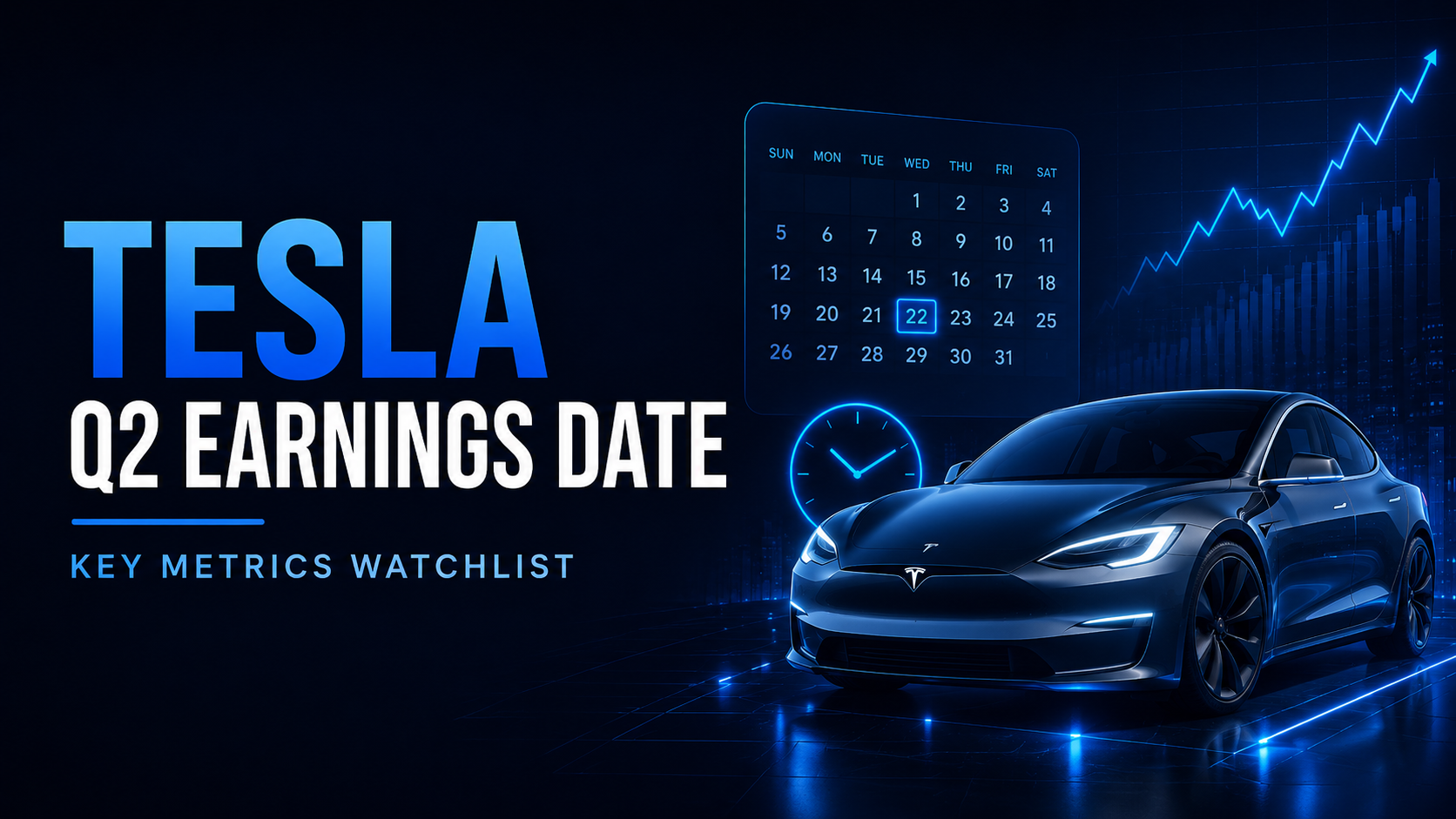
Tesla reports Q2 results after the U.S. market close on July 22, with management hosting a live call the same day.
Q2 deliveries reached 480,126 vehicles, up about 25% year over year and well above the roughly 407,000 consensus.
Revenue consensus sits in the $24.5 billion to $25.4 billion range, with EPS estimates around $0.42 to $0.48.
Whether automotive gross margin ex-credits holds in the roughly 18% to 20% range is the single most important item in this report.
FSD subscriptions have grown to about 1.28 million from roughly 850,000 a year earlier, up about 51%.
Management has raised 2026 capex guidance to more than $25 billion for AI chips, Robotaxi, and humanoid robots.
The Delivery Recovery Is Settled and the Suspense Moves Elsewhere
A delivery report that beat the bar
Q2 deliveries all but erased demand-related concerns. According to
Tesla's official release, the 480,126 deliveries were up about 25% year over year, with Model 3/Y accounting for 467,762 units. According to
The Motley Fool, that far exceeded the roughly 406,000 units analysts had modeled, confirming a clear recovery from Tesla's 2025 lows.
Why a beat still brought a decline
The catch is that the market no longer prices Tesla on volume alone. According to
TradingKey, the stock now embeds option value across automotive cash flow, FSD, Robotaxi, energy, Optimus, and AI infrastructure; Q2 deliveries can shore up the floor of demand but cannot, on volume alone, unlock the ceiling of valuation. That is why a strong delivery print instead triggered short-term profit-taking.
Margins Are the Real Swing Factor in This Report
Automotive gross margin ex-credits
The real focus is profit quality. According to
TradingKey, the market broadly expects Q2 automotive revenue between $20.5 billion and $21.5 billion, with automotive gross margin ex-regulatory-credits expected in the 18% to 20% range. For reference, according to
24/7 Wall St., Tesla's Q1 non-GAAP EPS was $0.41 and automotive gross margin had recovered to 21.1% from 16.2% a year earlier. Whether Q2 holds that improvement will directly decide whether the market reads it as discounting for volume or as a genuine margin recovery.
The revenue and EPS expectations
According to
The Motley Fool, current consensus points to Q2 revenue of about $25.4 billion and EPS around $0.48. Estimates are not uniform, however; according to
Benzinga, another set of analysts models revenue near $24.58 billion and EPS around $0.42. That dispersion itself shows that, with deliveries known, where profit ultimately lands still leaves considerable room for debate. To follow the
live price of Tesla and related assets, you can track it on the MEXC markets page.
FSD and Robotaxi From Narrative to Numbers
Progress on software monetization
Autonomy is the core support for Tesla's valuation premium. According to
Tesla's Q1 filing, active FSD subscriptions grew to about 1.28 million from roughly 850,000 a year earlier, up about 51%. According to
Tesla's Q1 update, the company moved FSD (Supervised) to subscription-only and posted record net new subscriptions in Q1, making the durability of software revenue worth listening to closely in this report.
Robotaxi's commercialization timeline
Robotaxi is a longer-dated and more contested layer of optionality. According to
Simply Wall St, Tesla has begun Cybercab production at its Texas plant and extended unsupervised Robotaxi service from Austin to Dallas and Houston, but management has stated that meaningful Robotaxi revenue is unlikely before 2027, with expansion to about a dozen U.S. states targeted by year-end. That means any quantitative Robotaxi guidance on the Q2 call could move the stock more than the financial figures themselves.
What It Means for Investors
For investors, the real significance of this report is that it tests a valuation logic in transition, from Tesla as an EV manufacturer toward Tesla as an AI-and-autonomy platform. According to
TradingKey, in the first half of 2026 Tesla completed its narrative shift from demand concerns to delivery recovery, while what the market must actually pay for in the second half is profit quality, software monetization, and validation of autonomous commercialization.
In other words, if margins stabilize, FSD subscriptions keep growing fast, and Robotaxi offers a clear expansion timeline, the market may pay a premium for the platform narrative before those businesses contribute real profit; conversely, hesitation in any one link could put the rich valuation under pressure first. To understand MEXC's edge in trading related assets, see
why mexc.
What to Watch Next and the Risks
Three signals warrant close tracking next: whether automotive gross margin ex-credits holds near the 20% line; the growth slope of FSD subscriptions and software revenue, along with European FSD regulatory progress; and whether the Robotaxi and Optimus commercialization timelines become clearer. Related listing and contract updates can be followed via
MEXC announcements.
The risks are equally clear. First, the drag from capex. According to
Simply Wall St, management has raised 2026 capex guidance to more than $25 billion for AI chips, Optimus, and a Texas chip fab, which will pressure free cash flow near term, and consensus 2026 revenue and EPS have both been trimmed recently. Second, the mismatch between valuation and sentiment. According to
24/7 Wall St., after deliveries, well-known short seller Michael Burry disclosed a fresh short position, and prediction markets are split nearly evenly on TSLA. Third, autonomy itself still faces regulatory and safety uncertainty. Past performance is not an indicator of future results.
Exclusive View from the MEXC Crypto Pulse Research Team
What truly matters about this report is not whether deliveries beat, which was already known in early July, but how the market reprices a company whose deliveries have recovered while profit and new businesses have yet to materialize. Tesla's stock is no longer valued as a carmaker but as automotive cash flow layered with a basket of options across FSD, Robotaxi, energy, Optimus, and AI infrastructure. This report's job is to test which of those options are turning from story into numbers.
The easiest thing for the market to misread is equating a delivery beat with a good report. In fact, the stock falling despite the beat shows volume is fully priced, and what remains unrealized is profit quality and software monetization. Anchoring to deliveries to judge direction can produce a wrong conclusion. Equally prone to overstatement is Robotaxi's near-term contribution, since management itself points meaningful revenue to beyond 2027.
For investors, the most important thing to watch next is not the delivery figure but three more fundamental signals: automotive gross margin ex-credits, the growth slope of FSD subscriptions and software revenue, and the clarity of Robotaxi commercialization. Only when they improve together does the platform premium hold; if they diverge, more than $25 billion in capex will put the rich valuation under pressure first.
In a cross-asset and crypto frame, this report offers a clear mirror: when a company's valuation is driven mainly by an as-yet-unrealized future, its pricing logic closely resembles a crypto narrative, where the market pays for expectations rather than current profit. Understanding how Tesla is repriced between manufacturing reality and AI narrative is instructive for understanding the valuation cycle of risk assets as a whole.
FAQ
When does Tesla report Q2 earnings
Per market information, Tesla reports its second-quarter results after the U.S. market close on July 22, 2026, followed by a management call and Q&A. Delivery figures were released in early July, while the full financials, including revenue, automotive gross margin, and EPS, arrive on the 22nd. For investors, since deliveries are known, the focus of this report is mainly on profit quality and progress in new businesses like FSD and Robotaxi.
How many vehicles did Tesla deliver in Q2
Per Tesla's official release, the company delivered 480,126 vehicles, produced 451,758, and deployed 13.5 GWh of energy storage in the second quarter. Deliveries rose about 25% year over year, with Model 3/Y accounting for 467,762 units. That figure far exceeded analysts' prior consensus of about 407,000, confirming a clear recovery from Tesla's 2025 lows. However, since the beat was priced in ahead of time, the stock pulled back short term after the release.
Why did the stock fall when deliveries beat
Because the market no longer prices Tesla on volume alone. Per market analysis, the stock embeds option value across automotive cash flow, FSD, Robotaxi, energy, and AI infrastructure. A delivery beat only shores up the floor of demand and cannot unlock the ceiling of valuation on volume alone. In addition, the stock had already risen about 13% in the week before, so with optimism digested, the confirmation triggered sell-the-news profit-taking.
Which metrics matter most in this report
Beyond revenue and EPS, the most critical is automotive gross margin excluding regulatory credits, expected in the 18% to 20% range, which directly reflects profit quality. Next are FSD subscription and software revenue growth, European FSD regulatory progress, and the Robotaxi and Optimus commercialization timelines. Capex guidance and free cash flow will also shape the market's view of Tesla's medium- to long-term return on investment.
Do FSD and Robotaxi contribute revenue yet
FSD already contributes subscription revenue. Per market data, active FSD subscriptions grew to about 1.28 million from roughly 850,000 a year earlier, up about 51%, and moved to a subscription-only model. Robotaxi remains early, however, with management stating meaningful revenue is unlikely before 2027. Service has expanded from Austin to Dallas and Houston, targeting about a dozen states by year-end, so near term it is more narrative than revenue.
Will this report affect the crypto market
It may have an indirect sentiment effect. Tesla is a Nasdaq heavyweight and a barometer of market sentiment, so its results and AI-related guidance move tech stocks and overall risk appetite, and crypto assets often trade with the Nasdaq in the current environment. That said, this is cross-asset sentiment spillover rather than a direct price driver. Crypto ultimately depends on its own fundamentals and flows, so investors should not simply equate the two. This is not investment advice.
Disclaimer
This article is for informational purposes only and does not constitute investment, financial, legal, tax, or trading advice, nor any recommendation. Prices of crypto assets, equities, and related financial assets can be highly volatile, with the risk of total loss of principal. Readers should do their own research (DYOR), assess their own risk tolerance, and consult a licensed professional where appropriate. The MEXC Crypto Pulse Team accepts no liability for any loss arising from the use of information in this article.
About the Author
The MEXC Crypto Pulse Team focuses on crypto market trends, on-chain narratives, fintech developments, and digital asset ecosystem research. The team tracks public market data, company announcements, third-party market platforms, and industry news sources to help users better understand market structure, risks, and opportunities.
Research References