Overview
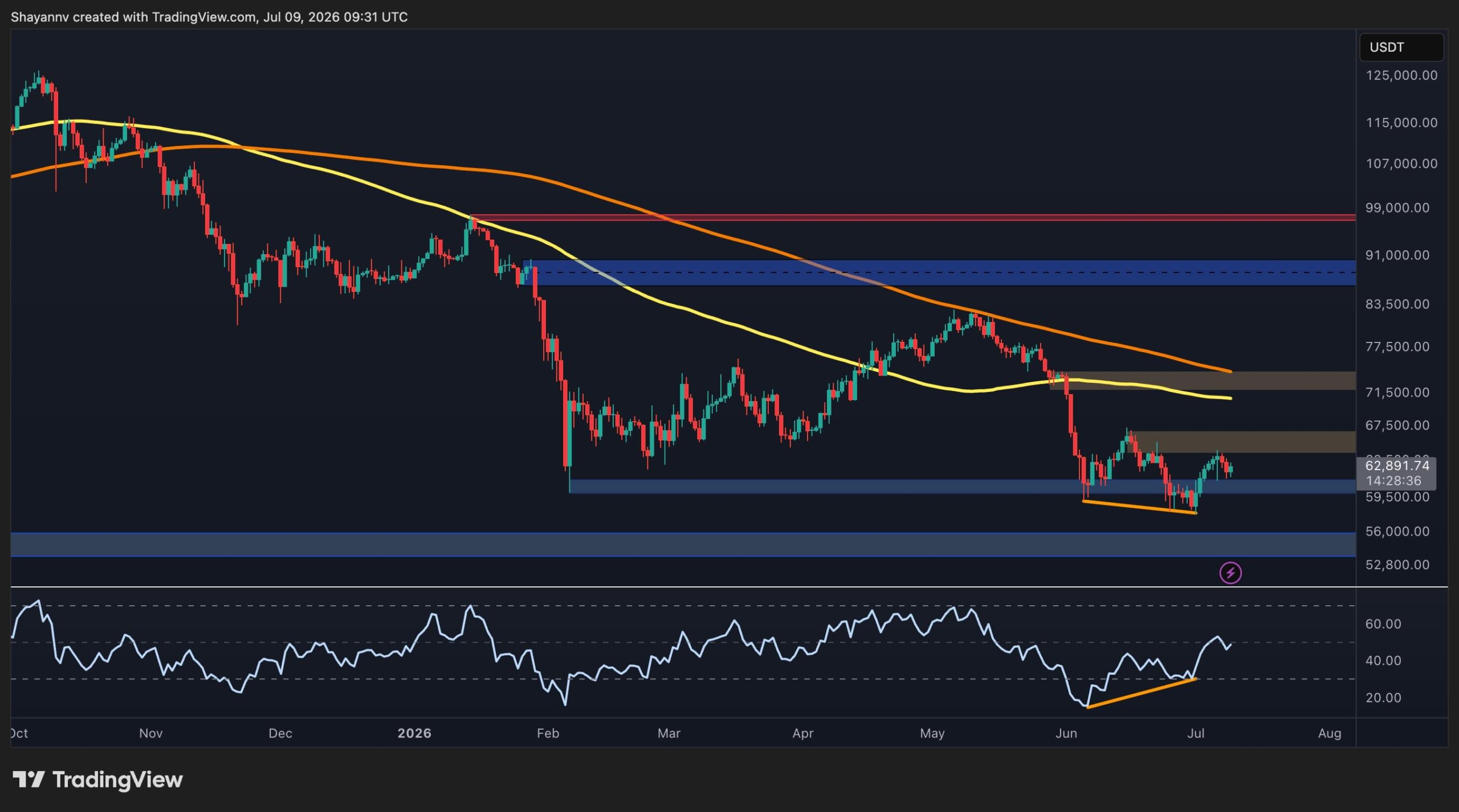
Bitcoin has rebounded above 66000 dollars, bringing renewed attention to the recovery in crypto markets. As of July 21, 2026, Bitcoin had climbed to approximately 66320 dollars, up about 3.3% from the previous trading period. The move matters not only because Bitcoin reclaimed a closely watched round-number level, but because it occurred while geopolitical risks remained elevated, the US interest-rate outlook remained uncertain, and spot Bitcoin ETF flows continued to fluctuate.
Markets are now reassessing three questions. The first is whether Bitcoin's decline toward 58000 dollars in late June exhausted much of the immediate selling pressure. The second is whether softer inflation can reduce the need for further Federal Reserve tightening. The third is whether renewed ETF inflows can support a more durable recovery.
The move above 66000 dollars has improved Bitcoin's short-term market structure, but it does not by itself confirm the beginning of a new sustained bull market.
Key Takeaways
Bitcoin rose to approximately 66320 dollars on July 21, 2026, reclaiming the 66000 dollar level.
The rebound extends Bitcoin's recovery from a late-June low near 58000 dollars.
Softer US inflation data reduced expectations for an immediate Federal Reserve rate increase.
US spot Bitcoin ETFs have recently returned to net inflows, although July flows remain volatile.
Geopolitical risk, oil prices and interest-rate expectations could still limit further gains.
The break above 66000 dollars is better viewed as confirmation of improving sentiment than proof that downside risk has disappeared.
Why Bitcoin Breaking Above 66000 Dollars Matters
Bitcoin briefly fell toward 58000 dollars on June 25 before recovering through 60000 dollars and 63000 dollars. Its return above 66000 dollars on July 21 represents a rebound of roughly 14% from that late-June low.
Unlike a single-session relief rally, the recovery has developed in stages. The first phase was driven largely by short covering and technical buying after an oversold decline. The move later received additional support from improving macro expectations and a recovery in ETF flows.
The 66000 Dollar Level Is a Key Sentiment Threshold
The 66000 dollar level is not a fundamental measure of Bitcoin's long-term value, but it is an important area within the recent trading structure. Bitcoin repeatedly traded between approximately 65000 dollars and 70000 dollars during earlier periods of volatility in 2026, leaving a concentration of trapped positions, stop orders and derivatives exposure around the range.
A sustained move above 66000 dollars may force some bearish positions to close and encourage trend-following strategies to increase long exposure. That mechanism can accelerate gains in the short term.
The same dynamic can work in reverse. A rapid decline back below 66000 dollars would suggest that selling pressure above the breakout level remains significant.
Bitcoin Remains in a Recovery From a Major Drawdown
Although 66000 dollars is an important short-term level, Bitcoin remains far below its October 2025 record of approximately 126223 dollars. According to a
Reuters report on the crypto market downturn, Bitcoin traded near 59831 dollars in late June after losing more than half its value from the record high.
The current move is therefore more accurately described as a recovery from a deep correction than a return to record territory. Investors should distinguish between a relief rally, a confirmed trend reversal and the beginning of a new long-term bull market.
Softer Inflation Has Improved Conditions for Risk Assets
Bitcoin's move above 66000 dollars followed a shift in US interest-rate expectations. Softer-than-expected June inflation data reduced concern that the Federal Reserve would need to tighten policy immediately.
Pricing reflected by the
CME FedWatch Tool showed that the probability of the Federal Reserve leaving rates unchanged at its July meeting rose to approximately 84.5% after the inflation report.
Bitcoin Is Responding to the Marginal Change in Rate Expectations
Risk assets do not necessarily require immediate rate cuts to rally. A lower probability of additional tightening can be enough to reduce valuation pressure.
Real yields, the US dollar and broader financial conditions all influence investor appetite for Bitcoin. When expectations for higher rates decline, cash and short-duration government bonds may become relatively less attractive, allowing some capital to rotate back into equities, technology assets and cryptocurrencies.
However, the market is not yet pricing an aggressive easing cycle. The current debate concerns whether the Federal Reserve will hold rates steady, rather than when it will begin a substantial series of rate cuts. Bitcoin is benefiting from expectations that monetary conditions may stop deteriorating, not from confirmation that abundant liquidity has returned.
Oil Prices Could Revive Inflation Concerns
Geopolitical risk remains a significant variable. Tensions involving the United States and Iran have previously pushed oil prices higher and increased concern about another wave of energy inflation.
A renewed rise in energy prices could lift inflation expectations, Treasury yields and the dollar. That would weaken one of the macroeconomic conditions currently supporting Bitcoin's recovery.
ETF Inflows Are Providing Incremental Demand
US spot Bitcoin ETFs remain one of the clearest indicators of institutional demand. ETF flows in July have not moved consistently in one direction, alternating between significant redemptions and renewed buying.
According to
Farside Investors US spot Bitcoin ETF data, the products recorded combined net outflows of approximately 424.7 million dollars on July 13, followed by net inflows of approximately 181.1 million dollars on July 14. Subsequent market data indicated that the ETFs later recorded several consecutive sessions of positive flows.
Renewed Inflows Show Institutional Demand Has Not Disappeared
The return of ETF inflows suggests that some institutional and professional investors remain willing to rebuild exposure after Bitcoin's substantial decline from its record high.
ETF flows are generally more closely associated with asset allocation, wealth management and medium-term positioning than activity in highly leveraged derivatives markets. However, ETF purchases should not automatically be interpreted as unhedged long-term bullish exposure.
Some institutions may buy ETF shares while simultaneously shorting futures to capture basis spreads or reduce directional risk. ETF inflows therefore demonstrate improved spot demand, but they do not mean that every dollar entering the products represents an outright bullish position.
Consistency Matters More Than One Large Day
Whether Bitcoin can establish a stronger range above 66000 dollars will depend on the persistence of ETF inflows rather than the size of any single session.
Several weeks of positive flows, combined with moderate price appreciation and controlled leverage, would provide a healthier foundation for the rally. In contrast, a rapid reversal in ETF flows alongside rising perpetual futures funding rates and open interest would suggest that the market is once again becoming dependent on leverage.
What Drove the Rebound From 58000 to 66000 Dollars
The late-June decline weakened sentiment and forced a large amount of leveraged exposure out of the market. After Bitcoin fell toward 58000 dollars, bearish positioning became increasingly crowded, creating the conditions for a rebound.
Short Covering Started the Recovery
When a large number of traders are positioned for continued declines, Bitcoin can rise rapidly if the market fails to produce another negative catalyst. Short sellers closing positions create forced buying, which can accelerate a rebound.
Short covering does not necessarily represent new long-term investment demand. However, it can push the price through technical resistance and attract momentum strategies. The current rebound appears to have progressed from short covering to improved spot demand and then to more supportive macro expectations.
Stabilisation Across Risk Assets Strengthened the Move
Bitcoin did not recover in complete isolation. US technology shares and other risk assets also benefited after the softer inflation data.
The broader improvement in risk appetite makes the rebound more credible, but it also illustrates Bitcoin's growing sensitivity to global financial conditions. If equities weaken again because of rates, earnings or geopolitical developments, Bitcoin may face renewed pressure.
What Investors Should Watch After the Breakout
The move above 66000 dollars does not remove all resistance. The next stage will determine whether the rally develops into a sustainable recovery or remains a temporary rebound.
Whether Bitcoin Can Hold Above 66000 Dollars
The first test is whether Bitcoin can maintain the level on daily and weekly closing prices. A quick reversal would indicate that substantial selling pressure remains above the breakout.
If 66000 dollars changes from resistance into support, the market may attempt to test the area around 70000 dollars. That region previously attracted significant trading activity and may contain both profit-taking orders and supply from investors seeking to exit positions accumulated earlier in 2026.
Whether ETF Inflows Continue
ETF flows should be assessed alongside price action. Rising prices combined with persistent ETF outflows would suggest that leverage and short-term positioning are doing more of the work.
A recovery supported by ETF inflows, higher spot volume and moderate derivatives activity would be structurally stronger.
Whether Leverage Is Rising Too Quickly
Derivatives can amplify a rally, but they can also create severe reversals. Perpetual futures funding rates, futures basis and open interest are therefore important indicators.
If open interest rises much faster than spot demand, the market may be developing an excessively one-sided bullish position. A negative macroeconomic surprise or geopolitical escalation could then trigger concentrated liquidations.
Whether Macro Data Supports Stable Rates
US inflation, labour-market data, retail sales and Federal Reserve communication will continue to shape the rate outlook. The current recovery partly reflects a reduced probability of near-term tightening. Stronger inflation data could quickly reverse that assumption.
Investors can follow Bitcoin prices, trading activity and broader crypto market developments through
MEXC, while assessing market data in the context of macroeconomic conditions and their own risk tolerance.
The Bitcoin Rally Still Faces Material Risks
The break above 66000 dollars has improved sentiment, but macroeconomic, flow-related and structural risks remain.
Geopolitical conflict could push energy prices higher and revive inflation pressure. Spot Bitcoin ETF flows could return to substantial redemptions after the recent recovery. Bitcoin has also already gained significantly from its late-June low, creating an incentive for short-term traders to take profits.
Corporate Bitcoin treasury demand is another potential vulnerability. A
Reuters report on digital asset treasury companies found that some companies using equity financing to accumulate crypto assets have faced valuation discounts and more difficult funding conditions. If such companies reduce purchases or sell holdings, the market could lose a previously important source of marginal demand.
Bitcoin also remains a highly volatile asset. Large daily gains and losses can occur even when the medium-term structure is improving. Buying immediately after a breakout is not inherently less risky than buying during a decline.
[Track Bitcoin Price and Market Momentum](在这里填写CTA链接)
Exclusive View from the MEXC Crypto Pulse Research Team
The real significance of Bitcoin's move above 66000 dollars is not the recovery of another round-number level. It is the partial reversal of the extreme pessimism priced into the market in late June.
At that point, the market was simultaneously discounting persistent ETF outflows, weaker corporate treasury demand, higher interest rates and geopolitical escalation. Inflation and capital flows have not deteriorated as severely as feared, forcing investors to reassess the probability of the most bearish outcomes.
One potential market misreading is the assumption that institutional capital has returned in full force. ETF flows have improved, but they have remained volatile throughout July. Corporate Bitcoin treasury strategies are also facing financing constraints. The rebound is better understood as the combined result of short covering, reduced macro pressure and a partial recovery in spot demand.
Investors should focus less on whether Bitcoin briefly reaches another higher price and more on whether 66000 dollars becomes support, ETF inflows remain positive and leverage stays under control. A sustainable transition from recovery to a more stable uptrend would require all three conditions.
The broader cross-asset implication is that Bitcoin is becoming increasingly integrated into the global macro trading system. Inflation, oil prices, Treasury yields, the dollar and ETF flows now play a more visible role in price formation. That integration may improve Bitcoin's access to traditional capital, but it also makes the asset more exposed to shifts in global financial conditions.
FAQ
Why Did Bitcoin Break Above 66000 Dollars?
Bitcoin's move above 66000 dollars was supported by several factors. Softer US inflation reduced concern about an immediate Federal Reserve rate increase, spot Bitcoin ETFs returned to net inflows, and the rebound from 58000 dollars triggered short covering. A broader improvement in risk appetite across equity and technology markets also provided external support.
Is 66000 Dollars an Important Bitcoin Resistance Level?
The 66000 dollar area is an important short-term trading and sentiment threshold. It is close to a range where Bitcoin previously accumulated substantial volume, leveraged exposure and trapped positions. A sustained move above the level could turn it into support. A rapid reversal below it would suggest that the breakout lacked sufficient spot demand.
Could Bitcoin Rise to 70000 Dollars Next?
The 70000 dollar area may become the next major level to watch, but a move above 66000 dollars does not guarantee that Bitcoin will reach it. The outcome will depend on ETF flows, US rate expectations, spot trading volume and derivatives leverage. Supportive macro conditions and persistent inflows would increase the probability of a test.
Are Bitcoin ETF Inflows Now Consistent?
US spot Bitcoin ETFs have recently returned to positive flows, but July data remain volatile. Several sessions recorded substantial redemptions before inflows resumed. Institutional demand has improved, but it has not yet developed into a fully stable one-way trend. Multiweek cumulative flows provide more useful information than any individual trading day.
Why Does Federal Reserve Policy Affect Bitcoin?
Higher interest rates increase the return available on cash and government bonds while tightening financial conditions. This can reduce demand for volatile assets. When expectations for further rate increases decline, valuation pressure on risk assets may ease. Bitcoin has a distinct supply structure, but its short-term price remains sensitive to the dollar, real yields and global liquidity.
Has Bitcoin Entered a New Bull Market?
A move above 66000 dollars is not sufficient to confirm a new bull market. Bitcoin remains far below its 2025 record, and the current move is better characterised as a recovery from a deep correction. A sequence of higher lows, persistent ETF inflows, stronger spot demand and controlled leverage would provide more convincing evidence of a durable trend reversal.
What Are the Main Risks to the Bitcoin Rebound?
Key risks include a renewed rise in oil prices and inflation, a more hawkish Federal Reserve, another wave of ETF outflows, weaker corporate treasury demand and excessive derivatives leverage. Bitcoin has already recovered substantially from its late-June low, meaning profit-taking could also generate sharp short-term volatility.
Disclaimer
This content is provided solely for general information, market research and educational purposes. It does not constitute investment advice, financial advice, legal advice, tax advice, a trading recommendation, or an offer or solicitation to buy, sell or hold any asset.
Cryptocurrencies, equities and related financial assets are highly volatile. Their prices may rise or fall substantially within a short period, and investors may lose some or all of their invested capital. Historical performance, market data, analytical views and previous price movements do not guarantee future results.
Readers should conduct independent research, verify relevant information and assess their financial circumstances, investment objectives, experience and risk tolerance before making any investment or trading decision. Independent professional advice should be obtained where appropriate.
The MEXC Crypto Pulse Team accepts no responsibility for any direct, indirect, incidental or consequential loss arising from reliance on, use of or interpretation of the information contained in this content. Market data may be delayed, revised or calculated using different third-party methodologies and should not be used as the sole basis for an investment decision.
About the Author
The MEXC Crypto Pulse Team focuses on crypto market trends, on-chain narratives, fintech developments, and digital asset ecosystem research. The team tracks public market data, company announcements, third-party market platforms, and industry news sources to help users better understand market structure, risks, and opportunities.
Research References